The end of spam?

Not this kind of spam. Credit: Matthew W. Jackson.

Not this kind of spam. Credit: Matthew W. Jackson.

Kaspersky Lab reported last week that spam email is on the decline, having fallen from 80%-85% of all email over the past few years to about 65% at the end of 2012. There are two main reasons for this. First most spam filters are at least 98% accurate. That may not be so great for a human, but it’s astoundingly good from a computer programming perspective. Second, most email clients are demanding properly-encrypted DKIM signatures, which verify the email address of the sender

Together, these two things make it almost impossible to get spam to your inbox, and it is becoming unprofitable. Many spammers have taken note and moved on to other venues, like legal internet ads, coupon services, and group discount websites. Caveat emptor.

Some of the more clever spammer (or scammer) methods are still in play, like malicious Google Documents and fake personal correspondence, but from the sudden drop in volume, it looks like we may be headed for a world (and may be reaching it, from the end users’ perspective) where no one really worries about spam anymore.

At least, that’s the good ending.

But there’s another side to this. There will always be scammers out there, and their computers are getting smarter just as fast as ours. Suppose that instead of trying to sneak around the spam filters by throwing in lots of random words or words with ch4racter substituti0ns, which appear far less legitimate to human eyes, artificial intelligence becomes advanced enough to write bogus emails that look like they were written by humans. Then, not only could the filters have a hard time spotting them, so could we.

To be sure, things will be harder at the senders’ end. Address verification means it could take legions of gmail address or even buying a few domain names to send large amounts of spam, and people will always be wary of unsolicited messages from someone they don’t know. Another proposed reform is the proof-of-work system, which slows the computer down for a few seconds when sending a message. This would be almost invisible to a normal user, but could slow down a spam-bot by orders of magnitude. It’s not clear who will have the upper hand long-term.

So what do you think? Will we stay ahead of the curve on this, or will spam make an AI-powered comeback in the future?

Posted in Predictions, Technology | Tagged , , , | Comments Off on The end of spam?

How to be a writer in 1 easy step

Photo Credit: Antonio Litterio.

Photo Credit: Antonio Litterio.

I know that at least some of the readers of this blog are also writers, and perhaps some of you want to start writing and aren’t quite sure where to start. Well, you’re in luck, because I am about to give you the complete guide to being a writer. Here it is, Step One:

You must write.

That’s it! That’s all you need to do to be a writer…by definition.

It sounds obvious, you may be saying, but there’s a reason why if you ask almost any professional writer, they’ll tell you that that’s rule number one. The reason is that it’s easy to think about writing. It’s easy to talk about writing. I can think of at least three people off the top of my head who have told me they want to write a novel. To my knowledge, no one I know has actually written one, except for people I specifically sought out as writers.

Don’t get me wrong. Thinking and talking about writing do have their place. If you plan your stories (though not everybody does) or if you worldbuild for them (which you probably should), thinking, planning ahead, and even talking to people more knowledgeable than yourself are essential. But you’re never going to get anywhere unless you actually start putting words on paper, or start putting words on the computer screen. And that can be very hard.

Another thing that’s very easy is coming up with excuses not to write. This is something else that all the professionals will tell you. See examples here, here, and especially here. The point is that none of those excuses matter. Even if you think you don’t have time to write, for example, you can make time. After all, plenty of people have written books while dealing with bigger problems than you probably are. What’s your excuse?

Posted in Writing | Tagged , , | 3 Comments

Waterworlds

Artist's rendition of a waterworld. Credit: Luciano Mendez.

Artist’s rendition of a waterworld. Credit: Luciano Mendez.

Super-Earths are odd things. They’re bigger than Earth, but smaller than gas giant planets, different from anything in our Solar System. The exact definition is a little fuzzy. Astronomers who find planets by the motions of their stars and usually only know their masses say that super-Earths are between 1 and 10 times Earth’s mass. Astronomers who find planets by their blocking of starlight and usually only know their diameters say that super-Earths are between 1 and 2 or 3 times Earth’s diameter.

For a few planets, we’re a little better off: we know both their masses and their diameters. That means we can calculate their densities and make some guesses about what they’re made of.

And that’s an area of a lot of speculation. Gas giants have very thick hydrogen atmospheres: thousands of miles thick, while Earth’s atmosphere has almost no hydrogen and is only tens of miles thick. Since a super-Earth is in between, perhaps it has an atmosphere with a medium amount of hydrogen that is a few hundred miles thick.

That might be right…or it might be completely wrong. The amount of hydrogen in a planet’s atmosphere depends on the planet’s temperature and gravity, which determine how much hydrogen escapes into space. It’s possible that a planet a only a little bigger than Earth holds onto a lot of hydrogen, making it a “mini-Neptune”. It’s also possible that super-Earths lose most of their hydrogen, leaving them with thin atmospheres, like Earth–or at least like Venus. Maybe all three things all possible in different circumstances.

But there is another intriguing possibility. Remember that planets can migrate over time, and many times, they migrate from the cold outer reaches of their solar systems to the hot inner regions. A planet that forms in cold regions, farther from its star than the so-called “snow line“, will have large amounts of water ice (for example, the dwarf planet Pluto is believed to be 30%-50% ice).

When an icy planet migrates to a warmer climate, the ice melts, forming a very deep ocean–possibly hundreds of miles deep! And below that might be even more ice, compressed into a solid form by the pressure, and there will be no land at all. Even if the planet’s temperature is above the normal boiling point of water, the pressure of the steam atmosphere will keep the ocean liquid. This type of planet is called an “ocean planet” or a “waterworld”.

So what are the super-Earths made of? With modern planet-hunting technology like the Kepler spacecraft, we are starting to learn about some of them, and they’re starting to look like there are many different kinds. The planet Kepler-10b is about 5 times Earth’s mass, but only 1.4 times its diameter, making it denser than Earth. That means it’s probably a “super-Mercury” made mostly of iron with some rock on top and a thin atmosphere.

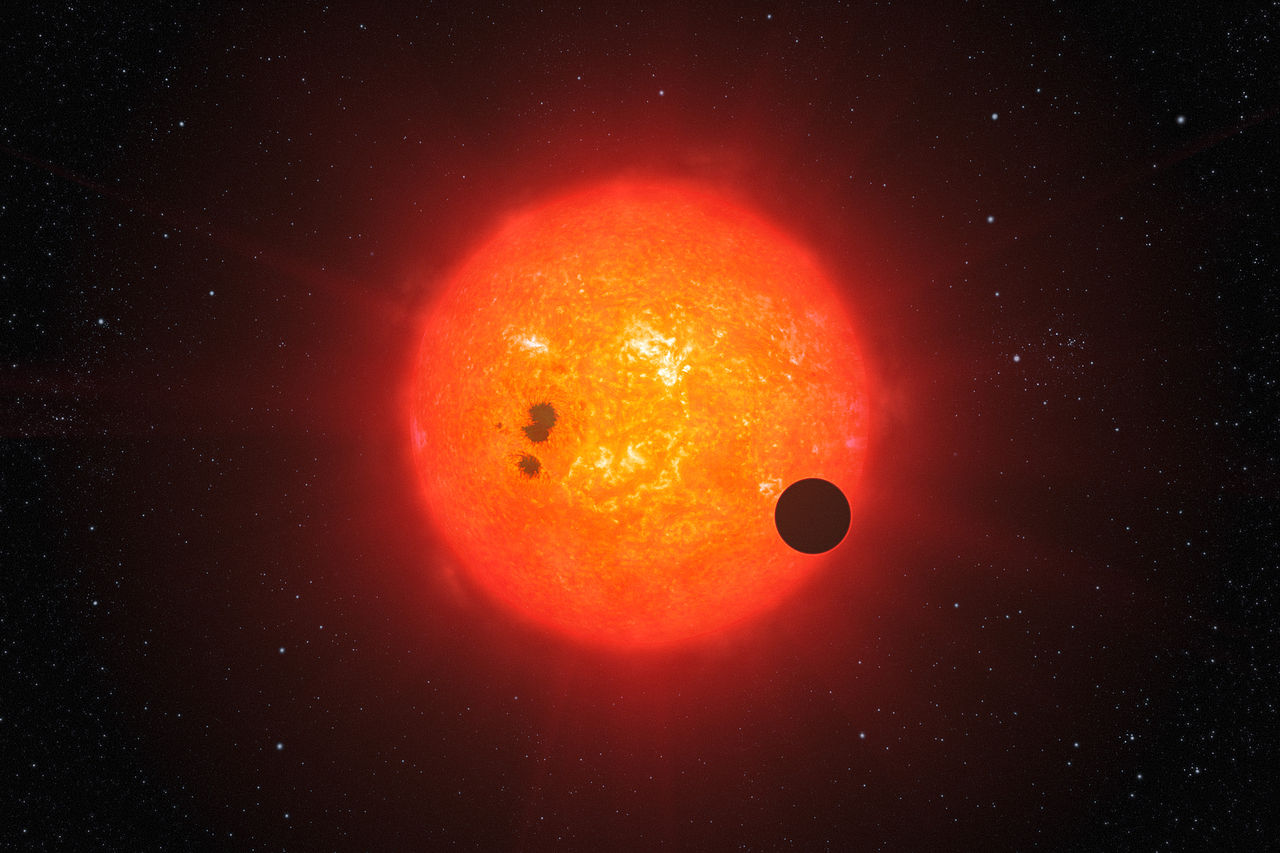
Artist's impression of GJ 1214b transiting its star. Credit: ESO/L. Calçada.

Artist’s impression of GJ 1214b transiting its star. Credit: ESO/L. Calçada.

On the other hand, the best-studied super-Earth is GJ 1214b. I’ve actually spent some time studying it myself in my research career. (Here’s the link, for the technically-minded.) This planet is only a little heavier than Kepler-10b, at 6.5 times Earth’s mass, but it’s much larger, at 2.7 times Earth’s diameter. That makes it barely denser than Neptune, and not even dense enough to be a waterworld (Neptune is denser than water, and water is usually called “incompressible”, but it actually compresses a lot under high enough pressure.) Just based on these observations, GJ 1214b should have a thick hydrogen atmosphere.

But GJ 1214b is a transiting exoplanet, meaning that it periodically blocks some of the light from its parent star. And just as the absorption of certain frequencies of light by the star itself tells us what the star is made of, the tiny absorption of certain frequencies by the planet’s atmosphere can tell us what the atmosphere is made of. As small as they are, we can detect these changes.

A hydrogen atmosphere should be easiest to spot because it would be very thick, but we don’t see it. For this reason, it was widely reported that GJ 1214b was a waterworld, but there remains quite a bit of debate among the astronomers who continue to study it. In the end, I think the jury is still out. GJ 1214b might be a waterworld, or it might have a thick hydrogen atmosphere obscured by thick clouds. Or it could be something else. Hopefully, we’ll be able to figure it out as more observations are made.

And that’s what makes it so much fun. Super-Earths are scientifically even more interesting than “Earth-like” planets because we know so little about them and because they are so different from one another. As we learn more about super-Earths, it will teach us more about how all planets form, and that will teach us more about Earth itself.

Posted in Planets | Tagged , , | Comments Off on Waterworlds

Finding little planets

Artist's rendition of Gliese 876d if it is a solid super-Earth. Credit: Trent Schindler, National Science Foundation.

Artist’s rendition of Gliese 876d, the first super-Earth to be discovered, if it is a solid planet. Credit: Trent Schindler, National Science Foundation.

The easiest planets to find are the biggest ones. The larger a planet is, the larger the effect on its parent star, which is what we can see. It’s also easiest to spot planets close to their stars, since they move faster there. This is why most of the earliest exoplanets discovered were hot jupiters.

But more sensitive instruments have allowed us to find smaller and smaller planets by spotting ever-tinier changes in the light from their stars. We now know that hot jupiters are not very common, although many of the smaller planets are still pretty hot.

By small, I don’t mean really small planets, like Mars and Mercury. Almost all of the planets we’ve found are still bigger than Earth, though often not by much. The next larger planet than Earth in our Solar System is Uranus, which is 14.5 times Earth’s mass, but Neptune is slightly smaller in diameter and has a more serious-sounding name, so astronomers like to call the warmest exoplanets that are Neptune-sized “hot neptunes“.

The first hot neptune to be discovered was Mu Arae c in 2004. It’s a little smaller than Neptune at about 11 times Earth’s mass, and it’s hotter than Mercury, but like Neptune, it’s expected to be gaseous. (We don’t know for sure because we don’t know how big across it is, but what we know about planet formation tells us that Mu Arae c is probably a gas giant.)

But the hot neptunes were just an opening act for a weird new class of planets that has been getting a lot of attention lately: the super-Earths. The “Earths” part doesn’t mean that they’re Earth-like, but just that they are solid, like Earth. The “super” part means that they’re bigger than Earth, but in-between Earth and Neptune, like in the example below.

Size comparison of Earth, Neptune, and the super-earth CoRoT-7b. Credit: Aldaron (Wikipedia).

Size comparison of Earth, Neptune, and the super-Earth CoRoT-7b. Credit: Aldaron (Wikipedia).

Nothing like that exists in our Solar System, and we still don’t know much about the super-Earths. We only know the diameters of a few of them, from things like the Kepler spacecraft, and we don’t really know what they’re made of. Some of them are definitely rocky, like Earth, and some of them are definitely gaseous “mini-neptunes”, but some of them are in the middle, where it’s not so clear. They could be rocky or gaseous, or even made of water–more on that later.

Posted in Planets | Tagged , , | Comments Off on Finding little planets

Welcome to the…past?

Impact of the 2004 Boxing Day tsunami in Thailand. Credit: David Rydevik

Impact of the 2004 Boxing Day tsunami in Thailand. Credit: David Rydevik

I occasionally write about the development of new technologies that remind me that we really are living in “the Future“, but how about one that happened nearly 70 years ago?

In a little-noticed story last week, The Telegraph reported that during World War II, the United States undertook an operation code-named Project Seal to build a weapon of mass destruction that would have created a tsunami to flood the enemy’s coastal cities. The files relating to Project Seal were declassified in 1999, but they have received renewed attention after being rediscovered by New Zealand author and filmmaker Ray Waru.

Could it have worked? The difference between a tsunami and a normal, wind-driven wave is not height. (Many tsunamis are only inches high, and wind-driven waves can be over 100 feet high.) It is the amount of water that is on the move. A wind-driven wave moves only the top layers of the ocean, while a tsunami occurs when the water is displaced from top to bottom. This usually happens when an earthquake moves a large chunk of rock upward, displacing the water above it, as in the 2004 Boxing Day tsunami. However, the 1958 Lituya Bay megatsunami (the tallest in recorded history) was caused by a landslide, and the same thing could happen in the case of an asteroid impact. Because these events move so much more water, it all comes up onto the shore like a tide.

This was the principle behind Project Seal. Just like an earthquake or a landslide, a large enough explosion could also displace enough water to create a tsunami. It would work even better if there were several explosions in a line to build up the wave, like water sloshing in a bathtub. In 1944 and 1945, 3,700 bombs were used to test this principle, but the results were not encouraging. The weapon would have needed 2,000 tons of explosives lined up just five miles from the target city, something that would not be very practical in an active war zone.

In the end, the atomic bomb filled the weapon of mass destruction role far more efficiently than the “tsunami bomb” ever could have, and the project was shelved, but that it ever existed at all proves that people have been thinking seriously about science-fiction-style technologies for a very long time.

Posted in Welcome to the Future | Tagged , , | Comments Off on Welcome to the…past?

2013: A look ahead

Happy New Year to all! Traditionally, the beginning of the year is a time to reflect and to look ahead, so here’s a look at what’s coming in 2013.

March: Comet PANSTARRS could be the brightest comet since 2008, possibly becoming brighter than Venus. That would make it the brightest comet in the Northern Hemisphere in many years.

Dragon_ISS

SpaceX will send two resupply missions to the International Space Station, one in March and one in October. SpaceX is also working toward manned flights in 2015.

April: Orbital Sciences Corp. will attempt the first launch of its Cygnus spacecraft to the ISS. Having two companies able to resupply the ISS will take some pressure off of the Russian program, which has had some problems with launchers in the past few years, and off of the European program.

October: The European Space Agency will launch its Gaia spacecraft. Gaia will carefully measure the positions of 1 billion stars to measure their distances and motions out to thousands of light-years, detect exoplanets from the motions of their stars, and better determine the structure of our Galaxy.

Artist's rendition of the MAVEN spacecraft. Credit: NASA.

Artist’s rendition of the MAVEN spacecraft. Credit: NASA.

November: The Mars Atmosphere and Volatile EvolutioN (MAVEN) probe will launch. In 2014, MAVEN will begin studying the atmosphere of Mars to determine why the planet lost its water.

December: Comet ISON just might blow Comet PANSTARRS away, potentially becoming brighter than the full Moon.

Besides all this:

The line of succession to the British throne will have its biggest change since 1984, and for the first time, male and female children will be considered equally.

China plans to launch its Tiangong-2 space station, which will be larger and operational longer than Tiangong-1.

Schematic diagram of the locations of the Voyager and Cassini spacecraft. Credit: NASA/JPL/JHUAPL.

Schematic diagram of the locations of the Voyager and Cassini spacecraft. Credit: NASA/JPL/JHUAPL.

The Voyager 1 spacecraft will probably become the first man-made object to leave the Solar System. In late 2012, its instruments indicated that it was reaching the edge of the influence of the Solar wind.

Hollywood will have its objectively least original year ever, with 31 sequels and 17 remakes. For better or worse, those are what sell.

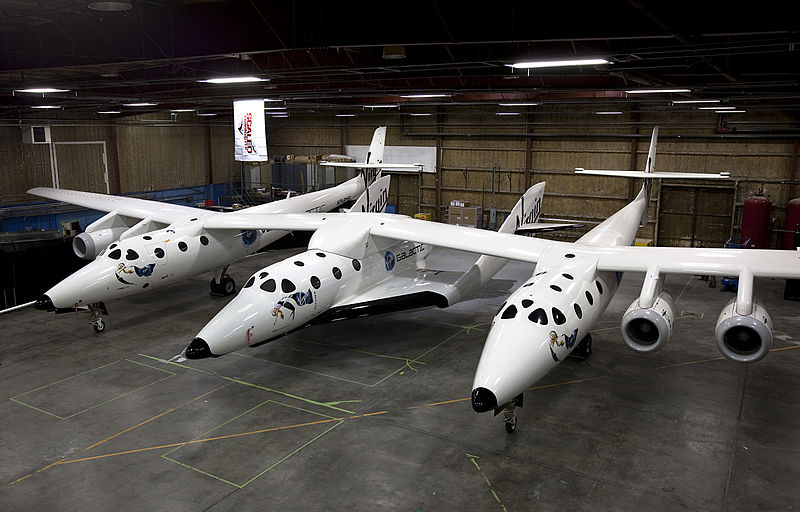
Virgin Galactic's SpaceShipTwo. Credit: Virgin Galactic/Mark Greenberg.

Virgin Galactic’s SpaceShipTwo. Credit: Virgin Galactic/Mark Greenberg.

Virgin Galactic will attempt to make the first ever manned commercial spaceflights. Tickets are on sale for $200,000.

The Large Hadron Collider will be shut down for most of the year for upgrades. In 2015, we will witness the firepower of this fully armed and operational particle accelerator.

The next Solar maximum will begin, bringing more opportunities to see auroras and a greater risk of catastrophic Solar storms.

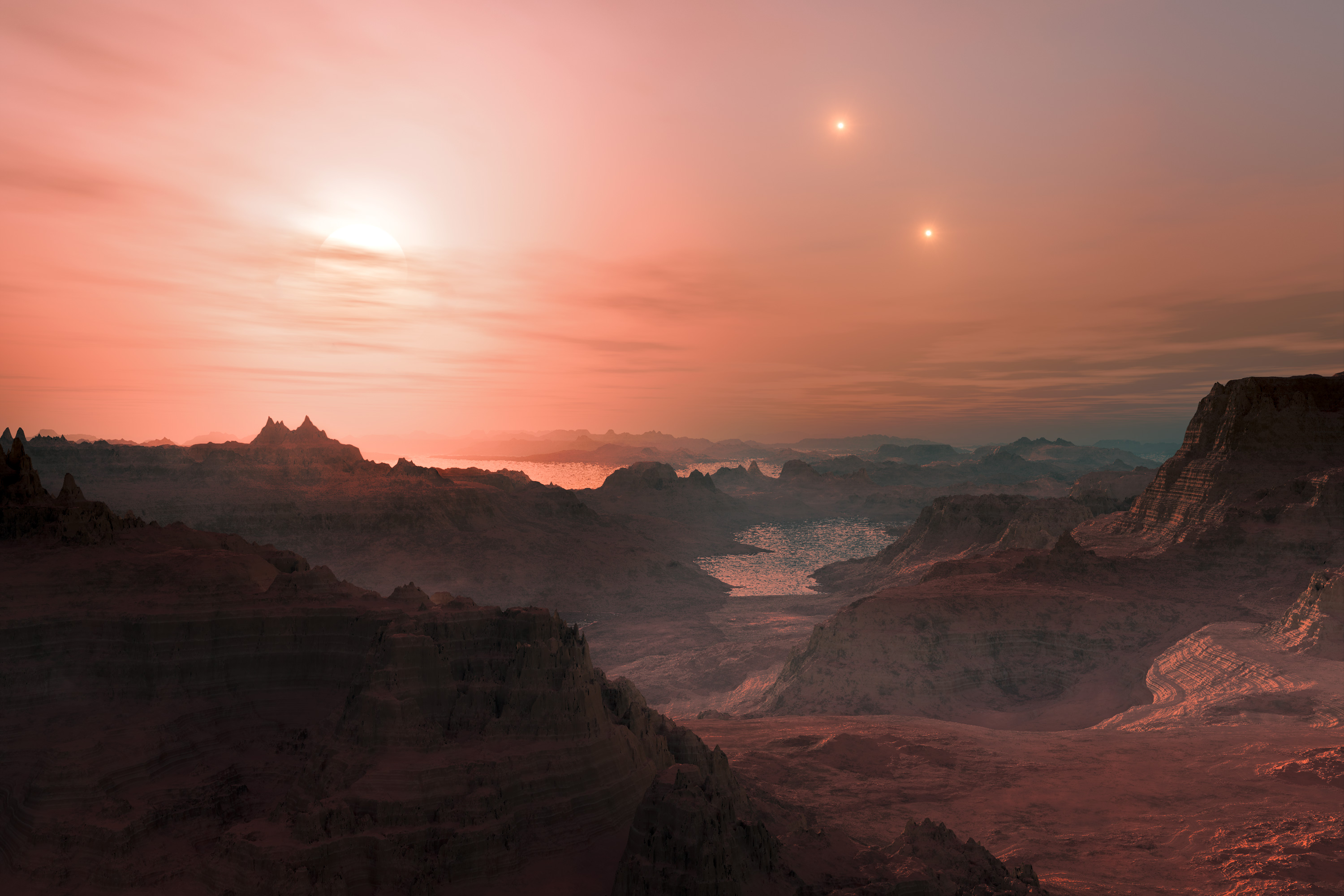
Credit: ESO/L. Calçada

Credit: ESO/L. Calçada

We will probably find new planets that are more “Earth-like” than any we have seen before. None of these planets are really as Earth-like as they sound, but more on that later.

Politics as usual will continue to be politics as usual–sorry, everybody, that’s not changing anytime soon. But in the meantime, keep watching the skies.

Posted in Current events, General | Tagged , , , , , , | Comments Off on 2013: A look ahead

2012 in review: science, fiction, and other cool stuff

As 2012 draws to a close, people around the world are looking back at everything that happened over the past year. Probably the most memorable story in science was the landing of NASA’s Curiosity rover on Mars, and for good reason. It’s a nuclear-powered robot dropped onto Mars with a crane. Let me repeat that: we landed a nuclear-powered robot the size of a car on another planet with a rocket-powered crane! There are few ways to make that sentence more awesome.

But that is only scratching the surface of the year 2012. Here are the stories that got my attention over the past year, some large and some small. Continue reading

Posted in Current events, General | Tagged , , , , , , , | Comments Off on 2012 in review: science, fiction, and other cool stuff

In the sky: the Wolf Moon

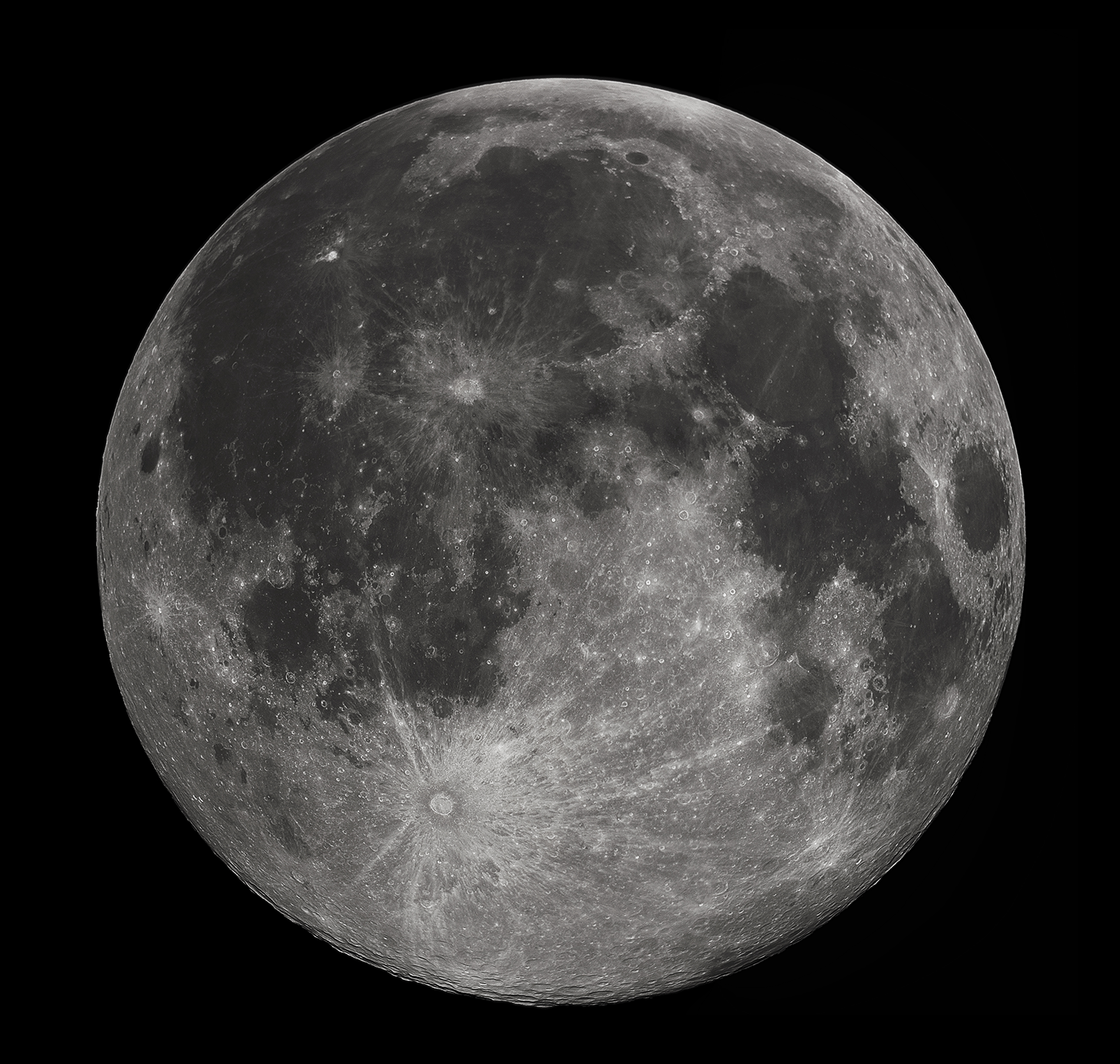
Credit: Gregory H. Revera

Credit: Gregory H. Revera

Okay, you probably don’t need a stargazing guide to find the Moon. If it’s up, it’s pretty easy to spot, even in the daytime. Tonight, it’s even easier, since it’s a full Moon, specifically, the Wolf Moon, the traditional name of the first full Moon of winter. It also happens to be the 13th full Moon of 2012, since we had a Blue Moon back in August.

But the interesting thing about observing the Moon is that, unlike everything else in the sky, it’s easy to spot features on it’s surface with the naked eye, and you can see a lot more with binoculars or a telescope.

Major features on the Moon. Credit: Cmglee (Wikipedia).

Major features on the Moon. Credit: Cmglee (Wikipedia).

The largest features on the Moon are the maria, or “seas”. These are the dark splotches that make up the “Man in the Moon’s” face. Early astronomers thought they looked like seas and gave them names like “Sea of Tranquility”, “Sea of Rain”, and “Ocean of Storms”. We now know that they are ancient lava fields from when the young Moon was still hot enough to have volcanoes. On smaller scales, there are many similar features called “lakes”, “bays”, and “marshes”.

The other obvious features on the Moon are craters. The whole Moon is covered with craters down to the microscopic level, but a handful of them are easy to see from Earth and have been given names. The most famous Lunar crater is probably Tycho, the location of the monolith in 2001: A Space Odyssey. Tycho appears as a bright spot in the Moon’s southern hemisphere.

With a telescope, you can see a lot more features on the Moon, like mountains, ridges, and valleys. Many of those mountains are as tall as large mountains on Earth, like the Alps. It’s well worth a look; even though it’s smaller than Earth, the Moon is a big world with a geography all its own.

One more thing about the Blue Moon: today, it’s considered to be the second full Moon in a month that has two, which was the full Moon of August 31 this year. However, it was traditionally the third full Moon in a season that has four. This was done so that the names of the full Moons would not be thrown off. The first full Moon of summer is called the Hay Moon, the second is the Corn Moon, and the last is the Harvest Moon. This year, there was an extra full Moon on August 2–the Blue Moon.

[Update: I later learned that this method of naming full Moons around the seasons is very outdated. The modern custom is to name the full Moons for the month they are in, making the full Moon of January 26 the Wolf Moon. There are also many alternative names for each full Moon, some of which are more popular than the ones I used here, like this list from National Geographic.]

Posted in Stargazing | Tagged , , , , | Comments Off on In the sky: the Wolf Moon

Planets of failed stars

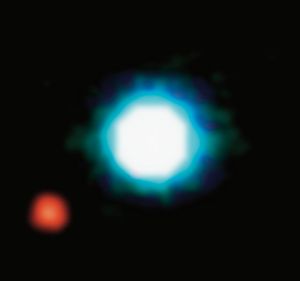
Infrared Image of 2M1207 and 2M1207b. Credit: ESO

Infrared Image of 2M1207 and 2M1207b. Credit: ESO

A brown dwarf is a failed star. It’s about the size of Jupiter, but anywhere from 13 to 80 times as massive. It is too small to shine by burning hydrogen, like a star, but it is massive enough to fuse the heavy hydrogen isotope deuterium. There’s not much deuterium in a star, but there’s enough for the brown dwarf to shine bright red under its own power for a few hundred million years (for comparison, a small star can shine for trillions of years). After that, they cool down slowly, over billions of years. Most brown dwarfs are about the same temperature as the hottest planets–one or two thousand degrees.

Brown dwarfs are thought to form from the same gas clouds as stars. Since they form in the same way, can they have planets? Yes, but with some caveats. First, as with nomad planets, not all astronomers agree that these objects should be called planets, since they don’t orbit true stars. “Planemo” seems to be the most popular alternative.

The first planet to be discovered orbiting a brown dwarf was 2M1207b, pictured above with its parent brown dwarf. That is an actual photograph (albeit in false color), one of very few we have of planets outside our Solar System. It was taken by the Very Large Telescope in Chile with an infrared camera. That’s why the brown dwarf appears blue in the image. The blue denotes hotter objects, as seen in the infrared, and the red denotes cooler objects. To the naked eye, both brown dwarf and planet would look either deep red or magenta.

2M1207b is about four times as massive as Jupiter and is separated from its parent brown dwarf more distantly than Neptune from the Sun. That means that it almost certainly did not form from a disk like the planets in our Solar System, but collapsed from the same primordial cloud as the brown dwarf, which brings us to the second caveat about planets around brown dwarfs.

Some astronomers say that only objects that formed like the planets in our Solar System should be called planets, and that objects like 2M1207b should be called something like “sub-brown dwarfs”. This definition is not very popular, since it would mean that if we found that Jupiter was not formed like the other planets (which we could tell if it did not have a solid core), then it would no longer be considered a planet. However, the International Astronomical Union has not produced a formal definition for exoplanets, so there is no strict rule about naming.

We do know, though, that some brown dwarfs have disks that could form planets like Earth. If it orbited close enough, such a planet could stay warm from heat of its parent brown dwarf and from tidal forces for billions of years and could even produce life. This may be the weirdest kind of place where we would expect to find life–at least life as we know it.

Posted in Planets | Tagged , , , | Comments Off on Planets of failed stars

A brief, festive history of time travel

In this holiday season, let us take a moment to remember the first popular book that brought the idea of time travel to the readers of the world…A Christmas Carol.

Wait, Charles Dickens was the father of time travel? Well, yes. He wasn’t the first to write about it, of course, be he’s definitely the first whose work is still widely read. Dickens wrote A Christmas Carol in 1843, 50 years before the two works that are usually thought of as heralding the start of time travel in literature: Mark Twain’s A Connecticut Yankee in King Arthur’s Court (1889) and H. G. Wells’s The Time Machine (1895).

“But wait,” you may be saying, “what about Rip Van Winkel?” It’s true, Washington Irving did write Rip Van Winkel in 1819, but in some sense, it’s not really time travel. Rip Van Winkel just falls asleep and wakes up 20 years later. In A Christmas Carol, on the other hand, Ebenezer Scrooge visits the past and the future and then changes the future. If you can find an earlier story where that happens, tell me in the comments, because I’d like to read it.

To be sure, A Christmas Carol is not science fiction. It’s correctly billed as a ghost story, although even that sounds a little odd given the association of ghost stories with Halloween. Nor is it the first instance of backward time travel in fiction. In 1733, Samuel Madden wrote an obscure volume called Memoirs of the Twentieth Century, in which an angel brings state documents back to 1728 from the year 1998. But Madden’s work was suppressed by Sir Robert Walpole under King George II, while Dickens’s classic continues to be subject to endless reinterpretations every December.

Meanwhile, Rip Van Winkel’s forward version of time travel has occurred in folklore and religious literature for the past 2,000 years. The 18th chapter of the Qur’an reinterprets the earlier Christian tale of the Seven Sleepers of Ephesus, who purportedly slept for 180 years to escape persecution. In the Jewish Talmud, Honi ha-M’agel is said to have slept for 70 years. And in the Hindu epic Mahabharata, a King Kakudmi goes on a short visit to Brahma and returns to Earth to find 116 million years have passed!

There is even one intriguing apparent manipulation of time in the Bible. Isaiah 38 records a miracle in which, “I will make the shadow cast by the sun go back the ten steps it has gone down on the stairway of Ahaz.” (Isaiah 38:8a, NIV). Most commonly, the stairway of Ahaz is interpreted as a sundial and the ten steps as marking a period of several hours. According to tradition, this passage was written by Isaiah himself around 700 BC. It’s tempting to call this the first example of time travel in literature, but given what was known of astronomy at the time, it seems much more likely that this would have been thought of as a change in the motion of the Sun, not of time itself.

As you’re watching some version or other of A Christmas Carol this week (which you’ll probably encounter if you have access to a TV), think about it’s unique place in history. It was truly a story ahead of its time.

Posted in Fiction, History | Tagged , , , , | Comments Off on A brief, festive history of time travel