What If? Rejects #1.1: Teeth

Next post in this series: Fire.

Randall Munroe’s bestselling book, What If? answers many absurd hypothetical questions with serious scientific answers. However, there are a number of questions that Randall refuses to answer and prints solely for entertainment value. These are the questions that are too disturbing or too ridiculous, by his standards, to justify an answer.

Well, I guess I’ve got a higher tolerance than Randall because I’m going to answer them. I don’t know if I’ll be able to manage all of them, but I’m going to try. And sadly, I don’t have funny stick figure drawings to liven things up, but I think the questions are interesting nonetheless. So without further ado, here is the first What If? reject.

Q: Would it be possible to get your teeth to such a cold temperature that they would shatter upon drinking a hot cup of coffee?

Randall’s answer: “Thank you, Shelby [submitter], for my new recurring nightmare.”

My answer: Probably not. And if you could, you’d have bigger problems. (Any dentists please feel free to correct me.)

Continue reading
Posted in Medicine, Reading, Science | Tagged , , , , | 3 Comments

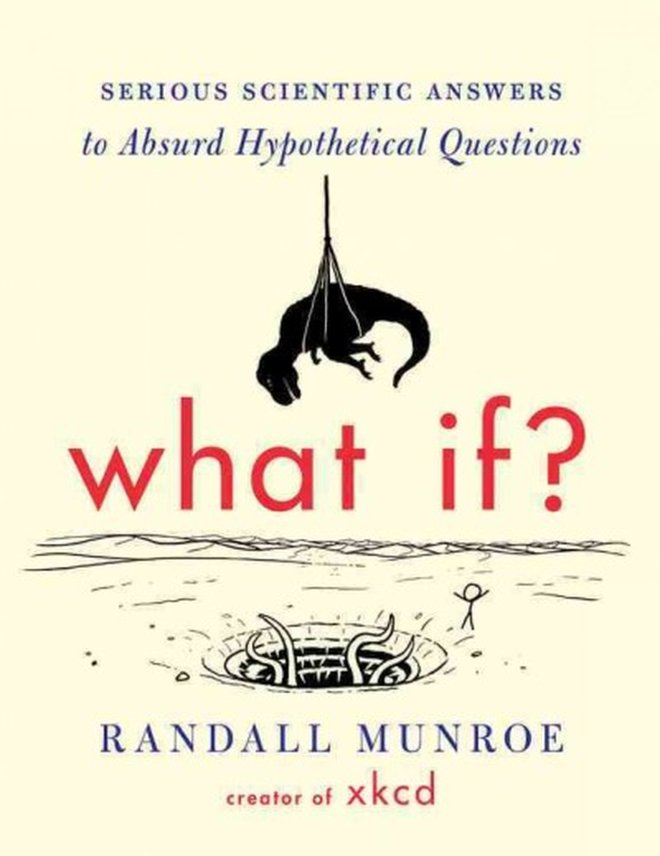
Book Review: What If? by Randall Munroe

Q. What would happen if the Earth and all terrestrial objects suddenly stopped spinning, but the atmosphere retained its velocity?

A. Nearly everyone would die. Then things would get interesting.

Q. Which US state is actually flown over the most?

A. Virginia, surprisingly thanks to flights like Toronto to Havana.

Q. Could the arrows of the Persians really have blocked out the Sun?

A. Yes, but not by aiming at the Spartans.

Randall Munroe is a former NASA engineer and the author of the highly acclaimed xkcd webcomic. More recently, he began a second blog called What If? in which he answers unusual and sometimes absurd questions like the ones above with interesting thought experiments.

As a science fiction author, I love this kind of stuff. Asking questions about the improbable or even the impossible can lead you down surprising avenues of research and provoke startling insights, and it’s just great fun. So when Randall wrote a book version of What If? I made sure to pick it up.

What If? the book contains a lot of old favorites from the website, including the very first one:

Q. What would happen if you tried to hit a baseball pitched at 90% the speed of light?

A. The city would be destroyed by a thermonuclear firestorm…and you would be entitled to advance to first base.

That’s basically it–more crazy questions like that, some are taken from the website, but the book also contains 51% new material, along with some of the weirder, sillier, and more disturbing questions that Randall declined to answer…more on that later. All in all, it’s definitely worth checking out.

My rating: 5 out of 5

Posted in Book reviews | Tagged , , | Comments Off on Book Review: What If? by Randall Munroe

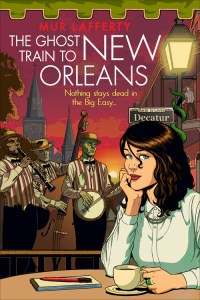
Book review: The Ghost Train to New Orleans by Mur Lafferty

Lafferty_GhostTraintoNOLA-TP

I previously reviewed Mur Lafferty’s breakout urban fantasy novel, The Shambling Guide to New York City about a woman writing a travel guide for monsters (or to be politically correct, “coterie”). Now, Zoë Norris is back for more adventures in The Ghost Train to New Orleans.

When we last saw Zoë, she had just learned that she is a “citytalker”–someone who can communicate with the spirit of a city and learn important information from it, like when one of the vampires, zombies, goddesses, dragons, or zoetists (people who make golems) who she works with is out to get her. Zoë’s newest assignment is to write a travel guide to New Orleans, where voodoo is the name of the game, so she takes her research team on the new Ghost Train, which can get her there from New York overnight.

But all is not well in Zoë’s world. Her boyfriend, Arthur comes with her to track down a legendary zoetist who is the only person who can save him from becoming a zombie. Then, the Ghost Train is robbed by ghosts, and Zoë is approached by a suspicious stranger who tries to recruit her to an assassins’ guild that employs the few surviving citytalkers. Oh, and one of her employees wants to eat her.

All in all, Ms. Lafferty has produced another stellar book. Steeped in mythology, equal parts humor and suspense, with new challenges, new villains, and a wider look at the world of the coterie, this is one sequel that is as good as the original. (Funniest moment: the Andrew Jackson hotel is run by the actual vampire Andrew Jackson, but is frequently picketed by Native American ghosts.)

My rating: 5 out of 5.

Posted in Book reviews | Tagged , , | Comments Off on Book review: The Ghost Train to New Orleans by Mur Lafferty

Banned Books Week Starts Today

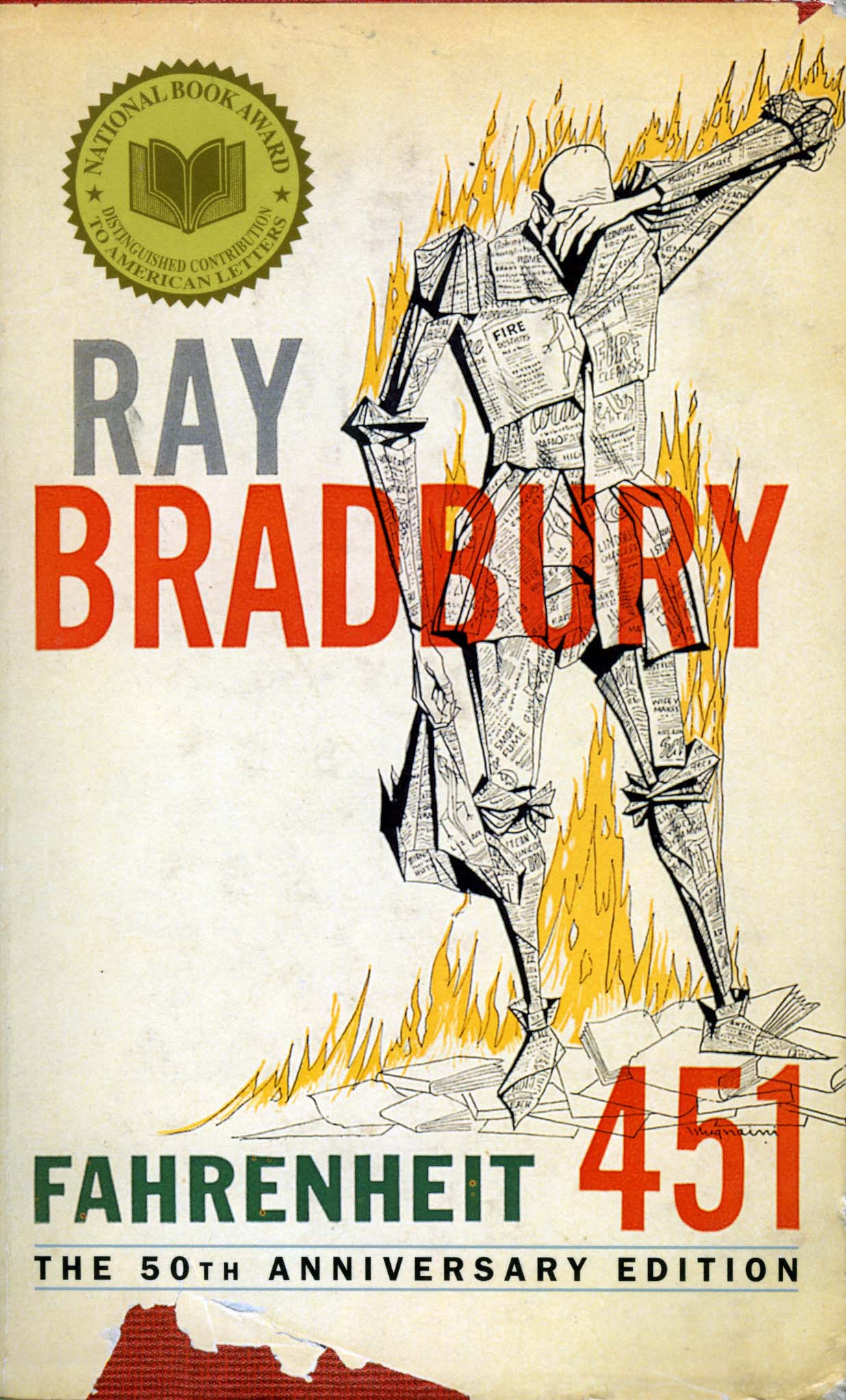
Probably the most ironic book that people have tried to ban.

Probably the most ironic book that people have tried to ban.

Every year, around the start of the school year in most parts of the United States, the American Library Association sponsors Banned Books Week. This effort of librarians, booksellers, publishers, authors, readers, and others raises awareness and works against campaigns to remove certain books from school and sometimes public libraries around the country. This may not be a headline-grabbing topic (although see these stories in The Guardian and The Huffington Post), but it is important to anyone who cares about intellectual freedom.

There are many reasons that parents (and they usually are parents) might not a particular books in libraries, especially school libraries. The stereotype is that books tend to get banned for religious and conservative political reasons. However, the truth is that these types of challenges happen just as much in the liberal Northeast as the Bible Belt (see this map).

The top reason for books to be challenged is that they are sexually explicit. Brave New World falls into this category (among others), to pick a comparatively time-tested one. This is one of those particularly ironic cases where a book about banning books gets banned. The reason is also rather silly. Brave New World is honestly pretty tame (or at least discreet) and isn’t even the most explicit thing I read in my pretty mainstream high school.

Offensive language is another big one, from general swearing in Catcher in the Rye to racist language in Huckleberry Finn and To Kill a Mockingbird. (Cue more irony, since both of those latter cases carry an anti-racist message, but they suffer from being steeped in the cultures of their times.) Other go-to reasons for censorship include violence, homosexuality, and the wonderfully vague “unsuited to age group” (something frequently applied even to books like The Hunger Games, which are written specifically for the very age group that reads them).

That said, I do wish the ALA would be a little more specific about the reasons books get challenged, or even provided the text of some of the complaints. For example, what “religious viewpoint” is objectionable in Twilight? Is it about Christians objecting to the occult subject of vampires? Mainstream Christians objecting to the Mormon author? Non-Christians objecting to the Mormon author? Or something else entirely? The ALA doesn’t say, at least not where it can be easily found.

Even so, the ALA is doing good work with Banned Books Week, and I wish them luck.

Posted in Culture, Reading | Tagged , , | Comments Off on Banned Books Week Starts Today

Optimism

The world needs more optimism these days–what with Ebola in West Africa, a civil war in Ukraine, and multiple wars in the Middle East. Here’s a does of optimism from one of the world’s greatest optimists, Hans Rosling, and yes, he has numbers to back it up:

Try watching the first couple of minutes and taking his quiz (I got 2 out of 3).

Most people in the western world believe that the world is getting worse. Only a small fraction know that things are getting better for the most part. Population growth is slowing. Average per capita violence is at historic lows. Extreme poverty was cut in half five years ahead of schedule. And so on.

Obviously, there are still big problems in the world. Reducing child mortality and promoting universal education are proving tough nuts to crack, not to mention all of the current crises. But just remember that the future is not as bleak as the news sites would like to paint it.

Posted in Culture, Current events | Tagged , , | Comments Off on Optimism

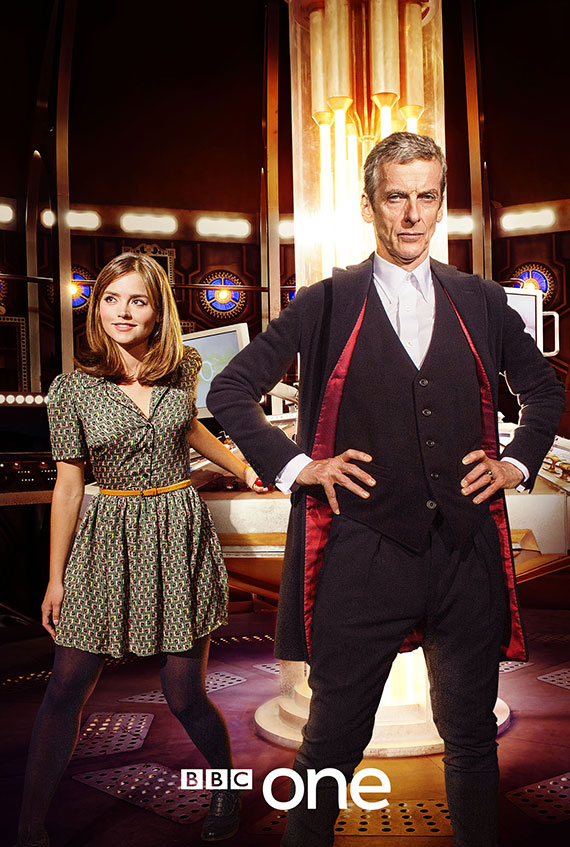
Television Review: Peter Capaldi as the Doctor


Doctor Who is one of the most successful science fiction franchises of all time, with (currently) 802 episodes to date spanning more than fifty years, three successful spin-off series, nearly 200 audio dramas, and what looks like several hundred books. The show recently began its “eighth series” (season) of the revived series, which began in 2005, with its twelfth regular actor playing the main character, the Doctor.

This is not a review of the new episodes of Doctor Who, “Deep Breath” and “Into the Dalek”, per se. This is a review of the new Doctor, as played by Peter Capaldi.

Warning: spoilers below. Continue reading

Posted in TV Reviews | Tagged , , | Comments Off on Television Review: Peter Capaldi as the Doctor

Children’s Fantasy: Books Versus Movies

It’s a well-known rule in fiction that the book is always better than the movie. However, in my survey of children’s fantasy, I have discovered that this genre is the exception. In many cases, the movie versions of children’s fantasy novels are better than the books.

I cannot be sure of why this is exactly, but I have a theory, which has to do with the lengths of the books. A two-hour movie script is 30,000 words, while a typical adult novel is more like 90,000 words, and frequently longer in fantasy. This means that a lot of important material has to be cut out of the movie, which seriously detracts from the quality.

However, children’s fantasy books are usually 25,000-30,000 words, the same as the movie. This gives room to faithfully adapt the entire book and, as such, also gives the screenwriters more breathing room to adapt the book to the screen and smooth over the rough parts. The result is often a better story. So with this in mind, here is my vote for the book versus the movie for the children’s fantasy novels I have reviewed.


Mary Poppins: Movie

I’ve mentioned this one before. Mary Poppins is one of those children’s books that has no real plot. Things happen for no real reason, they’re not connected, and there’s no real character development. The movie basically adds the plot of “saving Mr. Banks“, which I believe makes for an immensely better story.

The Phantom Tollbooth: About the same

The movie version of The Phantom Tollbooth is a pretty faithful adaptation, although simplified a bit. This means that it shares a lot of the book’s foibles, like (again) a lot of random stuff happening. Neither is fantastic, in my opinion, but you’ll get a similar quality from both.

The Chronicles of Narnia: Books, but not by much

I have more opinions on The Chronicles of Narnia that I have room to talk about here. The recent trio of movies did not include The Horse and His Boy, but I would still recommend seeing the ones that have been made. The problems with the movies stem mostly from condensing the books, which is the main reason I would rank them slightly lower.

A Wrinkle in Time: Book

The Disney TV adaptation of A Wrinkle in Time is a surprisingly faithful and well-done one. However, I have two reasons for ranking it below the book in quality. First is the watering down of the religious themes–omitting all references to the “witches” as angels and changing their psalm of praise to God to a song “about joy”. The second is the muddling of a few plot points that would make it confusing to someone who hasn’t read the book, particularly Meg’s first mental battle with IT, which becomes a physical confrontation.

Peter Pan: Book

Honestly, the only thing missing from the Disney adaptation is some of the richness of the original. The movie is still good an definitely worth seeing.

The Wonderful Wizard of Oz: Book

Don’t get me wrong. The 1939 film is considered one of the best movies of all time. But even this adaptation cuts out the last third of the book and loses a lot of the irony with the Scarecrow, who thinks he’s brainless but is actually the smartest of the bunch, and the Tin Man and Lion in their ways. Your mileage may vary, since the book itself is also in a very condensed form, but I think the book captures these subtleties better.

Alice’s Adventures in Wonderland: Movie

This is a tough call, since both book and movie are basically one long opium trip dream sequence, but I found the film to be a bit less of a slog on that front.

The Tale of Despereaux: Movie

Movie by a mile. The book is pretty good (Newbery-winning, after all), but the movie only improves on this by abandoning the device of telling the story out of order, engaging in a bit more worldbuilding, cleaning things up a bit, as by making the Gregory the jailer Miggery Sow’s father, and making Roscuro into a more sympathetic character.

Mrs. Frisby and the Rats of NIHM: Book

It’s been a long time since I’ve seen the movie, The Secret of NIHM, but I still remember that it made some artistic decisions that I seriously disagreed with: making the whole story quite a bit darker was just the start. They inexplicably added a mystical element around Nicodemus, and they also killed him off, while he is still an important character in the book sequels.

James and the Giant Peach: About the same

Both book and movie are fun, though actually quite different from one another. Both are snappy, silly, and quite clever is their whimsical, child-like adaptation of the real world, and both are worth checking out.

Bonus stories:

Matilda: Movie

Matilda was one of my favorite movies growing up, so I decided to read the book, and I was underwhelmed. The movie’s tale of a telekinetic child prodigy facing off against a sociopathic school principal adds more than any other adaptation on this list. From an expanded account of Matilda’s father’s legal troubles to adding a central role for her telekinetic powers, including a daring raid on the evil Miss Trunchbull’s house, I was surprised there was even room to add that much. Do yourself a favor, and skip the book on this one.

The Hobbit: About the same

Today, The Hobbit is often assigned as high school reading, but it was originally written as a children’s book (albeit a long one) and was reviewed by the publisher’s ten-year-old son. I say that the new movies are on par with the book on the individual merits of each. As an adaptation, the movies are way to bulky and over-the-top, but as movies, they are pretty good, although I think they would be even better if they were made as a miniseries.

Harry Potter: Books

Okay, so the series is more young adult fiction after the second or third book. Even the first two books are quite long for children’s literature, which is why they are much better than the movies. Even here, J. K. Rowling’s world is far too rich for the big screen to do it justice. Someday, if the industry swings that direction, it might be interesting to see a faithful adaptation of the books done as a miniseries (or a series of miniseries, in the British style), but until that day, crack open the books.

Posted in Book reviews, books versus movies, children's fantasy, Fiction, Movie Reviews, Reading | Comments Off on Children’s Fantasy: Books Versus Movies

Review: xkcd TimeAfterTime

Frame 1 of TimeAfterTime.

Frame 1 of TimeAfterTime.

A year ago, I highlighted a unique new style of story telling from the xkcd webcomic entitled Time. Somewhere between a comic strip and a movie, this story displayed one new black-and-white frame, usually pretty closely associated with the previous one, every hour on the hour for several months. These frames slowly unfolded into an epic story about the struggle to survive in the distant future.

At the time, I speculated that fans of the, for lack of a better work, comic might continue the story or create a new story in the same style, and, in fact, they did. The fan-made sequel to Time, called TimeAfterTime, has now concluded.

TimeAfterTime was not quite as refined an operation as the original Time. It played one frame every four hours, and the storyline does not appear as carefully planned–many aspects of it were not clarified as much as Time did. Yet, the story is still compelling.

In TimeAfterTime, the flooded-out refugees from Time explore their new home. But all is not well there, as what the reader will recognize as an ancient nuclear waste dump has contaminated the area. They must figure out the secret before it’s too late in order to find a safe new home for themselves.

Despite the weaknesses of TimeAfterTime, I still followed it to the end and found it a worthy successor to the original in this small and fledgling genre.

My rating: 4 out of 5.

Posted in Art, Fiction | Tagged , , , , , | Comments Off on Review: xkcd TimeAfterTime

Children’s Fantasy Review, Part 5

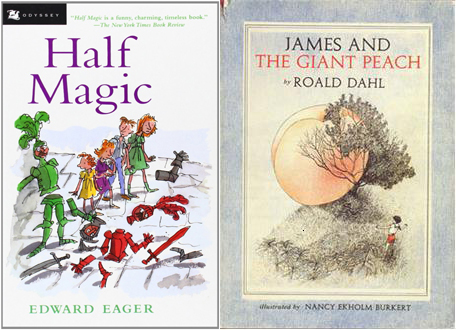
Magic comes home: Half Magic and James and the Giant Peach

This is the final post in my Children’s Fantasy Review series. See Part 4 here or start from the beginning here.

I am doing Camp NaNoWriMo this month. My project is (appropriately enough) a children’s fantasy novel and is also set in the real world. Given the anticipated length, I have set my word count goal at 45,000 words, of which I have currently written 15,092.

Half Magic by Edward Eager and James and the Giant Peach by Roald Dahl don’t have all that much in common at first glance. I put them together because…well, that’s what was left on my reading list, but also because of one notable property: they are set in the real world.

Now, in one sense, this is hardly extraordinary. Most children’s fantasy involves actual kids from the real world. After all, you want your readers to be able to relate to the story. But in a lot of children’s fantasy, those kids are whisked away to a far off land like Narnia, Oz, or Wonderland. Here, the magic all happens in the real world. (The technical term for this is low fantasy.) No other book that I’ve reviewed in this series does that. (The Rats of NIMH trilogy technically doesn’t have magic, just talking animals, and Mary Poppins has one chapter that takes place inside a chalk drawing.) Continue reading

Posted in Book reviews, Reading, Uncategorized | Tagged , , , | Comments Off on Children’s Fantasy Review, Part 5

Children’s Fantasy Review, Part 4

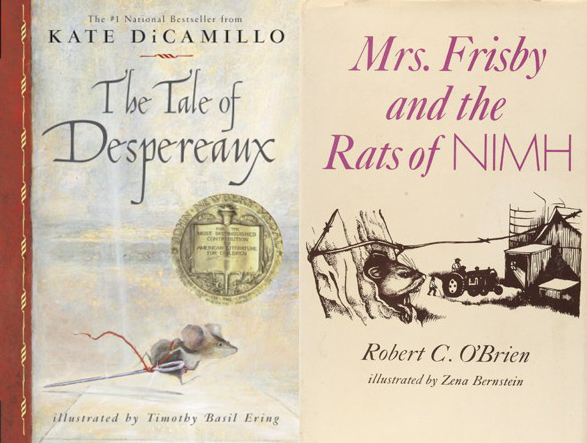
Rodents are people too: The Tale of Despereaux and The Rats of NIMH.

See Part 3 of this series here.

Talking animals are a classic staple of children’s literature, and even animals that are normally considered pests, like mice and rats, get their share of attention. These tales can run the gamut from the characters being basically human, except in appearance (think The Wind in the Willows), to stories where humans are completely out of the picture (think The Lion King) to stories where animals must deal with the problems caused to them by humans. These stories, understandably considered they’re about rodents, fall closest to the last category.


The Tale of Despereaux by Kate DiCamillo is something of an oddity. It is divided into four short stories, the first three each dealing with a different character, and the fourth with how their lives intersect with the inhabitants of the castle. Despereaux, the mouse, is a very unconventional mouse, more interested in reading books than chewing on them, and interested in talking to the Princess Pea, a crime for which he is banished to the dungeon. Roscuro is a rat born in the dungeon. Scorned by the surface world after he accidentally gave the queen a heart attack, he seeks revenge on Princess Pea. Miggery Sow is a human servant girl, and none too bright. Her greatest desire is to become a princess herself, and Roscuro uses her to further his own evil schemes. When he puts his plan into action, it is up to Despereaux to save the day.

The Rats of NIMH trilogy consists of Mrs. Frisby and the Rats of NIMH by Robert C. O’Brien, and Racso and the Rats of NIMH and R-T, Margaret, and the Rats of NIMH by O’Brien’s daughter, Jane Leslie Conly. The Rats of NIMH were a group of lab rats (and mice) who are scientifically altered to give them great intelligence and long life by the National Institute of Mental Health (NIMH). The experiment worked even better than the scientists expected, as the rats grew smart enough to unlock their cages and escape. Far from the city, they build their own society, first on a farm, and then in a secluded valley. But they must keep their existence a secret, due to the constant danger of being tracked down and recaptured by NIMH. Each of the books shows the rats’ facing their challenge to find and preserve their home.

There are two important things that I learned from reading these books. First, unconventional formats can work. Despereaux wasn’t exactly my cup of tea, and it might be more of an uphill battle, but even with the unusual format, it sold quite well and even won a Newbery Medal. Second, don’t be afraid to make the plot simple. Actually, you almost have to do this. Since middle grade fiction tends to be short, your main choices are to have a very choppy plot where nothing is dwelt upon deeply, like The Wizard of Oz or to have a simple plot where only a few major events happen, and, again, you can jump from one important scene to another with less (but not none!) of the leisurely intervening and reaction material of a full-length novel. There’s nothing wrong with this. It’s just the style of the genre.

Camp NaNoWriMo starts tomorrow, and I will be writing my own children’s fantasy novel in July. But I will have one more post to wrap up this series: some modern magic with Half Magic and James and the Giant Peach.

Posted in Book reviews, Reading | Tagged , , , , | 1 Comment