Day 2 at the #AAS230: Warm Jupiters, Human Spaceflight, and Other Stories

Image result for planet nine
Artist’s rendition of the mysterious Planet Nine.

The second day of the AAS Conference has concluded with still more fascinating tales from the world of astronomy. We begin with the tale of the Rosetta mission to Comet 67P/Churyumov-Gerasimenko, which concluded last year, from Bonnie Buratti of JPL. There were a lot of interesting results here, including that the water on Earth probably did not come from comets, as was previously thought, but from asteroids. But the biggest results are coming out on Thursday, so I’ll come back to that later.

One of the panel discussions tried to put together the pieces of the puzzle that lead to warm, Jupiter-sized planets with elliptical orbits. That’s a long and fascinating tale in itself involving the interaction of close in planets with more distant ones, and I’ll probably do a follow-up on that later.

Chris Impey of the University of Arizona spoke about our future in space. The upshot: despite funding difficulties in the U.S. at the federal level, thanks to commercial space enterprises, the future is bright.

Konstantin Batygin of Caltech is the “partner in crime” of astronomer Mike Brown, the discoverer of Eris and “killer” of Pluto. He described the long and fascinating process of predicting the existence of the as-yet-undiscovered Planet Nine. With new lines of evidence including the bizarre object “Niku” and a model for the axial tilt of the Sun, the evidence is stronger than ever.

Finally, Daniel Wang of the University of Massachusetts talked about the supermassive black hole at the center of our galaxy, Sagittarius A*. Of particular interest are the X-ray flares seen around the black hole. The origin of these flares is uncertain, but it could involve magnetic effects in the surrounding gas or even asteroids being torn apart by the black hole’s massive gravity!

Other highlights:

*This is not a footnote. The name of the object is Sagittarius A* (pronounced Sagittarius-A-Star).
Posted in astronomy, Science | Tagged , , , , | Comments Off on Day 2 at the #AAS230: Warm Jupiters, Human Spaceflight, and Other Stories

Day 1 at the #AAS230: Dark Matter, Colliding Planets, and More

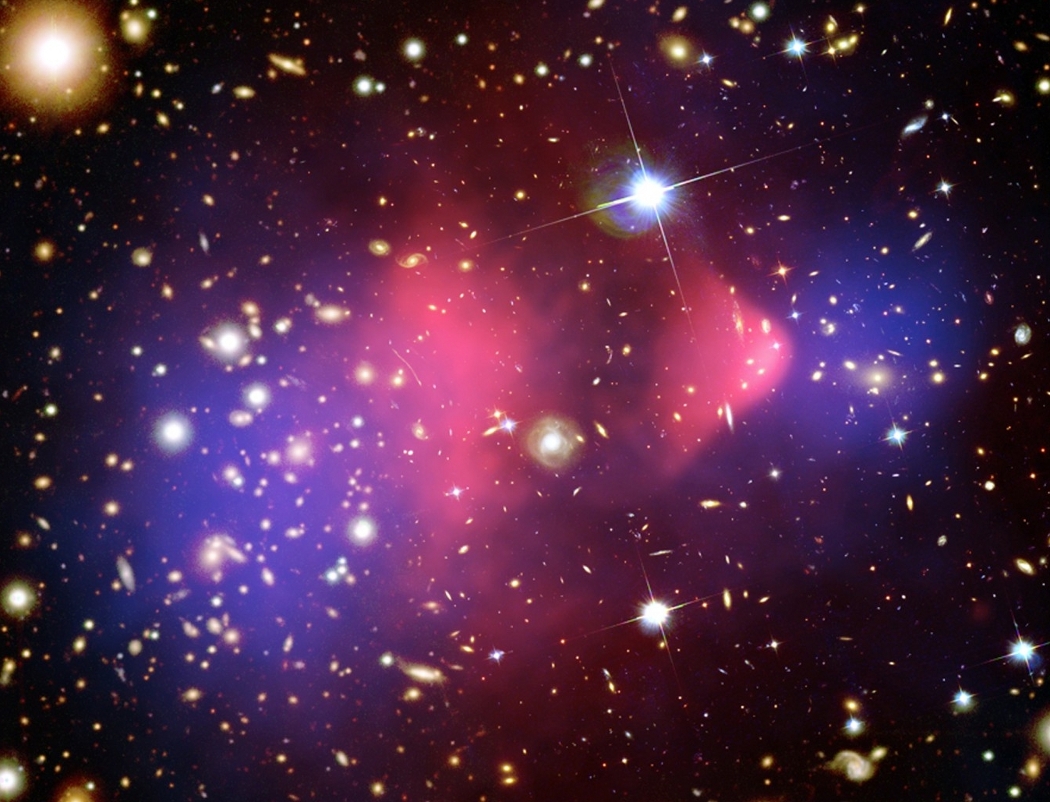
Image result for bullet cluster
The famous Bullet Cluster, the first clear proof of dark matter.

The AAS Conference is underway today with the first round of talks from all branches of astronomy. For us astronomers, the biggest events are probably the plenary sessions, where most everyone attends, but a lot of the most newsworthy results come from the contributed talks and press conferences, so there’s a lot of ground to cover, and I’ll come back later to focus on some of it in more detail, but here’s an overview.

We started the day with a plenary talk on dark matter by Katherine Freese from my own University of Michigan. The plenary talks are really more of a “state of the field” kind of thing, but it was still a very good overview, and I learned lot in a concise form to help me understand the issue of dark matter more clearly. The upshot is the dark matter remains one of the big outstanding questions about the nature of the universe, but we may start to get answers in the next few years.

Later, we heard from Bekki Dawson of Penn State on the subject of inner solar systems—planets that are close to their host stars (which are also most of the exoplanets we know about). I attended several follow-up talks on this subject that went into more detail as well. A big part of this was explaining all of the weirdness we’ve discovered about exoplanets over the years, which I’ve written a fair amount about before. A lot of that has to do with the “nature versus nurture” puzzle—teasing out the different effects of how the planets formed from how they changed and interacted with each other over time. There’s a lot of exciting stuff here, like planets colliding or being gravitationally pushed into their suns—things that may actually happen often during the formation period.

I wasn’t able to attend the afternoon talks today, but they covered interesting topics as well. One described the universe’s most extreme star forming galaxies, which were a major contributor to overall star formation in the early universe. The other presented results from SOFIA—an infrared telescope that flies around on a converted Boeing 747 with a big hole cut out of its side. Yes, seriously!

Other highlights:

*KELT-9b is not actually the hottest planet ever discovered. Kepler-70b and Kepler-70c are believed to be hotter. However, these planets are not original. They are remnants of planets that plowed through the atmosphere of the red giant star they orbited. However, KELT-9b is the hottest unprocessed planet ever discovered.

Posted in astronomy, Science | Tagged , , | Comments Off on Day 1 at the #AAS230: Dark Matter, Colliding Planets, and More

Blogging the #AAS230

As you may already know, I’m a professional astrophysicist, and for astrophysicists, the biggest event of the year is the biannual conference of the American Astronomical Society, usually known as the AAS (that’s “Double-A-S” for you non-astronomers). Now, the winter meeting held each January is really the main event, but the summer meeting being held this week is a pretty big deal, too. And that’s why, right now, I am in Austin, Texas for the 230th AAS meeting.
Well, partly it was a matter of when I had new results to present, but either way, it promises to be a fun week. I will be giving a short presentation (a 5-minute presentation–seriously) on my own research on Thursday, titled A Retrieval Architecture for JWST Observations of Directly Imaged Exoplanets, which I may talk about later. But there are lots of other cool new results coming for astronomers of all types.

Among the highlights of this year’s meeting (by which I mostly mean the plenary sessions) will be:

  • Origins of Inner Solar Systems
  • The Universe’s Most Extreme Star Forming Galaxies
  • Our Future in Space
  • Planet Nine From Outer Space
  • Space Weather

This week, I will be blogging each day of the AAS with science highlights from the day’s talks—probably the main plenary sessions for the most part, but I’ll make note of any other interesting developments I see. If you’re interested in astronomy at all, it’s sure to be good, so stay tuned. Expect the first post tomorrow evening.

Posted in Science | Tagged , , | Comments Off on Blogging the #AAS230

Movie Review: Pirates of the Caribbean: Dead Men Tell No Tales

Well, I’m back. I took a long hiatus from blogging after an even longer spotty record due to some personal stuff I’ve been dealing with. I may or may not eventually talk about that, but I’m going to try to get back on the proverbial horse and post here at least once a week. As a part of that initiative, I’ve decided to be more consistent about reviewing new books and movies that I read and see, and maybe a few other things, too, so watch this space for more updates.

This week, the big new movie is the fifth installment in the Pirates of the Caribbean series, Dead Men Tell No Tales.

Continue reading

Posted in Movie Reviews | Tagged , | 1 Comment

Movie Review: Rogue One: A Star Wars Story

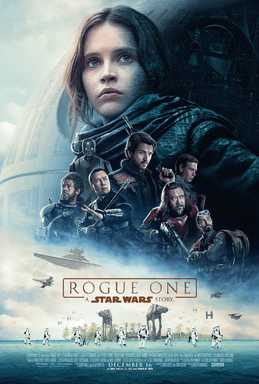
A long time ago in a galaxy far, far away, the Rebel Alliance stole the plans to the Death Star and discovered its One Weakness. Rogue One is the story of how that happened and why the Death Star’s engineers were stupid enough to build that weakness into the system in the first place. (Spoiler: it wasn’t stupidity.)

Snark aside, this was a pretty good Star Wars movie. I was nervous about Rogue One for several reasons. I was nervous when Disney said they were going to make non-Episode Star Wars films, especially another prequel because we know how the last batch of prequels turned out. I was worried because it felt like Disney is trying to turn Star Wars into another Marvel Cinematic Universe, and the MCU has been pretty hit-or-miss even with a lot less baggage than Star Wars.

But Rogue One exceeded my expectations. The movie tells the story of Jyn Erso, the daughter of the Death Star’s unwilling top engineer as she tries to get her father back and later stop the Empire from blowing up planets with a ragtag group of rebels. Now, here is the biggest flaw in the movie: I can’t tell you any of the others’ names. I don’t remember them, and the reason is that the exposition was muddled, busy, and definitely didn’t go out of the way to help the audience learn who these people were, even though several of them are compelling characters onscreen. I’m not great with names in general, but I just couldn’t keep track of them. (And it doesn’t help that Star Wars is filled with made-up names rather than familiar ones.)

But after that point, I enjoyed the movie. The rest of the story was well-written, and it was a technological marvel for the digital Peter Cushing alone. He really looked almost real, and he definitely came down on our side of the Uncanny Valley. I have a hunch we’ll be seeing more resurrected actors in other movies in the future.

I admit I was still worried, however. I was worried when the plot swerved in an unexpected direction from the heist flick that was implied in the trailer. I was worried when I couldn’t keep track of people’s names. But most of all, I was worried that they would botch the ending–that they would cop-out from where the story needed to go…but they didn’t. The ending was pulled off beautifully, and even if it was a little contrived, I wouldn’t change a thing. There’s some stiff competition, but I might be willing to go so far as to say that it was the most moving ending of any Star Wars film, and it goes a long way to make up for the messy introduction. In conclusion, Rogue One is a must-see for the hardcore and casual fan alike.

My rating: 4 out of 5.

Posted in Movie Reviews | Tagged , | Comments Off on Movie Review: Rogue One: A Star Wars Story

Movie Review: Arrival

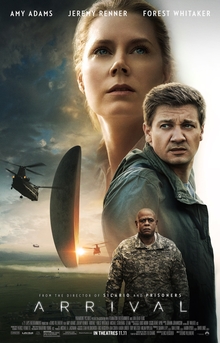
Arrival is a unique new science fiction film about alien contact based on the 1998 Novella “Story of Your Life” by Ted Chiang. Highly critically acclaimed, Arrival differs from most other movies of its type in that this is a movie, even more so than Contact, about language.

Spoilers below. Continue reading

Posted in Movie Reviews | Tagged , | Comments Off on Movie Review: Arrival

Movie Review: Fantastic Beasts and Where to Find Them

It's finally here!

It’s finally here!

Fantastic Beasts and Where to Find Them is the first spin-off film in the Harry Potter series, and the first screenplay written by J. K. Rowling directly. It is the first of five films that will apparently lead up to the epic duel between Albus Dumbledore and the dark wizard Gellert Grindelwald during World War II. And it is awesome.

Okay, let’s get my one big complaint out of the way first. J. K. Rowling is a British woman living in a country where handguns are completely banned, but wands (in her world) are carried without restriction. And now, she writes about the United States, a country with more guns than people, and she says that wands are heavily regulated and require a permit to carry here.

This despite the fact that the International Confederation of Wizards established the right to carry a wand at all times in 1692. (Quidditch Through the Ages, p. 28).

Yes, I’m a geek.

But other than that, Fantastic Beasts is an excellent movie, and J. K. Rowling has proved that she’s as good a storyteller in the area of screenplay as she is with novels. In my opinion, it better than most of the Harry Potter films, topped only by Deathly Hallows Part 2 and Prisoner of Azkaban.

On top of that, I firmly believe this is David Yates’s (who previously directed the last four Harry Potter films) best work as a director. I’ve previously been very critical of Mr. Yates for seemingly not understanding how to handle the characters in the Potter films and not being able to bring the best out of the lead actors, whom I thought did a lot of their best work in Prisoner of Azkaban. But in Fantastic Beasts, Mr. Yates has finally hit his stride. It’s beautifully directed, the characters are eminently relatable, and it packs in lots of action and an emotional impact equal to the best of Harry Potter.

Granted, Ms. Rowling’s worldbuilding has always been a little sloppy (maybe I’ll do a post on that later), and as other reviewers have said, it is a lot of exposition for the rest of the series, but those are small criticisms to the overall quality of the work.

I was nervous going into Fantastic Beasts both because of the debacle that was Cursed Child (despite Ms. Rowling not having written the play) and because of the choice of David Yates as director, but it exceeded my expectations on both counts, and it gives me high hopes for the next four films.

My rating: 4.5 out of 5.

Posted in Movie Reviews | Tagged , , , , | Comments Off on Movie Review: Fantastic Beasts and Where to Find Them

What If? Rejects #6.2: Chainsaws

Previous post in this series: A Well-Balanced Meal

What If? bonus: How Many Seconds in Eternity

Next post in this series: Thor’s Hammer

Q: What temperature would a chainsaw (or other cutting implement) need to be at to instantly cauterize any injuries inflicted with it?

Randall’s response: A woman with a chainsaw and a campfire says, “…I need to know by Friday.”

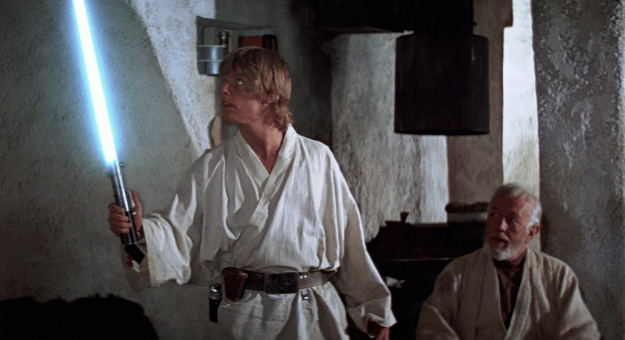
My response: I think what you actually want is a lightsaber.

But in all seriousness, it’s not about higher temperatures. Cauterization is a very specific (and usually not very useful) medical technique. It stops wounds from bleeding by burning the surrounding tissue to produce blisters. Higher temperatures will cause deeper burns and do more damage than they fix.

There’s not much information about the actual temperatures involved in cauterization, but it appears it can be anywhere from 500 to 2000 degrees Fahrenheit (260 to 1100 degrees Celsius), depending on the specific application. For a large, fast cut like a chainsaw will produce, it probably needs to be near the upper end of that range.

But there’s a bigger problem: if you can even get the chain to that temperature, much less keep it at that temperature…you’re going to destroy the chainsaw! The chain has to move at high speeds and pass through the mechanism. If it’s heated to a temperature of more than a few hundred degrees, it’s probably going to melt something in there, and a gas-powered chainsaw might just blow up in your face.

So maybe just stick with the lightsaber.

Posted in Medicine, What If? Rejects | Tagged , , | Comments Off on What If? Rejects #6.2: Chainsaws

What If? Rejects #6.1: A Well-Balanced Meal, Part 4

Part 1. Part 2. Part 3. Part 4.

Next post in this series: Chainsaws.

I want to finish up my discussion of the nutritional content of the human body, as per Randall Munroe’s What If? This post doesn’t really have any new information. I just wanted to compile what I already wrote into one handy FDA-approved* Nutrition Facts label. I be back with a new question next week-ish.

Human

Nutrition Facts

Serving Size 3 ounces (85g)
Servings per container 560


Amount Per Serving

Calories 200   Calories from Fat 120


                                             % Daily Values

Total Fat 14g                              21%
Saturated Fat 5g                24%
Trans Fat 0g
Cholesterol 56mg                     19%
Sodium 120mg                            5%
Total Carbohydrate 2g             1%
Dietary Fiber 0g                   0%
Sugars 0g
Protein 17g


Vitamin A                                      64%
Vitamin C                                        4%
Calcium                                    4,629%
Iron                                              469%

* Neither the FDA nor Science Meets Fictions condones cannibalism.

Posted in What If? Rejects | Tagged , | Comments Off on What If? Rejects #6.1: A Well-Balanced Meal, Part 4

What If? Rejects #6.1: A Well-Balanced Meal, Part 3

Part 1. Part 2. Part 3. Part 4.

Two years ago, I began a series of posts based on Randall Munroe’s book, What If? The What If? book and website are described as “serious scientific answers to absurd hypothetical questions.” However, there were some questions that were too absurd even for Randall. He printed a couple dozen of them in his book without answering them, just for the humor value, but I decided I would answer them. Thus, the What If? Rejects series was born.

Unfortunately, my life went nuts while I was finishing my doctorate, and my blogging mostly fell by the wayside for the past year, leaving the series half finished. But now, I’m bringing it back!

When last we met, I was in the middle of answering “Weird (and Worrying) Questions from the What If? Inbox #6”, Question 1: What is the total nutritional value (calories, fat, vitamins, minerals, etc.) of the average human body?

I calculated the calorie count of the average human body in this post: 560 servings of 200 calories each. In my second post, I calculated the macronutrients: fats, carbs, and protein, including sugar and cholesterol. Now, it’s time for the micronutrients: the vitamins and minerals.

The FDA only requires vitamin A, vitamin C, calcium, iron, and sodium quantities to be listed in products’ nutrition facts labels, but lets do all of them. There are 13 essential vitamins and 15 essential minerals that are needed by the human body, and calculating how much of them can be found in the body is actually quite a bit easier than figuring out carbs, proteins, and fats.

You see, each vitamin and mineral has something called a biological half-life. This is a little like a radioactive half-life, but instead of the time it takes for half of a substance to decay, it’s the time it takes for one half of a particular chemical to be eliminated from the body. So in order to find out how much of a vitamin or mineral is in a healthy human body, you just take its Reference Dietary Intake (formerly Recommended Daily Allowance), multiply by its biological half-life, multiply by 1.44 because logarithms, and you’re done.

Finding out the Daily Value per serving is even easier. The biological half life times 1.44 tells you the number of Daily Values in the body directly. Then just divide by the number of servings. For many vitamins, the number is zero: they get metabolized into other chemicals in the body in a matter of hours. Minerals, on the other hand, can stick around for a long time. You can look up the numbers for yourself, but here’s the end result:

Vitamin A: 64%          Vitamin B1: 3%          Vitamin B2: 0%

Vitamin B3: 0%          Vitamin B5: 0%          Vitamin B6: 0%

Vitamin B7: 0%          Vitamin B9: 3%          Vitamin B12: 2%

Vitamin C: 4%          Vitamin D: 4%          Vitamin E: 1%

Vitamin K: 0%

Sodium: 5%                   Magnesium: 11%          Phosphorus: 5%

Chlorine: 3%                  Calcium: 4,629%          Potassium: 4%

Chromium: 158%          Manganese: 10%          Iron: 469%

Cobalt: 1%                       Copper: 5%                   Zinc: 72%

Selenium: 26%                Molybdenum: 1%          Iodine: 21%

Note that the average of the human body (as opposed to particular tissues) is not particularly edible because you are liable to overdose on iron.

Posted in Biology, Medicine, What If? Rejects | Tagged , , | Comments Off on What If? Rejects #6.1: A Well-Balanced Meal, Part 3