In this episode, I review the recent history and current status of science fiction on television during the streaming era. TV recommendation: The Orville
In this second catch-up episode, I talk about the most recent monster movies (and one novel) to come out and their place in science fiction as a whole.
In this week’s episode of A Reader’s History of Science Fiction, I talked about constructed languages, or conlangs. I listed the major ones I discussed in the description, but there were many more that I mentioned in passing, which I didn’t have space to list. So, as I’ve done a couple times before, I’m following up here with a complete list.
Lingua Ignota (St. Hildegard of Bingen, 12th century) Dovahzul (Adam Adamowicz, Skyrim) Lojban (The Logical Language Group, 1987) Esperanto (L. L. Zamenhof, 1887) Barsoomian (Edgar Rice Burroughs / Paul Frommer, John Carter of Mars) Quenya (J. R. R. Tolkien, The Lord of the Rings) Sindarin (J. R. R. Tolkien, The Lord of the Rings) Old Solar (C. S. Lewis, The Space Trilogy) Newspeak (George Orwell, Nineteen Eighty-Four) Previously recommended. Nadsat (Anthony Burgess, A Clockwork Orange) Martian (Robert A. Heinlein, Stranger in a Strange Land) Heptapod (Ted Chiang, “Story of Your Life”) Babel-17 (Samuel R. Delaney, Babel-17) Pravic (Ursula K. Le Guin, The Dispossessed) Previously recommended. Ascian (Gene Wolfe, The Book of the New Sun) Tamarian (Joe Menosky, Star Trek: The Next Generation, “Darmok”) Speedtalk (Robert A. Heinlein, Gulf) Tnuctipun (Larry Niven, World of Ptaavs) Trinary (David Brin, Startide Rising) Ruanja (Mary Doria Russell, The Sparrow) Láadan (Suzette Haden Elgin, Native Tongue) Klingon (Marc Okrand, Star Trek) Atlanean (Marc Okrand, Atlantis: The Lost Empire) Na’vi (Paul Frommer, Avatar) Beama (Christine Schreyer, Alpha) Dothraki (David J. Peterson, Game of Thrones) Kastithanu, L’Irathi, Indojisnen, and Kinuk’aaz (David J. Peterson, Defiance) Recommended.
In this episode, I review the recent history and current status of science fiction on television during the streaming era. TV recommendation: The Orville
Science fiction frequently plays with language in different ways to explore the concepts of philosophy, culture, and cognition; and constructed languages (or conlangs) are a big part of that. In this episode, I highlight how conlangs have contributed to the genre over its history.
TV recommendation: Defiance (Kastithanu, L’Irathi, Indojisnen, and Kinuk’aaz, by David J. Peterson)
Other languages discussed: Newspeak (Nineteen Eighty-Four, by George Orwell) Láadan (Native Tongue, by Suzette Elgin) Klingon (Star Trek, by Marc Okrand) Na’vi (Avatar, by Paul Frommer)
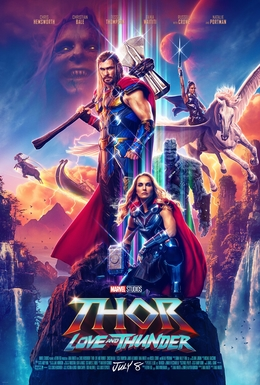
Thor: Love and Thunder is Disney’s latest addition to the MCU and the fourth Thor movie. This is actually a pretty big deal. Thor is the first MCU hero to get a fourth movie outside of the ensemble Avengers films. And Thor as a series had not one, but two lackluster offerings at the outset, only hitting its stride with Ragnarok.
Obviously, trilogies are something of a tradition in film, and with Iron Man dead and the original Captain America retired if not dead by now, there aren’t that many opportunities for a hero to rack up four movies, but Thor has done it and still gotten a “Thor will return” tag after the credits.
But the most important question is, how was the movie? And I’d say it was pretty good. It’s not stellar. It didn’t live up to Ragnarok, but it’s still a pretty solid movie and up to Marvel’s standards.
In this episode, I review the recent history and current status of science fiction on television during the streaming era. TV recommendation: The Orville
My first episode catching up both on classic works of sci-fi that I passed over before, and new works from the past 2 years. These are “short” episodes that will continue intermittently with longer ones.
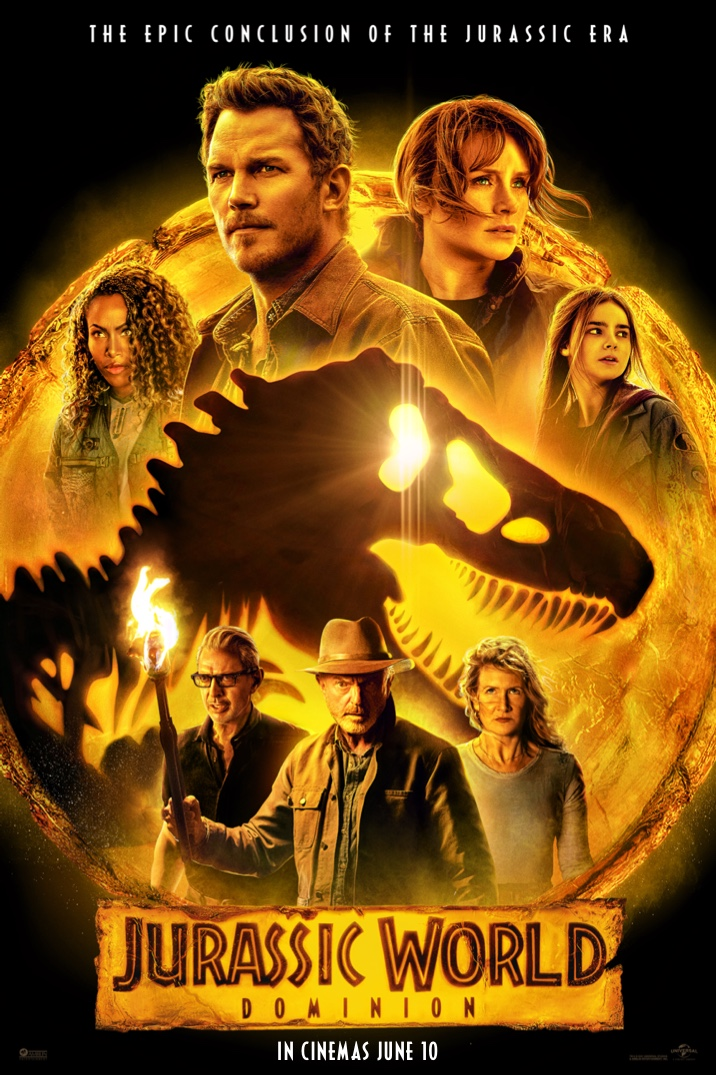
The new Jurassic Park trilogy made big waves when it debuted in 2015. Now, that trilogy has concluded with Jurassic World: Dominion, and things are crazier than ever.
This movie has not been loved by the critics, scoring the worst of the entire series with them on Rotten Tomatoes. However, I quite liked it. In fact, I daresay Jurassic World: Dominion may be the best Jurassic Park movie since the original. (And the audience score on Rotten Tomatoes supports that.) It’s not perfect, but it did a really good job of cleaning up the narrative mess the last movie got itself into.
A Reader’s History of Science Fiction will return next Monday with my interview with Farah Mendlesohn, author of The Intergalactic Playground. Be sure to check it out.
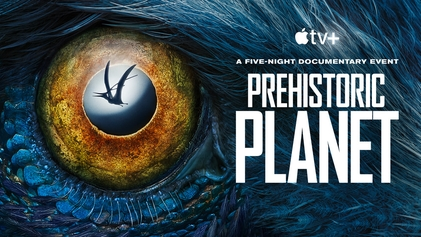
This past week, Apple TV premiered its new dinosaur documentary, Prehistoric Planet. This is a bigger deal than it may sound.
Okay, so, for a long time, the gold standard for dinosaur documentaries was Walking with Dinosaurs, which premiered on BBC One all the way back in 1999. It was an epic piece of work, using CGI on a level that had never been seen before, and kicking off a slew of sequels, plus plenty of similar shows on the Discovery Channel and the like.
It was also very much flawed. Walking with Dinosaurs didn’t showcase the latest science, but instead bowed to the popular conception of what dinosaurs were like (at that time probably driven by the original Jurassic Park more than anything else). Notably, we already knew in 1999 that dinosaurs had feathers, but Walking didn’t use them. (And honestly, for shows that did like Dinosaur Planet, they looked pretty dumb—more like fuzzy chicks than dangerous predators.)
The other thing is that there has been a pretty serious drought in dinosaur documentaries in recent years. I first noticed…probably 4 or 5 years ago that while there had been a lot of them in the 2000s, there were very few after 2011. We hadn’t gotten the opportunity to see the feathered dinosaurs properly updated. And what documentaries there were frequently weren’t up to the same quality of Walking with Dinosaurs. Most of them were shorter, and most of them broke the immersion by cutting away from the dinosaurs for interviews with scientists and video of modern day fossil hunts.
So when I saw the trailer for Prehistoric Planet, I was very excited. Here was the first major dinosaur documentary since (as far as I could tell) 2015, one on the same scale as Walking with Dinosaurs. It looked to be going all-in on the immersion (which later proved right); it had David Attenborough narrating (who turned down Walking With Dinosaurs because he thought it was too speculative at the time), Hans Zimmer on the music, and to cap it all off, feathered dinosaurs that actually look good.
So, yes, this was a big deal. And I have to agree it lived up to expectations. My rating: 4.5 out of 5.



 Science Meets Fiction