Why Hollywood has it wrong

Image credit: Bob Beecher.

Image credit: Bob Beecher.

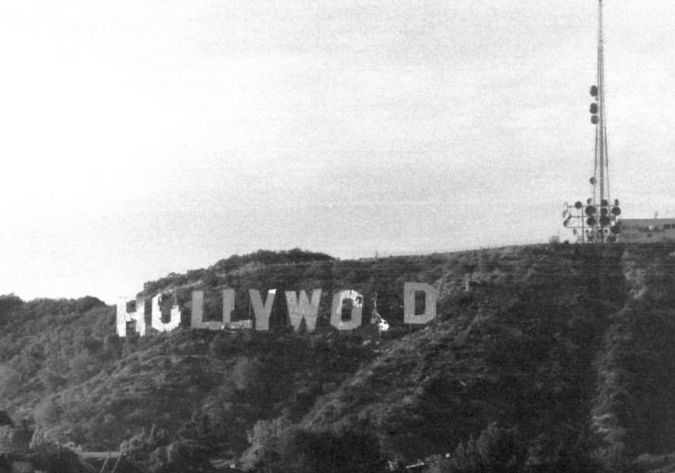
I’ve mentioned before how Hollywood movies suffer from a dearth of originality and how the quality control system in the industry is breaking down. But the biggest problem in this “year of the sequel” is not that there are so many sequels. (After all, Iron Man 3 and Star Trek 12 were pretty good.) It’s that most of them are written badly.

The big studios are very concerned about the number of box office flops they are experiencing this year. Even Steven Spielberg’s and George Lucas’s hyperbolic comments about an impending “implosion” of the film industry seem frighteningly prescient after White House Down, The Lone Ranger, Pacific Rim, and now probably R.I.P.D. have all bombed in the intervening month or so.

That’s the subject of this Telegraph article, which makes much hay about Hollywood’s “summer crisis”. Unfortunately, I think the blame for this crisis is badly misplaced. Consider this quote from a studio head: “You had too many $100 million-plus movies, not to mention $200 million-plus movies, jammed on top of each other. There isn’t enough play time, and the result has been more movies that wipe out.”

That’s just wrong. Well, okay, overloading the market may be partly to blame, since there are plenty of people who, for whatever reason, don’t see very many movies. But as for me, I would have been happy to see 10 good movies this summer. The problem is that there aren’t 10 good movies coming out this summer. There’s more like 5, at least the science fiction/fantasy territory where I mostly (but not always!) like to hang out.

Simply put, the reason so many big movies are failing is that people don’t want to see bad movies. Why so many bad movies get made is hard to say (my money is on too many cooks), but studios simply can’t get away with mediocre scripts anymore–not when we have easy access to wide surveys of reviews. In the past, when you would get most of your information about a movie from the trailer, which of course had all the best parts in it, lots of people would go see it, and you at least had a reasonable chance that word of mouth about whether it was good or not would get around slowly. Today, I don’t put much stock in the trailers, and I dismiss nearly half the movies I consider seeing because the early reviews are bad.

What’s worse is that you can often tell just by looking. Hansel & Gretel: Witch Hunters, Jack the Giant Slayer, and similar dark retellings of fairy tails from previous years have impressive trailers, but you just know that they’re not going to be done well. You almost don’t even need to check the reviews. And that’s sad because the ideas have great potential if they were only given to a writer who new how to use it.

You do have to be careful because the reviewers aren’t always right. Pacific Rim got good reviews, but I found it to be plagued with a shallow plot (again, with lots of missed potential) and abysmal movie science. Meanwhile, Red 2 is getting mediocre reviews, but I thought it was funny, clever, had at least some depth, and was a worthy follow-up to the original. Even so, the nice thing about a survey of reviews is that it’s much more accurate than just one of them. I believe people are starting to realize this, and are adjusting their viewing practices accordingly. Meanwhile, Hollywood remains sadly oblivious.
Posted in Art | Tagged , , , , | Comments Off on Why Hollywood has it wrong

Names, part 2

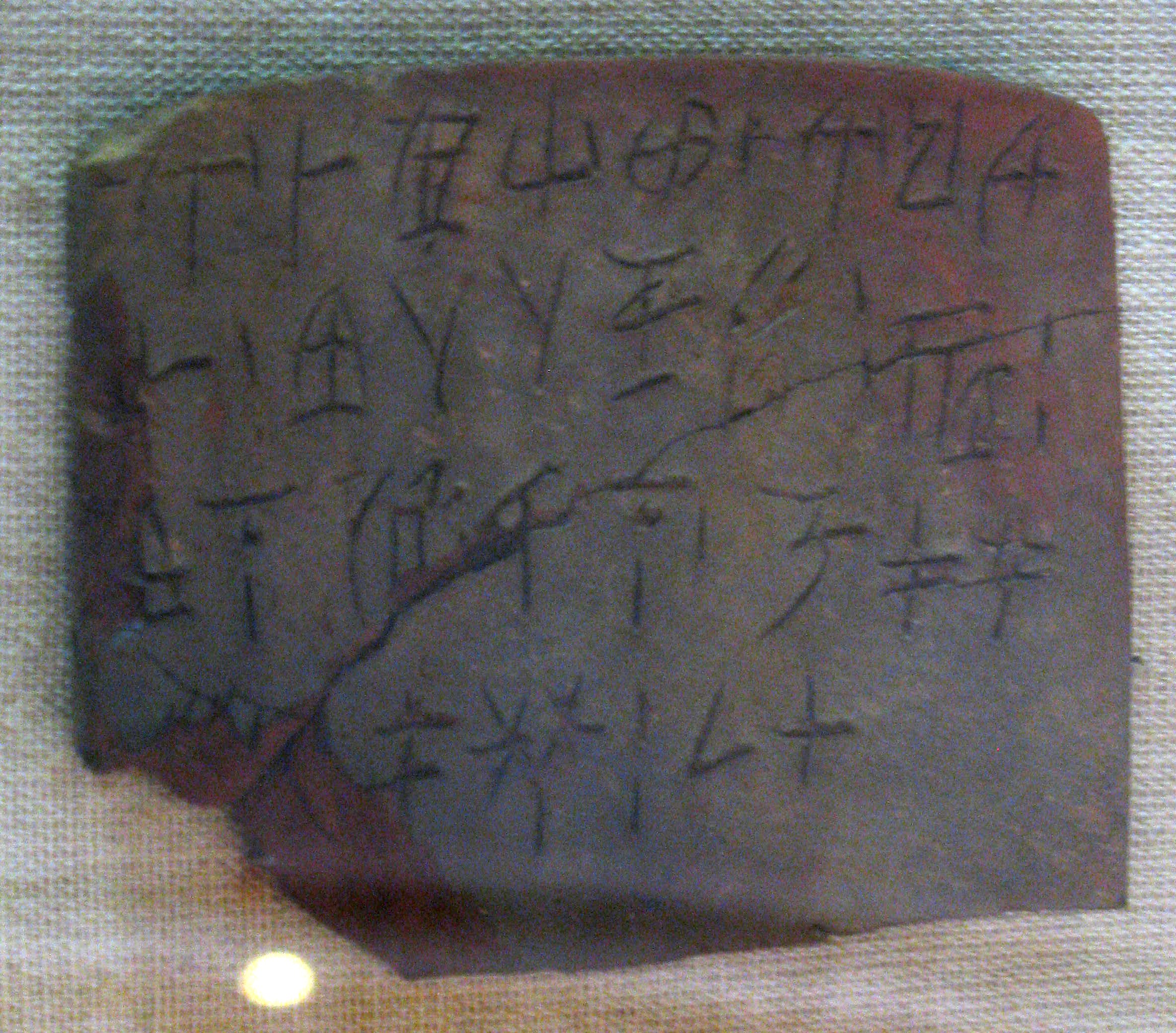
Actually, we have no idea what this says. Credit: Ursus (Wikipedia).

Actually, we have no idea what this says. Credit: Ursus (Wikipedia).

Even when you have lots of resources to find them, names can be hard to get right. One of my recent experiences was particularly nerve-wracking.

I’ve been planning my current project for Camp NaNoWriMo for a while now: a science fiction novel (what else?), and for a long time, my main character’s surname was Newman. But as I started writing seriously, I realized that was far to kitschy for a science fiction piece. So I changed the name to Adams in hopes that it would be a bit subtler.

Adams turned out to have two separate problems. First off, the constructions, Adams’s, Adamses, Adamses’, were just a little too awkward. That might have been okay on its own, but I soon noticed the second problem: I couldn’t write the phrase “Adams Family” with a straight face. So I sat on it for a few days. Finally, I decided to take a different tack and changed the main character’s surname to Franklin. So far, it seems to fit, so I’m hopeful that this one will stick.

Incidentally, my main character is not named after Ben Franklin, but there is another famous Franklin who inspired me to use the name. 1 Internet Point to anyone who can guess who it is.

My Camp NaNoWriMo project is going surprisingly well. I’m on schedule for the first time today, at 21,225 words.

Posted in Writing | Tagged , , | Comments Off on Names, part 2

Comet ISON update

The Hubble Space Telescope has taken new images of Comet ISON, a sungrazing comet that, it is hoped, will become the brightest comet in living memory this December. The video above is probably the best look we’ll get at ISON until it comes out from behind the Sun in September. Looks like so far, so good.

On November 28, Comet ISON will pass less than the Sun’s own diameter from the Sun’s surface, but it will probably survive this intense heat because it’s simply too big to melt all at once. If it does…and if we’ve called it right…it will dominate the northern skies after sunset here on Earth for the next month. In the extreme case, it could become even brighter than the Moon.

The reason ISON is expected to be so spectacular lies in its orbit. Its orbit is very nearly a parabola. That means it started almost “infinitely” far away, in the Oort Cloud, is falling toward the Sun, and would fly back to the Oort Cloud if left to its own devices. But most comets aren’t like than. When a comet passes through the inner Solar System, the gravity of the planets either bends its orbit into a long ellipse or kicks it out of the Solar System entirely.

ISON’s nearly parabolic orbit suggests that it is a virgin comet that has never come near the Sun before. That means it could be loaded with fresh ice that will vaporize and form an especially bright coma and tail, making ISON “The Comet of the Century”. So keep watching the skies.

For those of you who are wondering about my Camp NaNoWriMo exploits, I wrote 15,448 words in the first 10 days of the month, which is only 681 behind schedule. I am cautiously optimistic about finishing it.

Posted in Comets, Current events, Stargazing | Tagged , | 3 Comments

Names, names, names

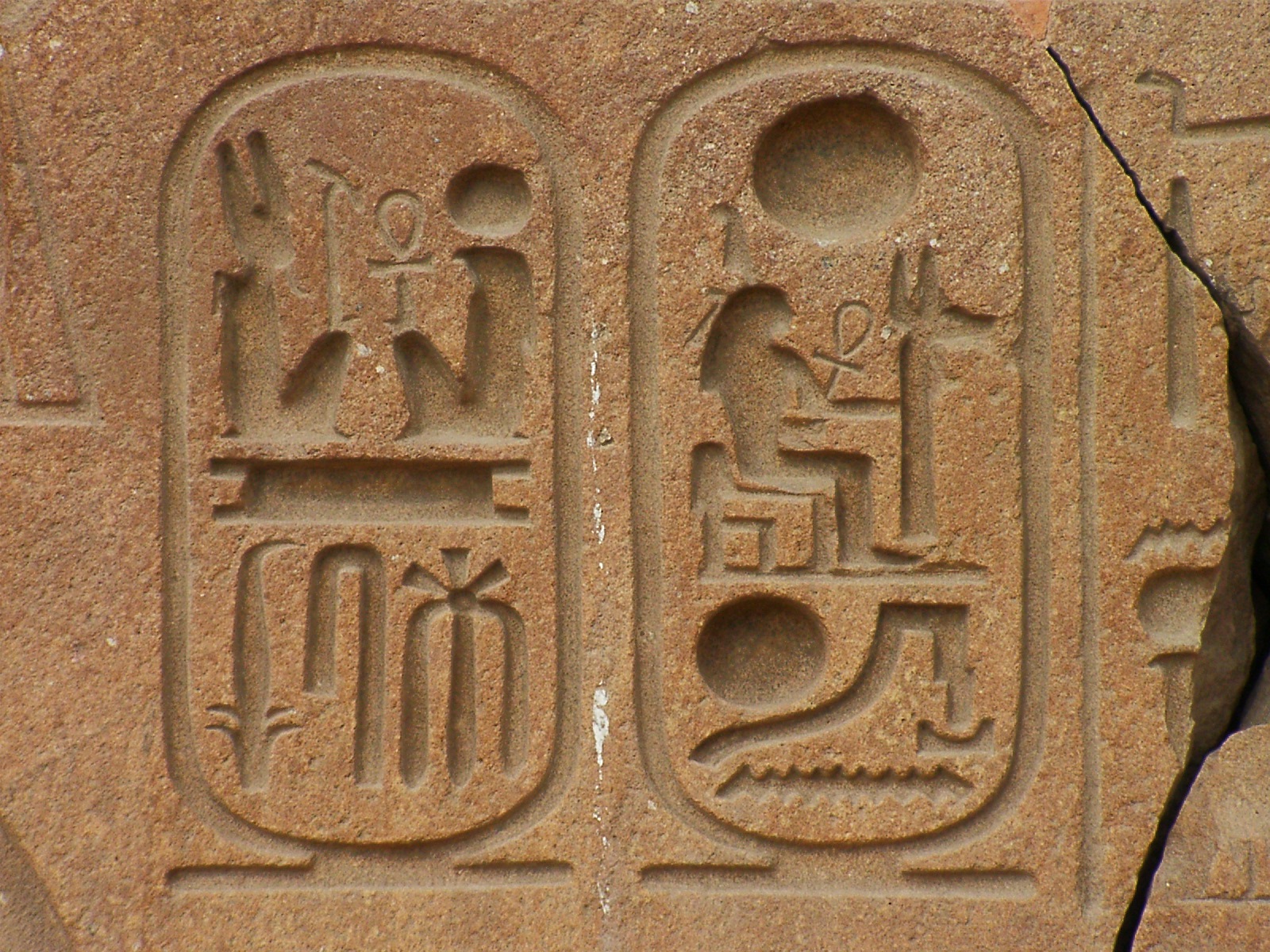
Names done 13th century BC style. Credit: HoremWeb (Wikipedia).

Names done 13th century BC style. Credit: HoremWeb (Wikipedia).

Names are hard. Your characters’ names are often the reader’s first impression of them. They have to sound just right–not just right in general, but right for the character and right for the setting, and they probably shouldn’t share the name of a famous person. Real people might be able to get away with those kinds of things, but it’s a little harder if they live in a book, unless they’re the kind of person who would have a weird name, of course.

How do you pick names? Well, the Internet is a valuable resource. For example, if you’re looking for an America-centric name, the Social Security Administration has a list of the 1000 most popular names by year back to 1880. That’s especially good for finding names to fit the time period. I like to pick something in the high double digits, so it’s not “too common”. Mongabay has a good resource for last names. Based on the U.S. census, it includes even the rarest of names. This can sometimes surprise you. For example, I personally know someone whose last name is shared by only about 100 people in the whole country.

If you want a foreign name, or especially if you want to look up the meaning of a name, you can look to the self-explanatory 20,000 Names. It lists names from all around the world and is a great resource for a lot of major ethnicities. It also comes in handy because I often like to pick a name with some significant meaning to the story, without being too obvious about it. Such names aren’t always available, but it’s usually worth a shot. For last names, the coverage is not as good, but Last Name Meanings and Behind the Name are still worth a look.

If you’re in science fiction or fantasy, though, you might not have those resources. Do you just make things up? I prefer to be a little more systematic. I won’t create a whole language for an alien species, but I will create an alphabet. And I’ll assemble names using the sounds from that alphabet, sometimes even sharing common linguistic roots. Hopefully, that will make the different species appear more distinct and self-consistent.

So that’s how I figure out who my characters are. How do you name them?

Posted in Writing | Tagged , | Comments Off on Names, names, names

Tatooine or bust

When worlds collide in a binary star system. Credit: NASA/JPL-Caltech.

When worlds collide in a binary star system. Credit: NASA/JPL-Caltech.

About half the points of light you can see in the night sky are binary star systems: two stars (sometimes more) orbiting each other. Sometimes, these stars are far apart, and planets can orbit just one of them with no problem, but are there any planets that orbit around both stars in a binary system?

Well, PSR 1620-26 b does, but pulsar planets are weird and don’t really count the same way other planets do. For a while, astronomers thought we might not find very many of these “circumbinary planets” that orbit around both stars. That’s because they looked at a certain type of binary stars called RS Canum Venaticorum variables and found that some of them have big, thick disks of dust around them, much bigger than our own asteroid belt. It’s believed that this happens because the gravity of the two stars makes the orbits of their planets unstable, causing them to collide. These stars are called “destroyers of worlds“.

But a year later, Kepler-16b was discovered. This is a Saturn-sized and decidedly not destroyed circumbinary planet orbiting both stars of the Kepler-16 system. We’ve discovered at least 16 of these circumbinary planets, now. This fits well with the theoretical estimate that a planet’s orbit will be stable if it is at least five times larger than the distance between the stars (or five times smaller if it orbits just one star). It looks like half the stars in the sky being binaries won’t cut down on the planets much at all.

Posted in Planets | Tagged , , | Comments Off on Tatooine or bust

How to be a writer: how much feedback?

Photo credit: gigijin (Flickr).

Photo credit: gigijin (Flickr).

Who should you ask for feedback on your story or novel? Some of them should be fellow writers, so you can be sure they’ll take a critical eye. Some of them should be your target audience, so you can be sure you’ve written your genre well. Ideally, one or two should have a career in English, so they can catch all of your mistakes (and you will make mistakes).

But how many people should you ask for feedback? It should be at least a few, so you can get multiple opinions. If you can find a lot of people who want to read your work, great. David Brin, for example, has about 50 beta readers who he sends all his novels to. But there is one piece of advice that I would strongly recommend.

Don’t send your writing for feedback to everyone who’s interested.

That seems a little counterintuitive. Why wouldn’t you want as much feedback as you can get? It’s simple: you might write something else.

Basic courtesy says you should only send people one thing to review at a time, especially if it’s a novel. If you send your novel to everyone in your social circle who has the time and interest to read it, and then you write a short story in the meantime, you won’t have anyone else to send it to. I learned that the hard way.

So don’t go overboard while looking for feedback, and in the meantime, keep writing.

Posted in Writing | Tagged , | 1 Comment

I’m doing Camp NaNoWriMo next month

Photo credit: Ken Whitley.

Photo credit: Ken Whitley.

National Novel Writing Month is becoming a bigger and bigger deal every year, with over 300,000 writers writing 3 billion words last November. But for people in academia, like me, November is one of the worst months of the year for a big project, especially for a hobby (probably only April is busier).

That’s why there’s Camp NaNoWriMo. If you’re not likely to get much spare time in November, or if you just want some extra months to get in on the action, you can still take the challenge in one of NaNo’s summer programs. This year, Camp NaNoWriMo is held in April (see above) and July. The goal is the same: write 50,000 words in one month (although in July you have one extra day to do it).

I decided to go for the 50,000 word goal for the first time this year in order to seriously start a new project that I’ve been wanting to write for a while. I might not be using the formal website, partly because I’m already about 8,000 words in, but I’ll be sure to keep you up to date on this blog.

Can I do it? It won’t be easy. Only about 1 in 7 people who try NaNoWriMo actually succeed, and I do have a day job to worry about. But last July, without any specific goals, I managed to write 28,000 words, so I think it’s definitely within reach.

Wish me luck, and good luck with your own writing.

Posted in NaNoWriMo, Writing | Tagged , , , | Comments Off on I’m doing Camp NaNoWriMo next month

In the sky: the perigee Moon

A comparison of the full Moon at perigee with an average full Moon. Credit: Marcoaliaslama (Wikipedia).

A comparison of the full Moon at perigee with an average full Moon. Credit: Marcoaliaslama (Wikipedia).

It’s that time of year again. Time for another round of stories to circulate about the alleged “supermoon”–if by “super” you really mean the Moon’s at perigee.

Perigee is the point where the Moon is at the closest point in its orbit to Earth. Since the Moon’s orbit is pretty close to a nice, neat ellipse, this happens every month. It happens during the full Moon (give or take a day or so) once a year, which the Internet has unilaterally decided to call the “supermoon“.

This year’s perigee Moon comes this Sunday, June 23. (Perigee comes 41 days later each year, since the Moon’s orbit isn’t quite a nice, neat ellipse.) Since it’s closer to Earth than usual, the full Moon will appear 7% larger and 14% brighter than average. And in the most “super” effect, tides could be as much as 18% high than average for a full Moon.

That’s not very super, but you should still go and check out the Moon this weekend because the Moon is pretty cool. After all, it’s the only place in space we’ve sent people to.

But while you do, please be considerate of the astronomers.

Posted in Stargazing | Tagged , , | Comments Off on In the sky: the perigee Moon

Welcom to the Future, Part 2: Star Trek Continues

Photo credit: Farragut Films, Dracogen Strategic Investments and Vic Mignogna.

Photo credit: Farragut Films, Dracogen Strategic Investments and Vic Mignogna.

Fan-made Star Trek films and web series are nothing new. The first ones hit the Internet way back in 2000. However, a quick survey of these productions reveals that most of them suffer from substandard script-writing, substandard acting, or both, to say nothing of the special effects.

Not so for the latest fan series, Star Trek Continues. This series aims to produce the cancelled final two seasons of the Enterprise’s original five-year mission. You can watch the first episode, “The Pilgrim of Eternity”, here.

Simply put, Star Trek Continues is the best fan series out there. The only thing that comes close is probably Star Trek: Of Gods and Men, which also happens to have by far the highest concentration of original series actors. Continues doesn’t have that advantage, but they do have real actors on their team, and they have worked hard to capture the feel of the original Star Trek, from Vic Mignogna’s spot-on replication of William Shatner’s infamous acting to, yes, even the cheesy 1960s special effects.

“The Pilgrim of Eternity” may still be a little rough around the edges, and the implied 2 or 3 episode per year production schedule is not encouraging, but I’m eager to see how the series develops.

So why does this show that we’re living in the Future? Because it shows that we are reaching the point where a bunch of amateurs with an Internet connection (and maybe a Kickstarter campaign) can compete with professional studios. Combine that with Steven Spielberg’s and George Lucas’s prediction of the impending implosion of Hollywood, and we could be in for the biggest media shake-up since…well…the Internet.

To be sure, we have a long way to go. Good luck moving special effects much past 1990 without a professional team, for example, but we are getting there. Let’s leave aside for a moment the inevitable copyright debacle* and the emerging problem of quality control. Just imagine the world 10 or 20 years hence, when it becomes economical for fans to made their own full-length films and TV series, for no cost beyond donations, which are better written and almost as well executed as what the big networks put out.

What will the landscape look like then, especially in science fiction, where it’s easy to get a cult following? Star Wars prequels that are actually good? A remake of Firefly? (God willing!) Or, failing those, how about original, intelligent series that rival anything the cable networks put out, but which don’t have the sword of cancellation hanging over their heads for anything besides actual quality? What do you think? What do you want to see from the new media?

It may sound optimistic to some, but I say it’s already started. Welcome to the Future.

*Expect the whole copyright mess to come to a head sometime between now and 2023, when the first Mickey Mouse cartoons hit public domain.

Posted in Technology, Welcome to the Future | Tagged , , , , | Comments Off on Welcom to the Future, Part 2: Star Trek Continues

Supreme Court rules human genes are not patentable

Protein produced by the BRCA1 gene. Source: Emw (Wikipedia).

Protein produced by the BRCA1 gene. Source: Emw (Wikipedia).

In what is widely seen as a victory for science and medical research, as well as common sense, the Supreme Court of the United States ruled unanimously today that human genes cannot be patented. (Read the opinion here.)

At issue was the patent held by Myriad Genetics on the BRCA1 and BRCA2 genes, mutations in which are known to cause breast and/or ovarian cancer in most people who have them–a condition recently publicized by Angelina Jolie’s decision to have a preventive double mastectomy after learning she had such a mutation.

Myriad’s patent was specifically on the genes as isolated from the human genome (since the “natural state” cannot be patented). Because of the patent, no one could produce the isolated genes without Myriad’s permission, which meant no one could test for them without Myriad’s permission. Myriad charges nearly $4,000 for a complete test, placing it out of reach for many women without insurance.

Even more worrying was that the prohibition on isolating the genes made it virtually impossible for medical scientists to conduct independent research on them, such as peer reviewing Myriad’s results, creating more reliable tests, and even devising better cancer treatments.

The Association of Molecular Pathology, along with researchers at several major universities, sued Myriad Genetics to invalidate the patents and open up new lines of research. After some conflicting decisions in the lower courts, the Supreme Court ruled today what most geneticists said was common sense–that the isolated gene is identical to the gene in the body and therefore is not eligible for patenting.

The arguments before the Court were thick with analogies. Can you patent pure gold refined from gold ore? Can you patent a baseball bat “isolated” whole from a piece of wood? These cases are obvious, but genes lie somewhere in the middle. Indeed, the Court ruled that synthetic or engineered DNA could still be patented, including a certain type of copy called cDNA.Myriad had argued that revoking patents on human genes could itself stifle innovation by removing economic incentives, but by retaining the cDNA patents, they retain control of some testing and copying techniques. Meanwhile, the loss of the patents on the natural genes opens up new avenues of research that people have been specifically waiting to get started.With the number of 5-4 rulings they turn out, the Supreme Court has something for everyone to hate, so it’s all the more refreshing to see them put up a unanimous show of common sense today.

Posted in Biology, Current events, Medicine | Tagged , , , , , , | Comments Off on Supreme Court rules human genes are not patentable