In the creation-evolution debate, you’ll often see creationists dismiss evidence for evolution after finding some fault with it, as they often do for transitional fossils. But something else you’ll see a lot is reexplaining evidence in a way that fits it into the Creation story.
As a writer, I can tell you that this can be fun. It’s like a puzzle, finding a way to make all of the pieces of a story fit together. But fiction is a forgiving medium, and science is not, and if you dig into it, you’ll soon find that creationist reexplanations usually don’t hold water. One such point that comes up a lot is this:
As I’ve writtenbefore, back in January, I made several New Year’s resolutions, but I later wound up adjusting them every three months. All year, I’ve been trying to set goals for myself that are ambitious, but doable—particularly to improve my writing speed, but also for other things. It always seems to take about three months for me to see where things need to change, either because I miscalculated at the beginning, or because of external changes in my life. So this is my third report this year as to my progress on these resolutions.
I’ve decided I’m going to try to be more
honest this time about how my progress is going and cut some things to focus
more closely on the others. I’m hoping I can springboard from this to something
more substantial in 2020, but time will tell.
First off, my “New Year’s” resolutions for the year as of July 1 stand as follows:
Exercise 30 minutes (at home) at least 3 days per week, except when I’m traveling. One of them must be Monday, Tuesday, or Wednesday. Completion rate: 23%.
Send 2 query letters for my novels to agents per month. Completion rate: 67%.
Read at least 3 chapters of different books per week, including one audiobook. Completion rate: 96%.
Publish at least 1 blog post per week. Completion rate: 87%.
A complicated set of weekly and monthly writing goals that I did not list in detail. Completion rate: 73%.
Write at least 250 words immediately after dinner on days when I don’t have something else going on. Completion rate: 94%.
Obviously, the exercise thing never really worked out. It seems like that would be the first thing to go (and fittingly so since it’s by far the most cliche resolution on my list). But I want to try to make one more push on it starting tomorrow, especially since I’ve moved and can’t walk to work anymore, so I’m going to keep it.
As for the others, these numbers look
pretty good, considering so many people’s New Year’s resolutions fail by February.
However, my point in setting these goals was to make them things I’d be able to
finish 100%, so I do want to subject them to closer scrutiny.
For the query letters, that’s fallen behind because
I’ve already taken care of the low-hanging fruit. The remaining agents who are
of interest want more complex queries that take time to write, and between that
and getting sidetracked with moving, I fell behind. I’m also far enough into
the process that I want to start looking at how to go about self-publishing. I
still want to try to move on that by the end of the year, but it’s at a point
where I can’t really make it a routine task. Therefore, I’m going to drop that
one as a resolution, though I’ll keep working on it.
One of my goals was to read a chapter from
three books each week. This was increased from two before, but I’ve now finished the
extra books I wanted to read, and I feel the need to do something else. In
particular, I never finished watching the last season of Doctor Who, andI need to finish
watching it before Christmas, when the new Christmas special will be out. This
one fell by the wayside because I found it hard to set aside an unbroken hour
of time to watch it. Mind you, it’s not really that hard, but I had a hard
time stopping to focus on it on a weekly basis when I was always trying to
catch up on my writing goals. I mentioned before that’s the same reason I never
really picked the exercise back up. So my new goal is to watch at least one
episode of Doctor Who per week. And when I run out of Doctor Who episodes, well, I always meant to watch Season 2 of The Orville and never got around to that
either, so I can use that to fill in the space.
My blog is coming along pretty well. I
always have enough half-finished posts to meet my goal (although I’ve been a bit
sidetracked working on a big project for next year). I just need to be more
diligent about finishing them.
Likewise, adding my daily writing goal has
been a good move. Sadly, it hasn’t done that much
for my total word count, but it has
helped me get back into the rhythm, so that stays.
Finally, at the beginning of the year, I
set a monthly writing goal that I chose not to detail. I made it monthly
because that is how National Novel Writing Month does it. However, I rarely
managed to meet it, and because of my schedule and workflow, I’ve decided a weekly writing goal will work better for me. And the complex set of
subgoals I was trying to juggle have ultimately proved unworkable for similar
reasons to the query letters. So I’m just going to cut through them and come
out and say it this time: my new goal is to write 5,000 words per week. That
includes blog posts, my novels, long-term projects that may or may not be
published, and writing for my personal use that definitely won’t be. It’s all
just about getting my word count up, but I do hope it will lead to knock-on
effects like more reliable posting.
So finally, here is my new set of goals for
the remaining quarter of 2019:
Exercise 30 minutes at least 3 days per week, except when I’m traveling. One of them must be Monday, Tuesday, or Wednesday.
Read or watch parts of 3 different stories per week, including one paper book, one audiobook, and one television episode from my backlog.
Publish at least 1 blog post per week.
Write at least 250 words immediately after dinner on days when I don’t have something else going on.
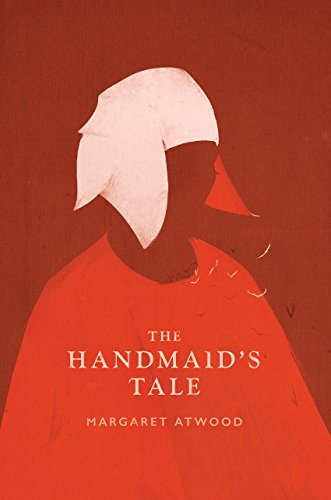
The Handmaid’s Tale is the famous dystopian novel by Margaret Atwood in which a radical theocratic regime has taken over America, brutally oppressing everyone who isn’t a Reconstructionist “Christian,” but particularly focusing on women. Since the book was released, and especially since the launch of the Hulu series based on it, feminists have been using it to protest policies and politics they oppose—things like restrictions on abortion, the Supreme Court nomination of Bret Kavanaugh, and the perceived anti-women attitudes of Donald Trump.
I feel like this is an interesting and somewhat misplaced move—not because of the merits of the policies themselves. (This isn’t a political blog, and I’ll admit that the red Handmaids’ costumes are a powerful symbolic image.) Instead, I’m thinking about two factors stemming from the story itself. First, as I described in my review, The Handmaid’s Tale was not meant to be overtly feminist nor political. And second, I think it is a dystopia of a very different kind from the earlier classics—one that is not a direct warning to the readers, but instead asks thought-provoking questions—questions I believe are just as important as its acquired political message.
You don’t see many movies like Ad Astra these days—movies that depict space exploration in the future, but in the forseeable future. Ad Astra falls in that narrow, but vital window in storytelling with Gravity, Interstellar, and The Martian in showing what could be rather than what has been (Hidden Figures, First Man, etc.) or what probably can’t be (Star Wars, Valerian, etc.). This is the kind of movie that we hope will inspire people to explore, not just entertain them.
Unfortunately, while Ad Astra is a cinematic achievement, it doesn’t actually do those
things that well.
My rating: 3 out of 5.
In an ambiguous “near future” in which humankind has colonized Mars and made the Moon a tourist destination (and spawned Moon pirates, apparently), astronaut Roy McBride is tasked with contacting his father, Clifford, long presumed dead at Neptune, who seems to be involved with mysterious electromagnetic surges that threaten the entire Solar System. These surges are by far the most outrageously nonsensical “science” of the film, which otherwise gets things mostly right. The offered explanation doesn’t even match what is shown on screen! But in response to them, McBride is led on a harrowing journey both across the Solar System and personally to reconciliation with his father.
The good part of this film is that it shows (in my opinion) such a plausible depiction of colonization of the Solar System. I won’t quite say “realistic” because realistic would be cramped underground tunnels that look more like a submarine than an airport terminal. But from a suborbital fall ripped straight from Felix Baumgartner’s 2012 stunt, to a well choreographed and silent high-speed chase on the Moon, to a beautiful if slightly stylized depiction of a mission to Neptune, a setting you don’t see very often, the look of the film is very real. Even with the scientific errors, I only really begrudge them the “surges” mess.
The bad, however, is (to start with) that the film is very slow-paced. I still rather enjoyed it, and if that were the only problem, I would have rated it higher, but you have to have the right attitude going in to appreciate it. There’s a certain class of science fiction that you’ll see in books like Mission of Gravity, Helliconia Spring, and The Left Hand of Darkness, where to varying degrees, the planet is the main character, not the people. I enjoy those kinds of books because they bring a sense of wonder that few others do. (Granted, I do need some characters. In books like Helliconia Spring where it starts to skip across decades or centuries of time, I lose interest fast.)
That is the feeling I get from Ad Astra. That’s not actually what kind of story it is. The movie is very much about Roy and Clifford, their relationship, and the concept of fatherhood, but seeing the Solar System colonized like that brings that same sense of wonder, and I don’t mind the story taking its time with it.
However, that’s not the only problem with this film. The
other big problem, the one that really hurts it in my mind, is that the writing
is substandard. The whole plotline with Clifford and what he’s been doing doesn’t
make a whole lot of sense, and the way each of the two men go about resolving
it doesn’t feel like it fits their characterization up to that point. In fact,
I’m not entirely sure what gets resolved in the end.
It’s this substandard writing that really
bumps this movie down to so-so for me, but thus qualified, if you’re into this
kind of sci-fi, I still think I can say it’s worth a matinee or rental price to
see it and enjoy it as a treatise on exploring the Solar System.
I’ve spent the past few years reading (okay, mostly listening to audiobooks) through a long list of classic science fiction novels (more on that at the end of the year), but I’ve put off reading Margaret Atwood’sThe Handmaid’s Tale almost to the end of that list because I didn’t think I would like it very much. With my limited knowledge of the subject matter, it really didn’t sound like it would be up my alley. But I finally read it, and I have to say, it’s a lot better than I expected.
(Note that I haven’t seen the Hulu series.
This review is only about the book.)
Before I read The Handmaid’s Tale, I had the impression that it was anti-Christian propaganda.
Granted, the people shouting this the loudest are all to my political right, so
you might want to take that with a grain of salt. But as a Christian, when you
hear that the book is about a dystopian, theocratic state that claims to quote
the Bible, but engages in extremely un-Christian practices like keeping concubines (though they deny that’s what the Handmaids
are), you kind of have to wonder.
But having read it, I am confident in saying The Handmaid’s Tale is not anti-Christian. It becomes abundantly clear early on in the story that Gilead, the dictatorship that has overthrown the U.S. government, is not genuinely Christian, as Atwood herself has said in the past, and is opposed to all mainstream Christians, even conservative ones like Baptists. Moreover, Atwood, though an agnostic, herself, praises the values of Christianity as Jesus taught it, and she has specifically said that her book is not meant to be anti-religious. Instead, it’s a statement (and a thought experiment) about totalitarianism, just like most of the other dystopias. And you don’t have to take my word for it; my Catholic readers may be interested in this review written by a friar who comes to the same conclusion. And it’s a pretty good book, too.
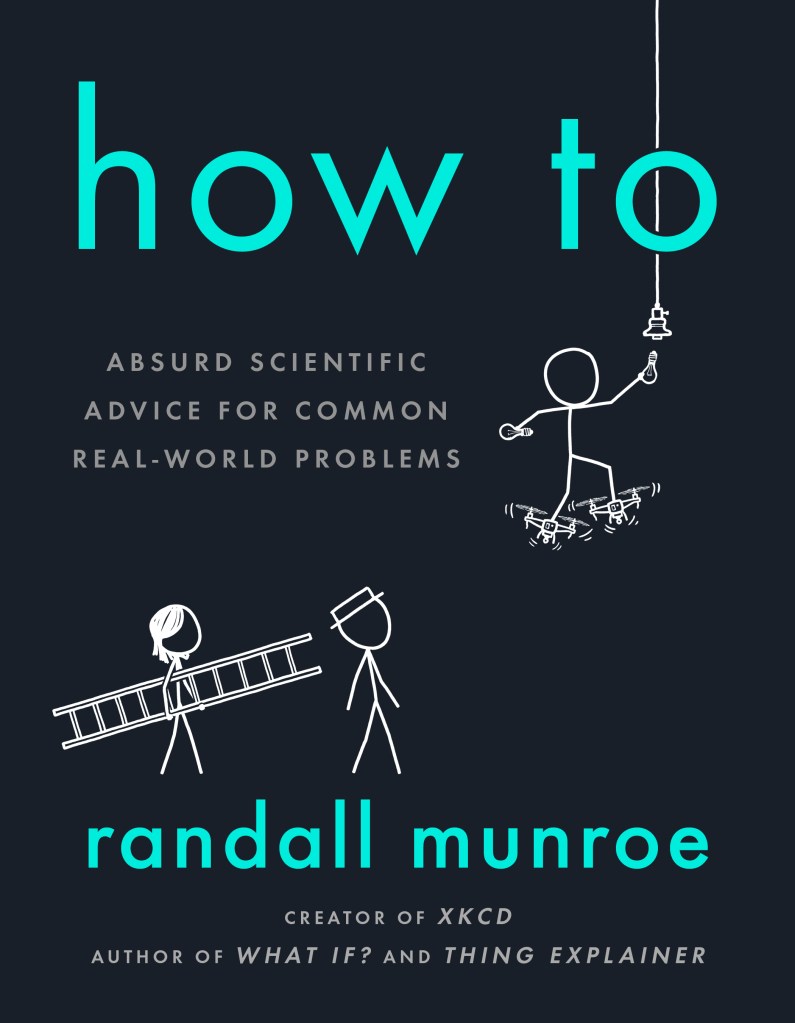
Randall Munroe, writer of the popular xkcd webcomic has released his latest book, How To. I previously reviewed his book, What If? which gave scientific answers to absurd questions submitted by readers. I also wrote a series of posts answering questions from that book that Randall declined to answer. (Start here if you want to read them.)
How To is sort of the opposite of What If? Instead of serious answers to absurd questions, it gives absurd answers to serious questions (although both are powered by science). For example, Chapter 1 is titled, “How to Jump Really High.” Randall suggests getting a sailplane and jumping off a mountain for best results. And things get plenty weirder than that.
I was hoping How To would have some unanswered questions that I could follow up on like I did with my “What If? Rejects” series, but sadly, it doesn’t. The closest it comes is a few how-tos in the form of comic strips that are scattered throughout the book, but even those don’t leave a whole lot to add.
Even so, I enjoyed the book. It had a lot of the same absurdist humor and interesting scientific trivia as What If? and even though it’s not quite as good, it’s still a pretty fun read, and if you’re a fan of xkcd, I definitely recommend it.
No, this isn’t actually a mutation, but it does illustrate the point.
In the creationism-evolution debate, one of the most common creationist talking points is that random mutation cannot be the driving force behind evolution, either because it is too unlikely to happen by random chance, or because mutations can’t make any substantive changes to lifeforms. Now, this ignores the fact that evolution doesn’t have a “direction” or “goal” in mind that mutations must fulfill, but that’s really irrelevant. The underlying point, as it is usually formulated, is a very clear assertion that evolution is impossible in principle because random mutation just can’t do it.
This point really comes in two parts:
“There are no beneficial mutations,” AND “Mutations can never add information to the genetic code.”
According to proponents of evolution, PRATTs are Points Refuted a Thousand Times—arguments by creationists against evolution that are easily refuted, yet keep coming up again and again. I’ve dissected a few of them so far to try to figure out what underlying misconceptions make them so hard to get rid of. Sometimes, it’s vague or unclear language that lets them sidestep the counterarguments, so if you want a more productive debate, you have to be very precise about your language. In the case of micro- versus macro-evolution, creationists mainly say that evolution is unbelievable or unreasonable. In that case, I feel like the way to move forward is to shift the argument from the facts to the plausibility of evolution’s claims so that it can’t be dismissed so easily.
Now, it’s time to get into the actual evidence for evolution and tackle perhaps the biggest, most widely used, and most bitterly debated PRATT in this field:
I’m slowly moving forward with my series about evolution. In my previous posts, here and here, I’ve tried to explore why debates between evolution and creationism are so unproductive. One thing I’ve noticed is people on both sides of the debates being sloppy with their language and poking holes in their opponents’ arguments that wouldn’t have appeared with more careful wording.
Today, I want to follow on from my second post and get into the substance of the debate, addressing specific, often over-played points that Creationists bring up. The argument I want to dissect today is:
If you haven’t heard of Shad Brooks, you should really check him out. He’s probably best known for his YouTube channel, Shadiversity, where he talks about all kinds of medieval swords, castles, fantasy literature, and related topics. Though an engineer by trade his background is in architecture, he is amazingly knowledgeable about medieval armament, and I’ve learned things from him that are useful even in science fiction writing.
However, Shad isn’t just an engineer and a medieval enthusiast. He has written a fantasy novel of his own, relying on his extensive knowledge. Shadow of the Conqueror, Book 1 of The Chronicles of Everfall, is now available for sale on Amazon, Audible, Barnes & Noble, and probably others. Everfall offers a unique fantasy world that isn’t like anything I’ve seen in total, but includes brilliant worldbuilding, authentic historical lifestyles, and some of the favorite fantasy tropes reconstructed in a rigorous way.
Now, I’ll admit, the book had a rough start. Shad’s exposition felt stilted and forced for maybe the first five chapters—more like he was explaining his world in one of his videos than actually telling a story in it. (And his dialogue could use a bit of work, too.) I much prefer stories that throw you in the deep end and tell you only what the characters see, leaving you to piece things together from the context. It can be tricky to pull off, but when it’s done well, it makes you feel like you’re really there. I don’t think Shad needed to go all the way there, but showing rather than telling at the beginning would have been a big help.
But for all that, once you get through the first few chapters, Shadow of the Conqueror is a pretty good story from then on. I was worried at first, but it really picked up by the end.





 VS
VS

 Science Meets Fiction