Television review: Cosmos: A Spacetime Odyssey

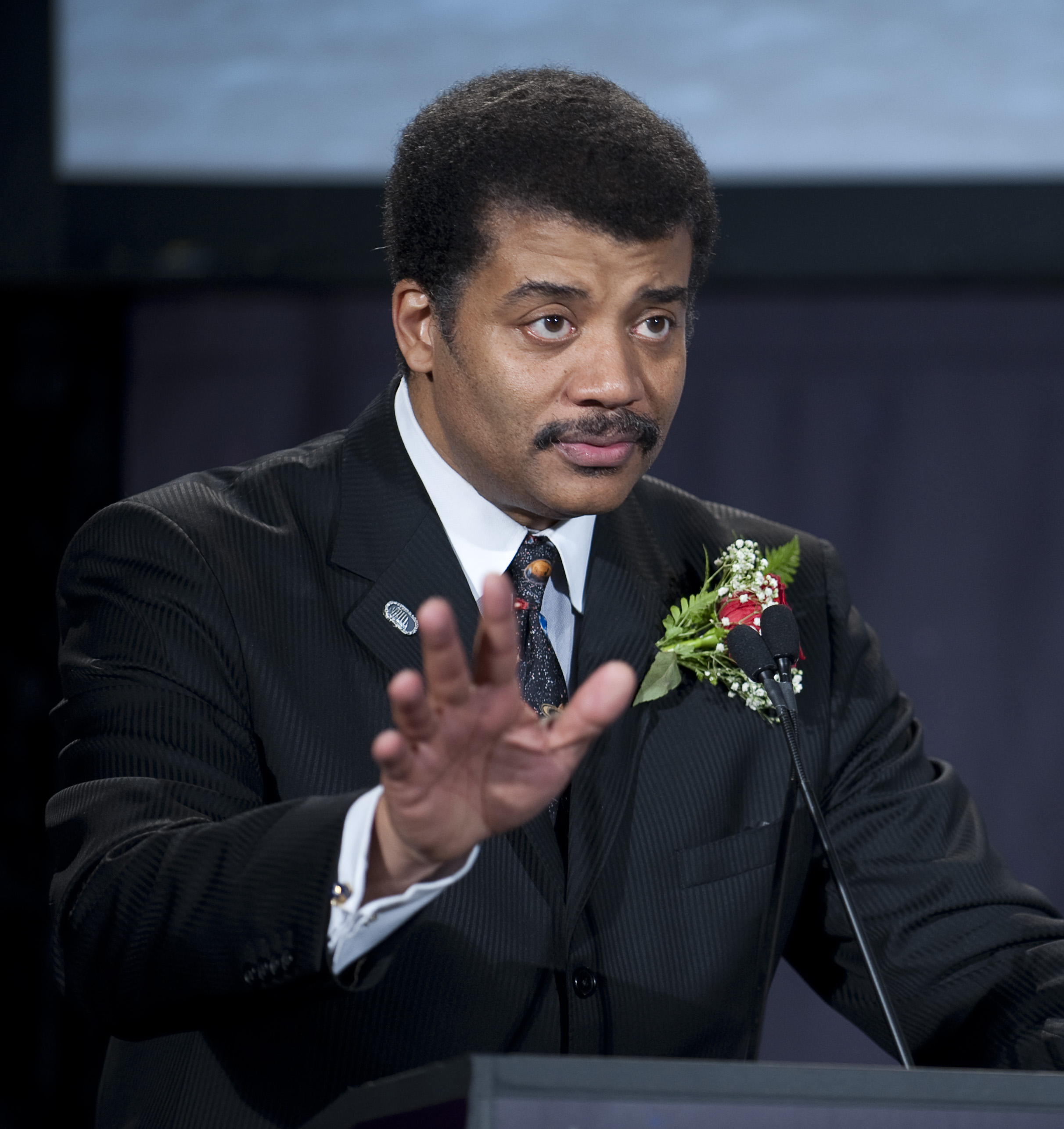
Cosmos: A Spacetime Odyssey, Neil deGrasse Tyson’s long awaited sequel to Carl Sagan’s Cosmos: A Personal Voyage premiered on Sunday. For those of you who have not seen it, you can watch the full episode on the website.

My feelings on the opening episode are complicated. I’ve never seen the original Cosmos all the way through, but I’ve seen enough of it to get a feel for the style, and I’ve read most of the book. It’s also been a while since I’ve seen much other popular science programming, so my views of the genre may be a bit skewed. I felt like the content was a bit light by those standards, but since this is a miniseries in which each episode (hopefully) builds on the previous ones, this is less of a problem than for a more episodic type of show.

The first thing you might notice about the new series is that it’s on a for-profit network rather than PBS. That means the episodes are 44 minutes long instead of 60 minutes. This by itself is not a bad thing. However, there were times when the episode felt like it was trying to squeeze 60 minutes of content into the 44 minutes. The slow, leisurely pace of the original Cosmos was one of its appeals, and that is not carried over into the sequel as it could be.

For the most part, I don’t begrudge Dr. Tyson this. While I believe he does have the gravitas to match Dr. Sagan’s style, his style is his own, and is markedly different, including quicker. The problematic part, in my opinion, was a script that glossed over a couple of key points: using the terms “cosmic address” (a listing of our place in the universe from Earth outward) and “cosmic calendar” (the analogy of scaling the lifetime of our universe to one year) without explaining them. While the descriptions were clear, the premises were a bit muddled.

That said, I enjoyed the show. The fundamental point, to ground the view firmly in our place in the universe in space and time, was explained clearly and thoroughly (if a bit rushed), and, in many respects, quite beautifully. Beginning and ending with quotes from Carl Sagan was a nice nod to the original series, and Dr. Tyson’s touching tribute to Dr. Sagan was perhaps the best part. I remain optimistic about the rest of the new Cosmos, and I am eager to see more.

My rating: 4.0 out of 5.

Posted in Current events, Science, TV Reviews | Tagged , , , | 1 Comment

The new Cosmos series premiers!

In 1980, the great astronomer and popular science figure Carl Sagan (top) premiered the acclaimed PBS series, Cosmos: A Personal Voyage, which introduced millions of people to the wonders of the universe for the first time. It remained the most watched America television series ever until The Civil War a decade later, and it has now been seen by over 500 million people worldwide.

Now, at long last, a sequel has been made, updated with modern special effects and the astounding astronomical discoveries of the past 34 years, from dark energy to exoplanets, and more. Cosmos: A Spacetime Odyssey begins tonight, hosted by the one living astronomer who can possibly match Carl Sagan’s popular recognition: Neil deGrasse Tyson.

The new Cosmos series will air on the Fox Network (and if that surprises you, that’s exactly why–to get a new, unreached audience) and the National Geographic Channel. Sadly, I do not get cable here, so I’ll be updating with other ways to see it in the coming days.

I had the good fortune to meet Neil deGrasse Tyson personally to discuss the show while it was in progress, and I was encouraged by what he said. I have high hopes for Dr. Tyson’s performance as a follow-up to Dr. Sagan’s, incorporating not just the science, but also the history behind it and the deep questions it raises about our future.

Whether you’re new to the wonders of the universe or a long-time lover of the original, I strongly urge you to see this update to one of the classic series of all time.

Posted in Art, Current events, Science | Tagged , , | Comments Off on The new Cosmos series premiers!

Another look at names

A while back, I wrote about the various resources I use to select names for characters. Now, I’d like to add one more: the Baby Name Wizard Blog. This blog is about much more than helping parents name their kids. It digs deep into interesting trends of all sort, breaking things down in far more detail than the other sources I usually use.

For example, the Social Security Administration will tell you the relative popularity of baby names by year, but without a lot of effort, it won’t tell you that a third of American boys today are given names ending with ‘n’, or that white boys are almost universally are given names with stress on the first syllable, while names with stress on the second syllable, traditional or otherwise, are now found mainly in the black community. Names have very complicated associations with race, socioeconomic background, and history that people generally don’t consciously notice, but would be critical if you want to make the right impression with you character. Or, conversely, you can give your character an incongruous name to make them stand out.

Some websites list names by language, but that won’t tell you that modern British names tend to be “cute” names like Alfie, while American names are more formal, like Landon.

And then there are the fascinating tidbits about the oddities of our time. There is a definite trend toward uncommon or “made up” names in America over the past fifty years. Nevaeh has now become so common that people are creating variants of it. Yet “weird” names are also apparently on the rise in Sri Lanka, not to mention the four-generation cycle of names.

You can even find (semi-) political commentary, if that’s your cup of tea, like this analysis of the name of Pope Francis. If you care a lot about your characters’ names, or just the sociology of names, it’s definitely worth a look.

Posted in Writing | Tagged , | Comments Off on Another look at names

Planets abound!

Image credit: NASA.

Image credit: NASA.

It’s always fun when a government agency uses the word “bonanza” in a press release.

NASA’s Kepler space telescope spent mission spent three and a half years observing distant stars in our galaxy looking for planets crossing in front of them, until a faulty piece of equipment stopped it. It has started up again with its new K2/Second Light mission, which will do the same thing, but with brighter stars and planets with smaller orbits.

In the meantime, scientists have been working feverishly to analyze Kepler’s initial three and a half years of data. To date, somewhere around 3,600 possible planets have been identified in the data, but only a couple of hundred have been confirmed.

But today, NASA has confirmed Kepler’s discovery of 715 planets orbiting 305 stars, blowing the total number of confirmed planets from all observatories way past 1,000 to nearly 1,700. Mission scientists found a way to identify many more planets than they could by waiting around to get careful spectral observations simply by looking for stars with more than one planet. Finding one planet could be a mistake, like if there was a binary star in the background that fooled the camera, but two will only very rarely be a coincidence. And there’s a lot more coming. They found this by looking at only half the data.

If you’re technically minded, you can read the two scientific papers here and here, but here are some highlights:

106 of the new planets are “Earth-sized”, meaning that they are smaller than 1.25 times the diameter of Earth. An emerging body of research, including one of my own recent papers, suggests that it will be mostly these small planets that have visible surfaces and not very deep atmospheres, like the gas giants.

4 of the new planets are in the habitable zones of their stars, cool enough to possibly have liquid water. Since Kepler mostly looks for planets orbiting close to their stars, the others are all far too hot. We should see a lot more of these when they finish crunching the numbers.

Kepler-132 is a sci-fi writer’s dream. It’s a binary star: two stars orbiting each other at a great distance of 450 AU, and both stars have planets. (And they both orbit in the same plane where we can see them cross in front of their stars.) We can’t actually tell which planet belongs to which star, but we know they have to have one each, since two of the planets have almost identical six-day orbits. They would knock each other out of orbit if they both orbited the same star. All three planets in this system are between one and a half and two and a half times the diameter of Earth.

Kepler-296 is even more interesting. It’s another binary star, orbiting a little closer, but still far enough for each star to have its own planets. The two stars have five planets between them, ranging from Earth-sized to Neptune-sized. These are also small stars: late K-dwarfs to be precise. That means they are small, dim orange stars, and despite the close-in orbits of the planets, one of them, Kepler-296f, is in the habitable zone of its star. At 1.79 times the diameter of Earth, this is the smallest of the four new planets in the habitable zone and the most likely to be truly Earth-like.

Several stars in the sample are confirmed to have five planets, all orbiting in the same plane, like our own Solar System. Kepler-90 has at least six planets and possibly seven.

Kepler-223 has four planets in what are known as mean motion resonances. The planets interact with one another gravitationally so that the lengths of their years and whole-number ratios of one another. The lengths of the four planets orbits have a ratio of 4:6:9:12. We still don’t know much about these resonances or why they occur in some solar systems and not others, but it may have to do with how planets form and migrate over time.

Posted in Current events, Planets | Tagged , , , , | Comments Off on Planets abound!

Book review: Empire State by Adam Christopher

The Empire State: a dystopian parallel-universe version of New York City, a dark, twisted reflection of the island of Manhattan, stranded alone behind impenetrable walls of fog. It is a tiny, gray, dreary world where Prohibition, Wartime rationing, and intrusive police blimps reign supreme.

Or such is the world of author Adam Christopher’s sci-fi/noir/superhero mash-up debut novel, Empire State.

The Empire State had a superhero once, the Skyguard. Fueled by strange science unknown, he was a beloved protector of New York City. But this is the Empire State, and he’s been in prison for literally as long as anyone can remember and has recently been executed.

Or has he? Private detective Rad Bradley finds himself attacked by two goons in gas masks and then saved by the Skyguard, the day after his supposed execution. Other threads come into play. He is contracted for a routine missing person case, his reporter friend, Kane Fortuna, discovers that for the first time ever, a ship has come back from the war, and his phone keeps ringing and ringing, but always seems to stop right when he picks it up. Little does he know that these events will soon merge together into a plot that could threaten the existence of the Empire State itself.

I will add that Mr. Christopher and his publishers have made an interesting choice for this novel: opening it up to fan works created under a Creative Commons license. Few authors actively oppose fan works being made based on their works, but to explicitly license it is a new and interesting move, and I will be interested to see if it spreads in the industry.

Honestly, I’m torn on this book. The prose itself is quite good–that is, it is well written, the characters compelling, and the threat clear. Not only that, but Mr. Christopher does an excellent job as merging the seemingly disparate elements of science fiction, superhero fantasy, and classic noir-style detective stories.

Christopher also captures the feel of the mirrored New York surprisingly well (with one confusion exception regarding the design of the Empire State building). I would never have suspected that he was a New Zealand-born author living in the United Kingdom, and his work appears to be well-researched.

But all that being said, I just couldn’t make the story work. The plot was weak throughout, with a slow start that spent what seemed to be about half the book on exposition, and a third act that made less and less sense as time went on. While the ultimate outcome was clear, I never had a good understanding of what each of the characters was trying to do and what their motivations were. Being a detective story at heart, all of them were cloaked in layers of deception and ignorance, but the reveals at the end just were not clear to me.

Despite this, the premise is unique and compelling enough, and the writing itself is good enough, that I am still holding out hope for the sequel, The Age Atomic. Keep an eye out for my next review.

My rating: 3.5 out of 5.

Posted in Book reviews | Tagged , | 1 Comment

Bill Nye, Ken Ham, and how science works, part 2

In my last post, I talked about the recent debate between creationist Ken Ham of Answers in Genesis and the Creation Museum and evolutionist Bill Nye “The Science Guy”. In that post, I noted that there has been a trend in recent years for scientists to avoid these kind of debates to avoid giving the creationist views any kind of false legitimacy. However, the fact that almost half of Americans believe that God created humans in our present form within the last 10,000 years means that this is a legitimate debate to have in many people’s minds, whether we like it or not.

But now, I want to look at the actual arguments made by Mr. Nye and Mr. Ham in their debate. The topic of the debate was, “Is Creation A Viable Model of Origins?” Which I believe was a good choice because it avoided the direct question of whether creationism or evolution is true, which probably would not be very productive.

For full disclosure, I reiterate that I am a Christian, and I also believe in evolution. Continue reading

Posted in Religion, Science | Tagged , , , , | 3 Comments

Bill Nye, Ken Ham, and how science works, part 1

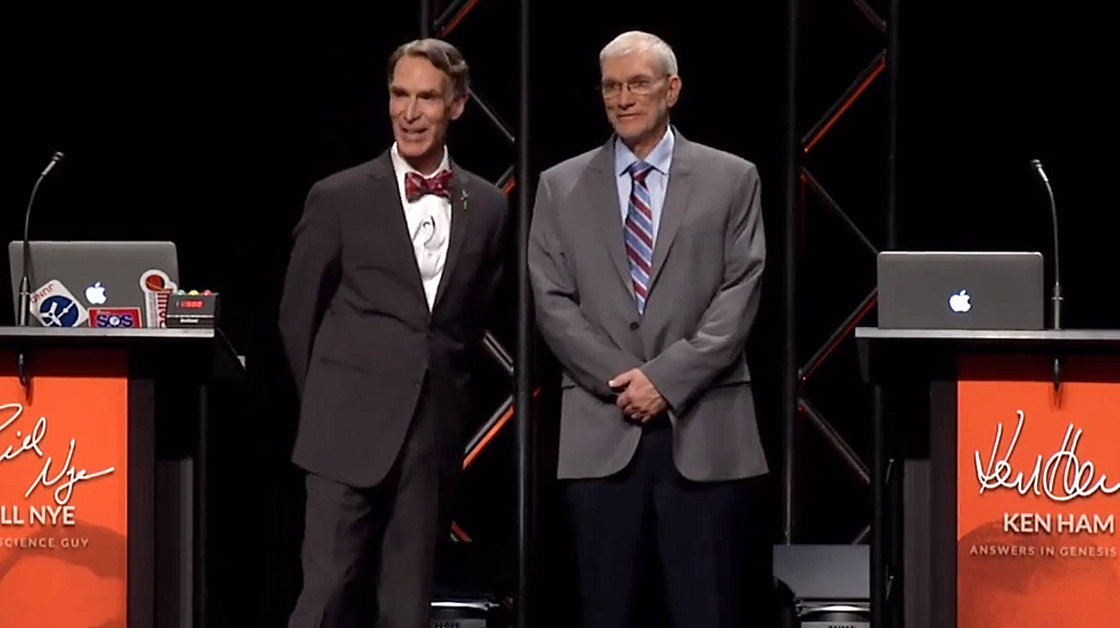
Bill Nye (left) and Ken Ham (right) at their debate at the Creation Museum. Credit: Answers in Genesis (YouTube).

Bill Nye (left) and Ken Ham (right) at their debate at the Creation Museum. Credit: Answers in Genesis (YouTube).

Last week, the world saw a rare sight: a creationist debating an evolutionist in public.

Bill Nye “The Science Guy” has a degree in mechanical engineering, is an agnostic, and believes in evolution. Ken Ham has degrees in environmental biology and science education, is a Christian, and believes in Young Earth Creationism. Bill Nye is famous for his eponymous television show, where he brought scientific concepts to children, including evolution, in a humorous fashion. Ken Ham is known for his Creationist projects Answers in Genesis and the Creation Museum.

On February 4, these two media heavyweights in their respective fields went head-to-head at the Creation Museum itself over the topic, “Is Creation A Viable Model of Origins?” You can watch the debate here.

Continue reading

Posted in Current events, Religion, Science | Tagged , , , , | 2 Comments

The great, unrecognized American holiday

Credit: BrokenSphere (Wikipedia).

1hol·i·day

noun \ˈhä-lə-ˌdā, British usually ˈhä-lə-dē\

1
:  holy day
2
:  a day on which one is exempt from work; specifically :  a day marked by a general suspension of work in commemoration of an event
3
chiefly British :  vacation —often used in the phrase on holiday —often used in plural
4
:  a period of exemption or relief <corporations enjoying a tax holiday>


Long ago, a holiday meant just what it looks like: a holy day–a day in which everyone was required to attend mass. These days might be days of celebration, like Christmas, or days of solemn remembrance, like Good Friday. The distinction has nothing to do with the difference between feasts and solemnities in the Catholic Church–both are types of celebrations. Christmas is considered a solemnity.

In today’s more secularized world, instead of a day of obligation, a holiday usually denotes a lack of obligation, through the cancellation of work. This used to be because everyone was going to church on the holidays, but the practice has stuck. Today, the United States Government closes on ten weekdays each year (eleven if a President is inaugurated that year). Only one of the federal holidays, Christmas, is religious, or two if you want to be generous and count Thanksgiving, but just like in the Church, they include both celebrations and days of remembrance.

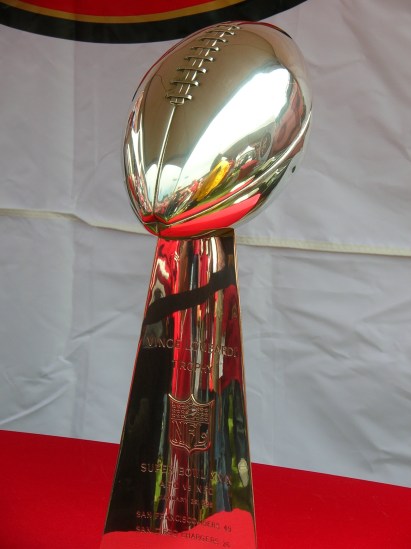
However, if you look at holidays in the old sense–days when people would do something special–we have a completely different set of holidays. And one of those holidays in particular is never printed on your wall calender. This year, that day happens to fall on February 2nd. It is Super Bowl Sunday.

Now, I will admit that I know very little about sports. I couldn’t quote the name of a single player in this year’s Big Game with confidence. I’ll probably tune in for the fourth quarter but that’s about it. To be honest, the only time sports really interests me is during the Olympics, which, as it happens, are also coming up.

But if you doubt that Super Bowl Sunday is a national holiday, just try going to the grocery store the day before. Super Bowl parties have become a tradition in America, and the day is the second-biggest food consumption day of the year after Thanksgiving, even beating out Christmas. It may not be on the regular calender, but it’s right up there with the big ones.

So what are America’s other holidays, culturally speaking–days when people don’t just have the day off, but actually do something out of the ordinary? It doesn’t have to be a party. April Fool’s Day is simply marked by pranks and jokes, but it is well loved by Google and other tech companies. Mother’s Day isn’t that out of the ordinary either, but you’d better remember to at least call your mom that day. It will vary be region, religion, and personal preferences, but here are the ones that, in my experience, people tend to go out of their way for. (If you think I missed one, leave a comment below.)

New Year’s Day; Super Bowl Sunday; Valentine’s Day; St. Patrick’s Day; April Fool’s Day; Good Friday; Easter; Mother’s Day; Father’s Day; Independence Day; Halloween; Thanksgiving; Christmas.

That’s 13 holidays, or fifteen if you count New Year’s Eve and Christmas Eve, only 4 of which are recognized as U.S. federal holidays. (Although, granted, 4 others fall on Sundays.) Interesting how American culture highlights a very different set of customs from the ones we just get the day off for, isn’t it?

Posted in Culture, General | Tagged , , | Comments Off on The great, unrecognized American holiday

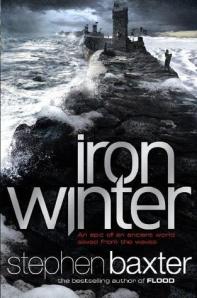
Book review: Iron Winter by Stephen Baxter

The year is 1315 A.D. The Wall of Northland has stood firm for over 8,000 years, keep the ocean out of what we know as the North Sea. Now, at the dawn of an early industrial era, Northland stands with its ally, Mongol Cathay (China) as one of the world’s two greatest powers. But all is not well in Northland, for the ice, now remembered only in myth, is returning. What in our world was the beginning of the Little Ice Age, in the world of Northland is the beginning of the next big one.

This is the bleak and treacherous world that Stephen Baxter paints in Iron Winter, the conclusion to the Northland Trilogy that began with Stone Spring and Bronze Summer.

History has played out strangely in this world. Heir to the inventive Greek traditions of Pythagoras, Northland is one of the few powers that wields eruptors (cannons) or travels by steam carriage (railroad), and is developing the rudiments of modern chemistry. Yet at the same time, the architectural style is stained glass and flying buttresses, and art has only begun to experiment with the new look-deep (perspective) techniques.

Politics has also played out strangely. The Americas are in regular contact with Northland by sea, and the major powers of the Mediterranean are Carthage, Muslim Egypt, and the Hatti (Hittite) Empire. Nor is religion untouched. Jesus still existed, but he was never crucified (“some say to his own astonishment”), and he is only worshiped by the Hatti.

But into this orderly world comes the Longwinter–the next great Ice Age–turning summers into winters in the space of a few short years. Drought, famine, and plague grip the world as has never before been seen in history, and only Pyxeas, the old scholar of Northland, braving the steppes of Asia and the dangers of Mongol Cathay, can save civilization.

Iron Winter is the most compact of the Northland Trilogy in narrative terms, with the entire story taking place in just four years, something I consider one of its strengths as it allows the stories of the many characters to be fully fleshed out and the danger to the characters to be brought front and center.

Once again, Mr. Baxter does an artful job of telling parallel story threads that, while not deeply connected, nonetheless touch each other in profound ways. There are few heroes in Iron Winter in the traditional sense. Against the advance of the ice, there is little that anyone can do but survive.

This story is human tragedy more than human triumph. The world is more familiar to us, despite the anachronisms, but Mr. Baxter’s telling of how it falls to pieces in the space of a few short years is, literally and figuratively, chilling. And yet, even when the few who remain are just clinging to life, there remains a hope to rebuild.

To the dark and complex conclusion to the Northland Trilogy, I give–

My rating: 4.5 out of 5.0

Posted in Book reviews | Tagged , , , | Comments Off on Book review: Iron Winter by Stephen Baxter

In the sky: supernova in M82!

Photo of M82 with SN 2014J. Credit: Adam Block/Mount Lemmon SkyCenter/University of Arizona.

Photo of M82 with SN 2014J. Credit: Adam Block/Mount Lemmon SkyCenter/University of Arizona.

The little arrow in the picture is pointing to SN 2014J, a new supernova in the M82 galaxy. It may not look like much in this picture, but it’s getting brighter.

Credit: Katzman Automatic Imaging Telescope / LOSS.

Credit: Katzman Automatic Imaging Telescope / LOSS.

Here’s a more recent photo, as of January 25. It’s going to get even brighter than that. Right now, it’s at about magnitude 10.5. In another week or so, it’s expected to hit magnitude 8.5, or in other words, as bright as the entire galaxy!

SN 2014J is a Type Ia supernova. This is not a case of an old, massive star exploding. The jury is still out on exactly how Type Ia’s happen, but we believe that they are caused by two dead stars–white dwarfs colliding and exploding. A Type Ia supernova is both rarer and brighter than the usual exploding stars, which are Type II.

M82 is about 12 million light-years away, which sounds like a lot, but this is actually the closest supernova of any type in a generation. The last one that was this close was SN 1993J, which went off in the neighboring galaxy M81. That was a Type II supernova, so this one should be even brighter–the brightest since SN 1987A in the Large Magellanic Cloud. And before that, you have to go all the way back to SN 1885 in the Andromeda Galaxy over a hundred years earlier to find anything even comparable. So this truly could be a once in a lifetime event.

So how do you find it? If you’re in the Northern Hemisphere, like me, you’re in luck, because this is a far northern object. And because it’s so close, it will be pretty easy to spot even with just binoculars. Go out in the late evening and look to the northeast. You should see something that looks like this:

In the yellow circle, near the familiar form of the Big Dipper, are the two nearby galaxies, M81 and M82. Take your binoculars to them, and they’ll look like little fuzzy patches, but one of those fuzzy patches will have a bright star in it–the supernova. In a long-exposure photograph, it will look something like this:

Credit: Joseph Brimacombe.

Credit: Joseph Brimacombe.

Here’s the other interesting thing about SN 2014J. M82 is a starburst galaxy–in other words, it’s forming lots and lots of new stars. Some of those star will be massive and will quickly explode…as Type II supernovae. We’d expect to see plenty of those in M82, but Type Ia’s come from old stars. We wouldn’t expect to see nearly as many of those there, so this one is an especially rare treat.

Posted in Current events, Stargazing | Tagged , , , , | Comments Off on In the sky: supernova in M82!