I had a weird question for Christmas this year. How many “standard” Christmas songs are there? You know, the ones we sing over and over every year. I went through a bunch of playlists and compiled a master list, and I uncovered some interesting statistics along the way.
Well, it’s finally here. After 13 years, James Cameron has finally come out with the sequel to the highest-grossing movie of all time (despite being briefly eclipsed by Avengers: Endgame): Avatar. Originally projected for release in 2014, Avatar 2 has taken eight more years to finish and at last premiers this weekend as Avatar: The Way of Water.
It’s hard to overstate how big a deal the original Avatar was back in 2009. The hype was off the charts in a way that feels alien to me now, no pun intended. Don’t get me wrong; the hype around Avengers: Endgame was also huge, but I didn’t see articles about how people were depressed after seeing it because the real world was so dull in comparison. That is a thing that happened with Avatar that is still being remarked upon today.
The original Avatar was like nothing people had seen before. Cameron built a virtual world filled with realistic(-ish) life with its own evolutionary tree. He created a race of aliens with a distinctive culture and a real, learnable language. (Check out my interview with the creator of the Na’vi language here.) And all of it filmed in IMAX 3D. He wanted Pandora to be as real and immersive as possible, and he largely succeeded there.
Even so, I had to wonder if Cameron may have finally bitten off more than he can chew this time. Avatar, for all its spectacle, was criticized for a lackluster plot—not terrible by any means. It rates a solid 7-8 out of 10 on review sites—but not worthy of the cinematic effort that he put into it. And it was also criticized for being derivative. “Dances with Wolves in space” and “FernGully in space” were common comparisons. With The Way of Water being possibly the most expensive film every made, it doesn’t exactly have as strong a foundation as it could to earn back that investment.
Plus, I feel like the hype is not there—or wasn’t before the release. That may change as the reviews roll in. The hype for The Way of Water didn’t really start until about a month ago, in my estimation, and it doesn’t feel as big as it was for Endgame, or maybe even The Force Awakens. Maybe I’m biased because I cared more about those movies, or maybe I’m more disconnected from Hollywood after the pandemic, but I just wasn’t feeling it. Will the movie turn a profit? Very likely. Will it outdo the original? Color me skeptical.
But how was the movie? It was…better. It wasn’t top-notch, but it was better than Avatar 1.
My rating: 4 out of 5. (That is, an 8 out of 10, where I would have given the original Avatar a 6 or 7.)
(It’s kind of confusing because movies are rated out of 10, but books are rated out of 5.)
And yes, I did see it in 3D. Avatar started the 3D craze that began in 2009 once people realized that 3D movies had actually gotten good, so I figured I should at least go that far for The Way of Water (although I did not see it in IMAX).
Of course, the 3D craze fizzled out after a while, and I think it was for a reason. This is the first one I’ve seen since…How to Train Your Dragon 3, maybe? Honestly, I don’t think 3D adds that much. Even in 2D, if you see in on the big screen, your brain can fill in the rest.
In this episode, I review the recent history and current status of science fiction on television during the streaming era. TV recommendation: The Orville
So, this ended up being less of a review and more of a post-mortem, but this is where the post went when I decided to put my thoughts down.
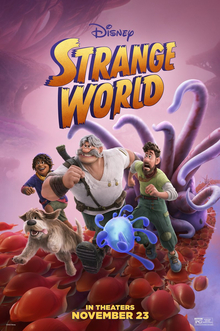
Disney has put out its latest theatrical release this week with Strange World, and it has not gone well. The same studio that blew the doors off with Frozen II, turned a solid profit with Encanto, and at least made its budget back with Raya, seems to have fallen flat on its face with Strange World, pulling in only $30 million in the first week to a budget of $180 million.
How did this happen?
I’m going to avoid the politics of this film except to say that I feel like reviews don’t tell you anything useful anymore. Look at the audience (not critic) scores from three of the top sites. Rotten Tomatoes: 64%. Metacritic: 2.8/10. IMBD: 4.7/10. They’re all over the place. It’s the difference between them, not the absolute numbers, that make me suspect review bombing is involved (and I tend to suspect it on both sides).
What did I think of it myself? Honestly, I rather liked it.
My rating: 3.5 out of 5. Or I suppose 7/10. In fact, I’m tempted to bump it up to 4, but there were a couple of structural issues that led me to downgrade it.
In this episode, I review the recent history and current status of science fiction on television during the streaming era. TV recommendation: The Orville
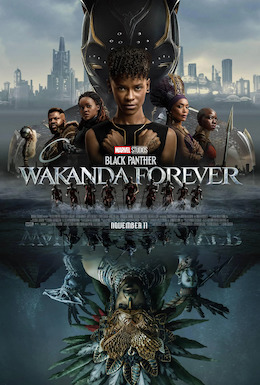
Black Panther: Wakanda Forever is the much-anticipated sequel to Marvel’s hit 2018 film Black Panther (and also the end of the MCU’s Phase Four). We return to a Wakanda that is reeling from the sudden death of King T’Challa and facing new threats looming on the horizon—namely world powers that will do anything to get their hands on Wakanda’s rare and powerful Vibranium and one very grumpy fish-man who doesn’t want the Surface World encroaching on his domain.
And this was surely a difficult movie to make, marred as it was by the tragic death of the series’s lead actor, Chadwick Boseman, in 2020. Instead of T’Challa’s triumphant return, the movie became in many ways a tribute to Boseman, told through the grief of the characters. It’s something that very easily could have gone wrong with a script that clumsily played find-and-replace with the main character…but it didn’t.
This move was very good. In fact, I think it was even better than the first Black Panther. I gave that one full marks when I reviewed it, but I also said it wasn’t off the charts like Infinity War and Endgame were. There was still room for improvement, and Wakanda Forever did that.
In this episode, I review the recent history and current status of science fiction on television during the streaming era. TV recommendation: The Orville
In this episode, I review the recent history and current status of science fiction on television during the streaming era. TV recommendation: The Orville
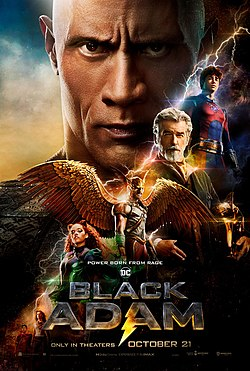
DC superhero films are doing something interesting and kind of Marvel-esque this year. They are releasing two films in the same series back-to-back. This week saw the premier of Black Adam, and just five months from now in March will be his opposite number, Shazam! Fury of the Gods.
Black Adam is an interesting character in the DC universe. He was a bronze age superhero (originally Egyptian, but in the movie, he’s from the fictional country of Kahndaq) who was granted superpowers by the Council of Wizards—the same superpowers that were later given to Captain Marvel/Shazam (whose movie I reviewed when it premiered). In the original storyline, Black Adam was corrupted to villainy and became the arch-enemy of Shazam, but in recent years, DC has reimagined him as an antihero instead (as was lampooned at the end of League of Super-Pets). In fact, he is presumably meant to sit on the vacant seventh throne in the Shazam Family’s “lair,” suggesting a crossover in the future.
This version of Black Adam is still from the bronze age, and also doesn’t regard himself as a hero. He’s driven by anger and revenge, and he’s not shy about it. But his actions are also driven by the fact that he’s…well, from the bronze age. As a wise man once said, “The past is a foreign country; they do things differently there.” When he’s first awakened, Adam viciously slaughters an entire platoon of mercenaries (who are, admittedly, trying to kill him). In 2600 BC, this would (probably) have been considered just fine or even lionized. But in 2022 AD, it puts him at odds with the infamous Amanda Waller and her Justice Society, led by (ironically) a far too trigger-happy Hawkman.
Now, Black Adam must learn how to look past his vengeance and do things our way–not just superheroing, but also things like teamwork and self-government for his people…Oh, and also, the demonic force known as Sabbac is coming to bring about Hell on Earth.
So, how did they do? Pretty well. They didn’t knock it out of the park like they did with Shazam!, but this was a really solid movie.
My rating: 4 out of 5.
Black Adam is an interesting movie from a (mainstream) superhero perspective, and it shows a lot of dynamic range for DC. Adam being an antihero is only the start of it, although that’s a big point already. Many superheroes, especially in DC, are scrupulous about not killing people, except for the occasional really bad guy like Steppenwolf in Justice League. Adam kills a lot of people even when he doesn’t particularly have to. Granted, it’s war, where that sort of thing is…expected, for lack of a better word. And granted, Iron Man did the same thing in his cinematic debut. But still, it’s very different from the much darker-themed Batman.
But it goes deeper than that. It’s not often spelled out, but a lot of the movie is addressing themes of personal justice, systemic justice, and the role of heroes in the world (into which you might read law enforcement, the military, and global powers in general). For example, the people of Kahndaq are angry at Hawkman for saving the warlords who are oppressing them, and they cheer Adam when he kills them. Adrianna points out that Kahndaq has been oppressed for 27 years, but the Justice Society only showed up when they finally had someone on their side.
Adam has to deal with a lot of these things on a personal level as well. As I said, he doesn’t identify as a hero and is annoyed when the “official” heroes keep getting in his way. He’s praised by his people, but even Adrianna doesn’t like his methods. Our world is so foreign to him that it takes him a while to understand how it works, and it comes down to a lot of these same themes.
To be honest, I’m not entirely sure where I’m going with this. The main thing is that throughout the movie, there is a subtext that is constantly wrestling with what is the right thing to do for people with power over others—and that goes for institutions as well as superpowered individuals. It’s the kind of movie that makes you think—I mean, yes, it’s still a popcorn flick, but it’s the kind of movie that makes you think a lot more than you expect. But it still has a lot of fun along the way, which makes it a strong showing all around.
In 2014, XKCD creator Randall Munroe released What If?, a book based on his long-running…blog? It’s not his usual “blag,” but I think it qualifies. Anyway, in it, he used science to answer “absurd hypothetical questions” submitted by his readers.
Last month, Randall released What If? 2, in which he answered still more absurd questions…
Q. What if the Solar system was filled with soup out to Jupiter? A. It would immediately collapse into a black hole.
And sometimes took semi-ordinary questions to absurd lengths…
Q. How long would it take to flood the Earth with puppies (under XYZ conditions)? A. The observable universe would be filled with dogs in 330 years.
Or sometimes even answered normal questions…
Q. What happens to all the rubber rubbed off of car tires. A. It’s a major source of microplastics.
Long story short, this book is just as funny and thought-provoking as the original, and absolutely befitting Randall’s style. I said when the first one came out that as a science fiction author, I love this stuff. Even when the scenarios involved are impossible and ridiculous, they lead you down some interesting rabbit holes to learn things that are of use in more practical (often fictional) situations. There’s a long tradition in science of using thought experiments of things we can’t do—that maybe no one can do—to learn more about our universe and the way the real world works, and that applies just as much if not more to envisioning fictional worlds.
There’s not a lot to say about this one, but that’s not for lack of quality. By no means! It’s just that this book is Exactly What It Says on the Tin, and it’s perfect that way. If you like absurd scientific thought experiments, or if you liked the first book, you should definitely read What If? 2.
My rating: 5 out of 5.
P.S. And yes, Randall did leave a few unanswered questions for our entertainment—not as many as last time, but still a good number. Stay tuned for my take on those.




 Science Meets Fiction