Movie Review: Fantastic Beasts: The Crimes of Grindelwald

https://upload.wikimedia.org/wikipedia/en/3/3c/Fantastic_Beasts_-_The_Crimes_of_Grindelwald_Poster.png

Well, this is the moment fellow Harry Potter fans have been waiting for: the second Fantastic Beasts movie: The Crimes of Grindelwald. Now we see the continued adventures of Newt Scamander and the evil schemes of Gellert Grindelwald. So how was it? Honestly, not as good as I was hoping. I believe J. K. Rowling fell into the same trap in writing this film that she did in Order of the Phoenix and parts of Deathly Hallows: trying to do too much at once. The storyline was cluttered with too many extraneous elements. Not to mention all the continuity problems she introduced.

Unfortunately, The Crimes of Grindelwald just doesn’t measure up to its predecessor, I rated that one a 4.5 out of 5, but I don’t think I can fairly give this one even a 4. It’s entertaining enough, and if you’re a Wizarding World fan like me, you should absolutely see it, but…

My rating: 3.5 out of 5.

I feel like this movie needs a bit more of a detailed treatment, so in the style of my review of The Last Jedi, let’s break it down.

Spoilers Below (#keepthesecrets)

Continue reading

Posted in Movie Reviews | Tagged , , , | 1 Comment

The Kilogram Is Redefined (and Other Units, too)

The International Prototype Kilogram, which until next May 20 is the definition of the kilogram.

The kilogram, as my international readers will know is the official unit of mass in the metric system—or more precisely, the International System of Units (SI). But less well known is that until today, the kilogram has been defined not as some universal value, but as the mass of a physical object: a chunk of platinum-iridium alloy in a triple bell jar in a secure vault in Paris.

Last week, however, the International Bureau of Weights and Measures (BIPM—it’s French) redefined the kilogram and three others of the seven “base units” from which all other units of measure are derived to make them more reliable and more universal. The new definitions come into effect on May 20. The BBC has a nice analysis of the kilogram in particular here.

The problem with the kilogram is that the official kilogram (pictured above) has been losing weight. As hard as platinum and iridium are, it’s lost atoms over the years when they take it out to clean it—about 50 micrograms, we think. And because this cylinder is the definition of a kilogram, the unit itself has been changing.

This affects us in America, too. American units are defined by law in terms of SI or metric units. That means when the kilogram changes, the pound legally changes (technically the slug, but it’s basically the pound), as does every other unit that’s defined in terms of pounds, including some that you wouldn’t expect. The psi, the horsepower, the kilowatt-hour, the volt, and even the calorie have hidden kilograms in them, so they have been legally changing, too. Only by 0.000005%, but still.

That’s why the BIPM decided they needed to change the definition of the kilogram to make it completely fixed, by tying it to one of the constants of nature. They chose Planck’s constant. This is a number that gets used a lot in particle physics. It happens to be 4π times the smallest angular momentum a particle can have, and it also shows up in Heisenberg’s uncertainty principle. The BIPM redefined the kilogram not to a direct measurement of mass, but such that Planck’s constant is exactly 6.62607015×10⁻³⁴ J×s.

Joules (J) have kilograms in them, and you can measure Planck’s constant with something called a Kibble balance (better known as a watt balance), which balances a weight against the force of an electromagnet. It’s not as intuitive unless you’re a particle physicist, but it’s a lot more reliable, especially when you need things to be precise (and some things do need to be) to 0.000001%. And better yet, anyone with the right equipment can measure the kilogram for themselves. They don’t have to go measure against a reference weight in a vault somewhere. This redefinition democratizes the kilograms.

The BIPM redefined some of the other units too, to fix them to other physical constants. The ampere, the unit of electric current, used to be defined in terms of the magnetic forces around a flowing current—not very intuitive when it just measures flowing electrons. Now, they’ve defined it as a certain number of electrons per second—or rather, that one electron per second is exactly 1.602176634×10⁻¹⁹ amperes.

The kelvin, the unit of temperature, used to be defined be the triple point of water, a thermodynamic point very close to the freezing point. That was reasonable, but the purity and isotopic composition of water can affect the triple point, and it could only be measured so precisely. Now, they’ve defined it so that Boltzmann’s constant, a number used to compute the average energy of molecules, is exactly 1.380639×10⁻²³ J/K.

And finally, we have the mole, (not the animal) which is a measure of the number of atoms or molecules in a given sample. You see it a lot in chemistry. It used to be defined as the number of atoms in 12 grams of carbon-12, also known as Avogadro’s constant. Again, isotopes are the problem. It had to be pure carbon-12 because atomic weights vary slightly even after accounting for the number of protons and neutrons because of their different nuclear energies. So now, they just picked a number that was as close as they could get to the current measurements: 6.02214076×10²³ atoms or molecules.

Most people will never notice this redefinition in their daily lives. Some units will change a tiny bit, but it will be too small for most measurement devices to even register it. However, in high-precision physics, where measurements sometimes need to be made to one part in a trillion, or even to one part in a sextillion, it’s very important to have your units defined exactly so there is no ambiguity. This redefinition solves a longstanding problem in that regard and sets up a system of measurement that can truly be permanent, and that even aliens on the other side of the universe could use just as well. The metric system has well and truly been brought into the twenty-first century.

Posted in Current events, Science | Tagged , , , | Comments Off on The Kilogram Is Redefined (and Other Units, too)

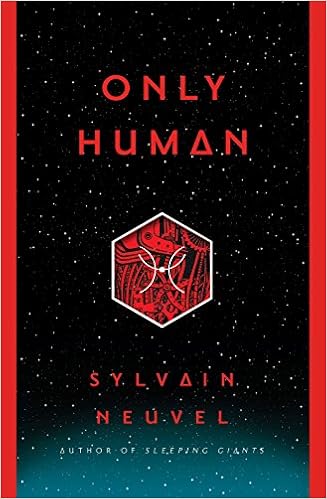
Book Review: Only Human by Sylvain Neuvel

https://images-na.ssl-images-amazon.com/images/I/511NZXQ-DsL._SX325_BO1,204,203,200_.jpg

Only Human is the conclusion to the Themis Files trilogy by Sylvain Neuvel, following Sleeping Giants and Waking Gods. In this installment, trouble with the aliens who built the giant robot Themis leads to trouble on Earth, and three kidnapped humans making their way back find themselves in home they don’t recognize anymore. While it’s not that different in tone from the first two books, I have to admit, the premise of the world stereotypically collapsing into fascism and war grated a little. But even so, I enjoyed the story, and I’d still put this book in the middle of the trilogy in quality.

My rating: 4.5 out of 5.

Big Spoilers Below

Continue reading

Posted in Book reviews | Tagged , | Comments Off on Book Review: Only Human by Sylvain Neuvel

Elon Musk’s BFR Update and Yusaku Maezawa, the First Lunar Tourist

The latest version of the BFR.

Last night, Galactic President CEO of SpaceX Elon Musk gave an update on his big future projects, the BFR (Big Falcon Rocket), BFS (which he says he needs to rename), and his planned tourist flight around the Moon. Video here.

Musk also introduced the first paying customer for his lunar flight, Japanese billionaire and fashion guru Yusaka Maezawa. But the big news of the night was that Maezawa didn’t just buy a seat. He bought out the entire flight! Maezawa wants to offer free rides around the Moon to half a dozen or so artists to inspire artistic creations upon returning to Earth. And that is pretty cool.

Maezawa at the SpaceX press conference.

You can read all about this in other places, and if you’ve read it this far, odds are you have. But I have a few particular thoughts on this that I wanted to talk about here.

First, Elon Musk. Mr. Musk has gotten a lot of criticism lately, from defaming one of the divers from the recent heroic rescue mission in Thailand to smoking pot live on YouTube to the boondoggle that Tesla is becoming. Even SpaceX has been kind of shaky for much of its history. He consistently fails to meet deadlines, and people made fun of him for launching his car into space. But you know what?

He’s still doing better than everyone else right now, including NASA.

SpaceX has competition, to be sure, but that competition is years behind the curve. When it comes to launch capability, SpaceX can launch more rockets reliably for less money than any other company or space agency in the world. And if Boeing and Lockheed or Blue Origin manages to beat him out? Great! As he says, bring it on. At least he’ll have kicked the industry into high gear. For now, though, he’s still doing pretty good work.

Second, Yusaka Maezawa. Mr. Maezawa clearly cares deeply about this project. That he is willing to buy out the whole flight and give the rest of the seats away says a lot, but I’d like to dig a bit deeper. Maezawa is worth about $3.6 billion, according to Forbes, and while we don’t know how much he has paid to SpaceX, the final launch cost for the BFR is estimated at $335 million. The point is that this is not small change to him, where buying a single seat arguably would be. I say this because it shows he’s really serious about it, and I appreciate his contribution to the project.

Third, the idea of the art project itself. Sure, it sounds cool, but I believe it’s actually vitally important. Combining art and science is a powerful thing. I look back to Richard Feynman on this matter. Speaking back in 1955, he said, “Is no one inspired by our present picture of the universe? The value of science remains unsung by singers, you are reduced to hearing not a song or a poem, but an evening lecture about it. This is not yet a scientific age.”

Of course, this isn’t true anymore. Songs about space exploration topped the charts within Feynman’s lifetime. Star Wars is mainstream. People like Bill Nye and Neil deGrasse Tyson are superstars. And even the most successful sitcom on TV is about scientists. But I think Feynman’s sentiment still rings true, especially in the area of space exploration, which has stagnated in recent years. We still need this kind of art, and once again, I thank Mr. Maezawa for making the effort to patronize it. Godspeed.

Posted in Art, Current events, Space exploration | Tagged , , , , | Comments Off on Elon Musk’s BFR Update and Yusaku Maezawa, the First Lunar Tourist

Book Review: Artemis by Andy Weir

https://upload.wikimedia.org/wikipedia/en/6/68/Artemis-Andy_Weir_%282017%29.jpg

Andy Weir, author of The Martian, put out his second novel late last year: Artemis. Artemis is another space-based adventure for the one-time computer programmer, but he takes it in a different direction this time. While The Martian is a one-man tale of survival on Mars, Artemis is a high-stakes caper on the Moon. And it’s a great ride all around.

My rating: 5 out of 5.

Continue reading

Posted in Book reviews | Tagged , | Comments Off on Book Review: Artemis by Andy Weir

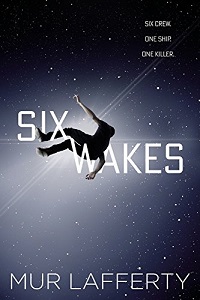
Book Review: Six Wakes by Mur Lafferty

https://upload.wikimedia.org/wikipedia/en/8/89/Six_Wakes.jpg

Six Wakes is the latest novel by Mur Lafferty, author of the Shambling Guides series. In this book, however, she takes a left turn from urban fantasy to a sci-fi mystery story. From the central story of a perfect locked-room mystery, Lafferty weaves a sprawling tale of politics, conspiracy, and what it means to be human in one very unique vision of the future. And she does a pretty good job of it.

My rating: 4.5 out of 5.

So here’s the story: in the Year 2493, cloning technology has become commonplace, and better yet, it’s possible to copy a person’s memories into their clone. People can clone themselves into new bodies over and over again when they die, extending their lifespan indefinitely. Some clones are over 250 years old, adding up their various lives.

But there’s one catch. In addition to being condemned by many religious groups, clones are kept as second-class citizens to keep them from becoming too powerful with their centuries of life experience and amassed wealth. Multiple clones of the same person aren’t allowed to exist at the same time. Clones aren’t allowed to have children. And most controversially, it’s illegal to modify the DNA of a clone, even to fix a genetic illness.

Of course, these laws are often broken by illegal cloners, with serious consequences even for unwilling cloning victims. Various crimes have led six clones to become the crew of the Dormire, a sleeper ship traveling to colonize the Tau Ceti system. The clones will run the ship through the multi-generation flight in exchange for having their criminal records wiped clean.

But then, halfway through the mission, the whole crew wake up in cloned bodies to find their previous selves have been murdered, and worse, their memories haven’t been copied over. The last thing they remember is coming aboard the ship. It’s the perfect crime: six victims, six suspects, all of them with criminal records, and none of them remembering what happened, not even the killer themselves. And now they have to solve the mystery before it happens again.

Lafferty expertly spools out this mystery piece by piece, and along the way, she reveals the backstory of each of the crew, what they did to get themselves on the Dormire, and why they might have a motive to kill everyone. It’s not perfectly done. Some of the crew are obviously bigger suspects than others, but the truth doesn’t fully come out until the end, with a couple of major twists along the way. And in the meantime, the themes of what cloning means for every aspect of society and the very nature of humanity, which run throughout the story in a very entertaining and thought-provoking way, more than make up for these shortcomings. Six Wakes is just as much about exploring this uncanny future and its implications as it is about the mystery, and that, in my opinion, is what makes it a real quality read.

Posted in Book reviews | Tagged , | Comments Off on Book Review: Six Wakes by Mur Lafferty

Movie Review: Ant-Man and the Wasp

https://upload.wikimedia.org/wikipedia/en/2/2c/Ant-Man_and_the_Wasp_poster.jpg

Ant-Man is one of the sillier entries in the Marvel Cinematic Universe, and that goes double for the science in it. (Yes, comic books in general consider the laws of physics to be more like guidelines, but Ant-Man takes the cake.) But it was still good enough to get a sequel: Ant-Man and the Wasp. In fact, I think the sequel was considerably better than the original.

Also, be sure to stay all the way to the end of the credits. That last line is a doozy.

My rating: 4.5 out of 5.

Spoilers below.

Continue reading

Posted in Movie Reviews | Tagged , | Comments Off on Movie Review: Ant-Man and the Wasp

Movie Review: Jurassic World: Fallen Kingdom

https://upload.wikimedia.org/wikipedia/en/c/c6/Jurassic_World_Fallen_Kingdom.png

So, I wasn’t going to review this one for a while, not because I didn’t want to, but because I haven’t had time, and my writing process has been more chaotic than usual lately. Plus Incredibles 2 and Ant-Man and the Wasp came out before I got it up. But then I remembered that I already had this review half-written, so let’s dive into it!

Jurassic World: Fallen Kingdom is the big dinosaur movie of the year. It’s basically Jurassic Park 5, if you’re counting, although I’m still not entirely clear whether they wanted Jurassic World to be a sequel or a reboot. Jurassic World was definitely a rehash of Jurassic Park in a lot of ways, and it’s perhaps even more obvious that Jurassic World: Fallen Kingdom is a rehash of The Lost World: Jurassic Park (also known as Jurassic Park 2).

But did I like it? It’s middle of the pack, as Jurassic Park movies go. I do believe Fallen Kingdom was better executed that the first Jurassic World. It even told a better story…but it wasn’t Jurassic Park.

My rating: 4 out of 5.

Spoilers below.

Continue reading

Posted in Movie Reviews | Tagged , , , | Comments Off on Movie Review: Jurassic World: Fallen Kingdom

Movie Review: Incredibles 2

Weirdly, the sequel to The Incredibles is titled Incredibles 2. No “The.”

Pixar’s newest offering is one of the most anticipated movies of the year—dare I say it, even more than Infinity War. This is a sequel 14 years in the making: Incredibles 2. More supers, more crimefighting, more…villains with a weirdly good point than ever.

So how was it? I’d rank the storyline slightly below the original The Incredibles. The original was just too good to beat. On the other hand, the pacing (it’s Pixar’s longest film ever at 1 hour, 58 minutes) is markedly better. Re-watching the original, I thought it ran a little fast, jumping from scene to scene too fast for the impact to fully land—not always, but fairly often. This one was spot on, though. So in a word: great!

My rating: 5 out of 5.

Also, I feel the need to warn you that there is a seizure warning on this movie. (And I’m honestly surprised they had to add it, and it wasn’t shipped with one.)

Spoilers below.

Incredibles 2 picks up literally the minute The Incredibles left off, with the Parr family fighting the Underminer. Unfortunately, the fight doesn’t go well. Despite the Parrs’ and Frozone’s highly-praised defeat of Syndrome’s Omnidroid three months earlier, superheroing is still technically illegal, and they actually cause more damage fighting the Underminer than he would have done on his own, without even catching the bad guy.

Unable to return to hero work and with their house still destroyed from the last movie, the Parrs need a break, and corporate tycoons Winston and Evelyn Deavor step in to help. Winston is a giant superhero fan and wants Helen (Elastigirl) to go out crimefighting again (still illegally) as a corporate-sponsored hero to try to gain the sympathy of the public to “make supers legal again!”

Cue hilarious scenes of Bob (Mr. Incredible) struggling (though ultimately succeeding) to be a stay-at-home dad while Helen fights the nefarious villain Screenslaver, who can hypnotize people through TV screens. After saving an ambassador’s life, she gets the public back on the supers’ side…only to find out that Screenslaver was a setup from the start.

The interesting thing about both Incredibles films is that the villain not only has a point, but is…kind of more right than the heroes—you know, aside from the killing people part. As screwed up as Syndrome was in the first movie, he may well have had the better argument when he said the supers’ powers shouldn’t make them better than everyone else. Now contrast the Parrs, who basically embrace their superiority and let their son who can outrun a Bugatti join the track team in the final scene. It may not technically be cheating, but it’s certainly against the spirit of the competition—and not very heroic.

A little unfair? Maybe, but you can definitely see the thread. Now, in Incredibles 2, we have Evelyn Deavor (Seriously, who didn’t see that coming?) who believes that people have come to rely too much on the supers (and this from painful personal experience), tying it into how they have also come to rely too much on technology. Just read Screenslaver’s speech, courtesy of the Villains Wiki (yes, that’s a thing):

Superheroes are part of a brainless desire to replace true desire with simulation. You don’t talk, you watch talk shows. You don’t play games, you watch game shows. Travel, relationships, risk; every meaningful experience must be packaged and delivered to you to watch at a distance so that you can remain ever-sheltered, ever-passive, ever-ravenous consumers who can’t free themselves to rise from their couches to break a sweat, never anticipate new life. You want superheroes to protect you, and make yourselves ever more powerless in the process.”

There’s more, but you get the picture. If that’s not a commentary on the state of society today, I don’t know what is—especially with the juggernaut that is Marvel playing on the screen next door (pun intended). And to top it all off, Screenslaver says all this while the movie is drawing the audience in with a big action scene.

The point is, Evelyn is obviously wrong to restrict the supers’ rights to use their powers and help the world, but she’s right that their influence on the world hasn’t exactly been healthy, whereas Bob and Helen (at various times) are just enjoying the hero game and not paying attention to her concerns.

The movie ends on a positive note for the supers, with the government (via a judge, weirdly) reinstating their legal status. But we can hope that after what they went through to get there, they will be a little more socially conscious in the future and try to help the world in more ways than just fighting crime.

Posted in Movie Reviews | Tagged , , | Comments Off on Movie Review: Incredibles 2

Movie Review: Solo: A Star Wars Story

https://upload.wikimedia.org/wikipedia/en/5/54/Solo_A_Star_Wars_Story_poster.jpg

Okay, I really need to put out my review of Solo. I don’t review every movie I see, either because I haven’t had time (see Deadpool 2) or because I’m not really sure what to make of it (see Annihilation and, oddly enough, Early Man). But I can’t pass up a Star Wars movie, so I need to get this one out there. (Maybe I’ll make an anthology post for the others later.)

Unlike the others, the biggest reason I’ve been slow to review Solo is that I’m just not that excited about it. Mind you, it was good in some ways. It certainly wasn’t actively bad like the prequels were, and it wasn’t a love it or hate it kind of thing like The Last Jedi either. It was just…meh.

My rating: 3.5 out of 5.

Spoilers below.

Continue reading

Posted in Movie Reviews, Science Fiction | Tagged , , , | Comments Off on Movie Review: Solo: A Star Wars Story