Court Rules “Happy Birthday” is Public Domain!

Credit: Puschinka (Wikipedia).

Credit: Puschinka (Wikipedia).

“Happy birthday to you…” It’s a song with five unique words besides the name of the recipient, and everyone’s sung it at every birthday party for as long as anyone can remember. Surely, you could never get in trouble for singing it, right? There can’t even be enough to it to copyright it, right?

Wrong!

“Happy Birthday to You” is not as old as you might think, at least officially. It’s registered under a copyright from 1935 that was eventually bought by Warner/Chappell Music in 1988. In the United States, most creative works written after 1923 are still copyrighted, and this is one of them.

Until now!

United States copyright law is pretty screwed up. I don’t have time to get into it now, but suffice it to say that things stay copyrighted for far longer than most people think they should be, and enforcement (at least when they want to make an example of someone) is far harsher than most people think it should be. Warner/Chappell started enforcing its copyright on “Happy Birthday” when it bought it in 1988. Under the law, any public performance is illegal unless Warner/Chappell allows it (which costs you money). That’s why whenever you go out to eat for your birthday, the restaurant will make up a ridiculous song of its own instead of singing the classic song like normal people.

But now, at long last, a federal judge has ruled that Warner/Chappell actually doesn’t own the rights to “Happy Birthday”. It is, in fact, in the public domain. Yay!

The story is a bit complicated. It turns out that the tune of “Happy Birthday” was already public domain. It was published back in 1893 with different lyrics under the title “Good Morning to You”. So if you play an instrumental version, you’re in the clear. Oddly, however, the “Happy birthday” lyrics, which were copyrighted in 1935, appear to also be old enough to be public domain. They were first referenced in 1901 and first seen in print in 1911. That would suggest the copyright hasn’t been valid for years.

The judge didn’t rule on these grounds per se. And unlike trademarks, which can lose their legal weight if they become associated with the generic product in the public eye, copyrights cannot be voided in that way. (One wonders if they should. “Happy Birthday” would probably be the only song that applies to.) Instead, the judge ruled that Warner/Chappell only holds the rights to certain piano arrangements of “Happy Birthday”, not the lyrics themselves.

It remains to be seen whether Warner/Chappell will appeal the ruling, which they well might. After all, they’re staring down the barrel of a class-action suit from everyone they’ve forced to pay for the use of the song over the years. But still, we can take comfort in the fact that, at least for now, the world has been made a little more sensible.

Posted in Current events | Tagged , , , | Comments Off on Court Rules “Happy Birthday” is Public Domain!

Doctor Who Returns with a Bang

Yes, that is the Doctor rocking out in 1138 AD. Credit: Simon Ridgway/BBC via The Guardian.

Yes, that is the Doctor rocking out in 1138 AD. Credit: Simon Ridgway/BBC via The Guardian.

Doctor Who kicked off its “9th” series this weekend with “The Magician’s Apprentice”. I have just four words to say about that.

Out. Of. The. Park.

This episode was epic–easily Peter Capaldi’s best performance as our favorite time-traveling alien and a refreshing change after what I thought was a lackluster Series 8 (for which I blame the writers more than the actors who were, in fact, pretty good). “Dark Water“/”Death in Heaven” were great episodes, but even they couldn’t measure up to “The Magician’s Apprentice“. This was on another level entirely.

From the stunning intro (“My name is Davros.”) to the very last line (“Exterminate!”), this episode is a whirlwind of surprises driven by two of the Doctor’s greatest enemies, Missy (the Master) and Davros, “the Creator of the Daleks, the Dark Lord of Skarro”. Davros is dying and seeks a final confrontation with the Doctor to settle a very old score. The Doctor, suspecting he won’t come back alive, throws a party in which he introduces rock music to the 12th century before facing his fate.

That would be enough by itself to make an excellent episode, but the greatest moments come when the old enemies come face to face, and we’re treated to references to the original Tom Baker serial “Genesis of the Daleks“. Ultimately the Doctor (and me too) is blindsided by his own words coming back to haunt him:

“If someone who knew the future, pointed out a child to you, and told you that that child would grow up totally evil, be a ruthless dictator who would destroy millions of lives, could you then kill that child?”

What happens next? Well, let’s just say the Doctor isn’t Tom Baker anymore.

One important question isn’t addressed, though. Who is the magician’s apprentice? I think we’ll find out the answer to that, plus what happens to Davros, the Doctor, Missy, and Clara, next week.

My rating: a big 5 out of 5 for “The Magician’s Apprentice”.

Posted in TV Reviews | Tagged , , | Comments Off on Doctor Who Returns with a Bang

Science and Sociology in Archangel

I reviewed Archangel by Marguerite Reed last week. I enjoyed the book, but I felt that it wasn’t living up to its potential at a couple of points. Notably, it raised a number of social issues and questions that I felt weren’t adequately explored. Still, I think you can read between the lines and make some interesting conclusions. I caution that I have no idea whether Ms. Reed was thinking along these lines. I merely submit that I consider this a plausible reading of the book, which contains some very interesting science and sociology, which is why I wanted to share it.

Warning: spoilers below. Continue reading

Posted in Science, Science Fiction | Tagged , , , , , | Comments Off on Science and Sociology in Archangel

Book Review: Archangel by Marguerite Reed

I can’t remember the last time I just picked up a book from a bookstore bookshelf without knowing anything about it besides what was on the back cover. In fact, of the many book reviews I’ve written on this blog, I have never reviewed a book for which I knew neither the title nor the author by reputation before I read it. Since I had an empty reading list this summer while I was waiting for a couple of new titles to come out, I decided to try it for a change, and I liked what I found.

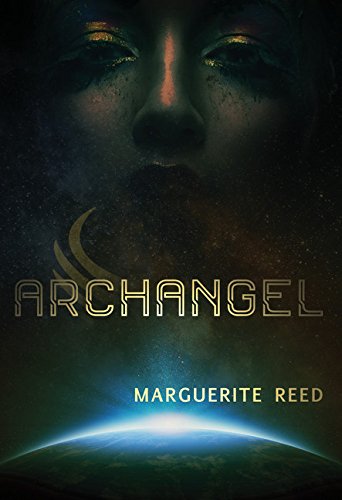
Archangel is the first novel by sci-fi author Marguerite Reed and Book 1 of an anticipated series, The Chronicles of Ubastis. I bought it because from the description, it looked like the closest new novel to the good, old-fashioned, “strange new worlds” sci-fi. It wasn’t exactly that, but it was an enjoyable read that raised a lot of thought-provoking questions.

In the 24th century, Earth is so polluted as to be nearly uninhabitable. Humans have spread throughout the galaxy, searching for a new home, and they have found a potential paradise on the planet Ubastis. But, fearful that the human race won’t be able to live on Ubastis for more than a century without ruining it like Earth, the scientist-colonists who study it have strictly limited their population to a few thousand and hardly dare touch the ecosystem outside their small cities. Needless to say, there are powerful political interests against this.

Vashti Loren is a very rare breed: a hunter. In an era when a majority of the population is genetically modified to reduce aggressive tendencies, she takes wealthy offworlders hunting the dinosaur-like big game of Ubastis to get scientific samples and money for the colony. Four years after the gruesome death of her husband, the colony’s figurehead, at the hands of Beasts–genetically-modified super-soldiers–Vashti meets another Beast under suspicious circumstances. She only wants revenge, but the Beast brings a warning: Ubastis’s political enemies are moving against her, and only swift action will stop them being overwhelmed by colonists.

This book wasn’t quite what I expected, but it was a very interesting story with a lot of deep themes. Some of them were a little off-putting, like the hyper-environmentalism and the cavalier attitude towards genetic engineering of humans, but even these were thought-provoking and raised a lot of interesting questions–so many that I’ll need a whole other post to unpack them. I was a little disappointed that these issues weren’t explored in more detail, if they were intentional, but I suppose that’s fine for a Book 1. The writing may still be a bit rough around the edges, but the political intrigue was fun and suspenseful, the social world was well-described, especially for a non-western culture, and the subplot of Vashti being forced to overcome her prejudices was well-played.

My other criticism of the book is that I didn’t understand the title. I’m pretty sure the word “archangel” doesn’t appear once in the text. It was only when I looked inside the front cover and saw that the title of the anticipated sequel is Legion that I figured out that “Archangel” probably refers to the Beast, which is a clever move.

Overall, I’d rate Archangel as a pretty good start by an up-and-coming author, and I’m interested to see when the sequel rolls out.

My rating: 4 out of 5.

Posted in Book reviews | Tagged , , | 3 Comments

High Frequency

A Short Story

Author’s Note: This story was written at the height of the Occupy Wall Street movement. However, I think many of the themes involved are still relevant. I also want to credit the fiction and nonfiction writings of David Brin for inspiration.

“Nikki—oh, God—alright, listen, you have to get the kids. Something’s gone wrong—really really wrong. I need you to get the kids and get to LaGuardia right now.”

“Julian? Whats wrong?”

“Just do it! I’m booking the flight now; I’ll meet you at the airport.”

“Flight to where? What happened?” Nikki asked.

“Zurich. I don’t know what happened. The fund just went completely nuts.”

“The fund? Zurich? Did we lose all the money?”

“No, worse. We made money—a lot of money.” she heard frantic typing over the phone line. “We have to get out while there’s still time. They’ll be after us real quick.”

“Julian, who’s going to be after us? How much money did we make?”

“About five zeros’ worth!” Continue reading

Posted in Fiction, Science Fiction | Tagged , | Comments Off on High Frequency

Planet or Not? How About “Planetoid”?

A dwarf planet, according to the IAU.

A dwarf planet, according to the IAU.

I’ve argued that Pluto shouldn’t be a planet, and I’ve also argued that we don’t know enough to rigorously define the word “planet”. Now, I want to take a closer look at how and why we divide our own Solar System into planets and non-planets, but also why we shouldn’t be too quick to call that the be-all and end-all.

The upshot: the IAU’s definition isn’t far off, despite being poorly written, but the name “dwarf planet” should be changed to something else. I vote for “planetoid”. Continue reading

Posted in Planets, Science, Space | Tagged , , , | 2 Comments

How to “Define” the Word “Planet”

A dwarf planet, according to the IAU.

A dwarf planet, according to the IAU.

So the IAU has declared that Pluto is not a planet. I agree with this assessment, but I also think that the IAU’s definition is poorly written. So how should that word “planet” actually be defined? It’s not simple. Continue reading

Posted in Planets, Science | Tagged , , , , | 2 Comments

Why Pluto Really Shouldn’t be a Planet

(But the IAU is Wrong, Too.)

A dwarf planet, according to the IAU.

A dwarf planet, according to the IAU.

In 2006, the International Astronomical Union (IAU) voted that Pluto was not a planet, just months after the New Horizons spacecraft was launched with a mission to…visit the last planet that had never been visited by a spacecraft.

Well…that was awkward. Continue reading

Posted in Planets, Science | Tagged , , , , , | 2 Comments

More on Pluto: Nitrogen Glaciers and a Hazy Atmosphere

NASA has released its final batch of findings and images of Pluto from New Horizons until the main bulk of the data starts downloading in September, and there’s a lot more interesting stuff to see.

The northern edge of the nitrogen glaciers of Sputnik Planum. Credits: NASA/JHUAPL/SwRI.

The northern edge of the nitrogen glaciers of Sputnik Planum. Credits: NASA/JHUAPL/SwRI.

Most of Pluto’s appearance is driven by seasonal changes as the direction of its tilt and its distance from the Sun change over its 248-year orbit. It has was looks like young, yellowish methane-rich ice at the south pole (the one facing us), slightly bluer nitrogen ice at the mid-latitudes, and old, dark methane-rich ice at the equator. However, this pattern is broken by the bright ice of Tombaugh Regio, or “the Heart”.

We now know that the youngest, brightest part of Tombaugh Regio, Sputnik Planum, is a huge nitrogen glacier, also containing methane and, unlike the rest of Pluto, large amounts of carbon monoxide, suggesting a possible internal source in that region. The nitrogen glaciers seem to flow out from the middle of Sputnik Planum and into the surrounding highlands and mountains.

Interestingly, Neptune’s moon, Triton, looks very different from Pluto, despite probably being a captured Kuiper belt object. but it doesn’t have one similarity. Take a look:

Triton as imaged by Voyager 2.

Triton as imaged by Voyager 2.

That weird “cantaloupe” terrain that covers the majority of the image does look a fair bit like like the “polygons” of Pluto’s Sputnik Planum. Perhaps this is some kind of common signature of nitrogen volcanoes.

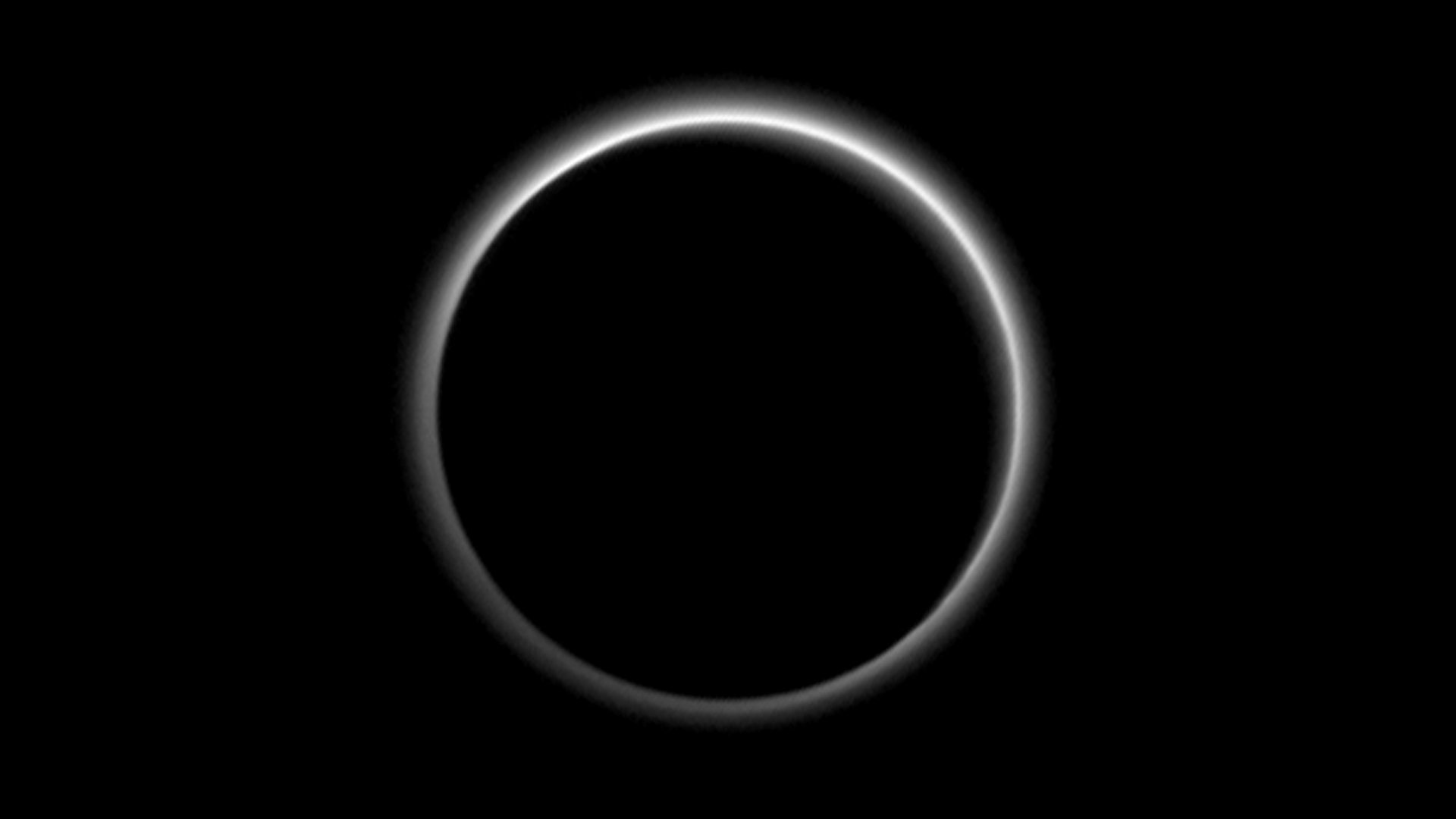
The night-time side of Pluto back-lit by the Sun. Credits: NASA/JHUAPL/SwRI.

The night-time side of Pluto back-lit by the Sun. Credits: NASA/JHUAPL/SwRI.

That is the night side of Pluto backlit by the Sun. The ring of light is caused by sunlight scattering through a hydrocarbon haze high in the atmosphere–30 to 50 kilometers high–much higher than expected. This is despite the atmospheric pressure being much lower than expected. Pluto’s atmosphere has about 0.001% the pressure of Earth’s, and the latest measurements seem to support a particular theory that Pluto’s atmosphere freezes out very rapidly a couple decades after its closest approach to the Sun (which happened in 1989). Its atmospheric pressure dropped by half in just two years, so we may have gotten lucky to see it freezing now.

Posted in Current events, Space exploration | Tagged , | Comments Off on More on Pluto: Nitrogen Glaciers and a Hazy Atmosphere

NASA Discovers the First “Earth-Like” Planet for the Third Time

"Earth-like" planets discovered by Kepler. Credit: NASA Ames/W. Stenzel

“Earth-like” planets discovered by Kepler. Credit: NASA Ames/W. Stenzel

There’s been buzz in the news about the latest planet discovered by NASA’s Kepler space telescope, Kepler-452b. It’s being hailed as a major discovery. It’s the first ever Earth-sized planet found in the habitable zone of a…boy, this sounds familiar, doesn’t it?

If you’re a regular follower of NASA and exoplanets, you probably remember hearing them announce the discovery of the first “Earth-like” or “potentially habitable” or “Earth-sized” planet multiple times. It seems like every year, they make a groundbreaking discovery, and it’s the same discovery. So what’s really going on? It actually has to do with how “Earth-like” you want it to be. Continue reading

Posted in Current events, Planets, Space | Tagged , , , , | Comments Off on NASA Discovers the First “Earth-Like” Planet for the Third Time